



The complete guide
How To Choose A Countertop Wine Rack That Actually Fits Your Kitchen
The problem with keeping wine at home
Wine storage is one of those jobs that never quite gets done. You buy a few bottles, they sit on the bench. You buy a few more, they go in the pantry behind the pasta. Someone brings a bottle to dinner and it ends up on top of the fridge. Before long you cannot remember what you have, you knock a bottle over reaching for the olive oil, and the corked bottles are standing upright drying out their corks.
It is not a dramatic problem. It is just an annoying one that repeats every week.
A countertop rack fixes it with almost no effort. Bottles get a fixed address. You can see every label without moving anything. They lie on their side, which is what corked wine wants. And the bench stops looking like a bottle shop loading dock.
How a honeycomb countertop rack works
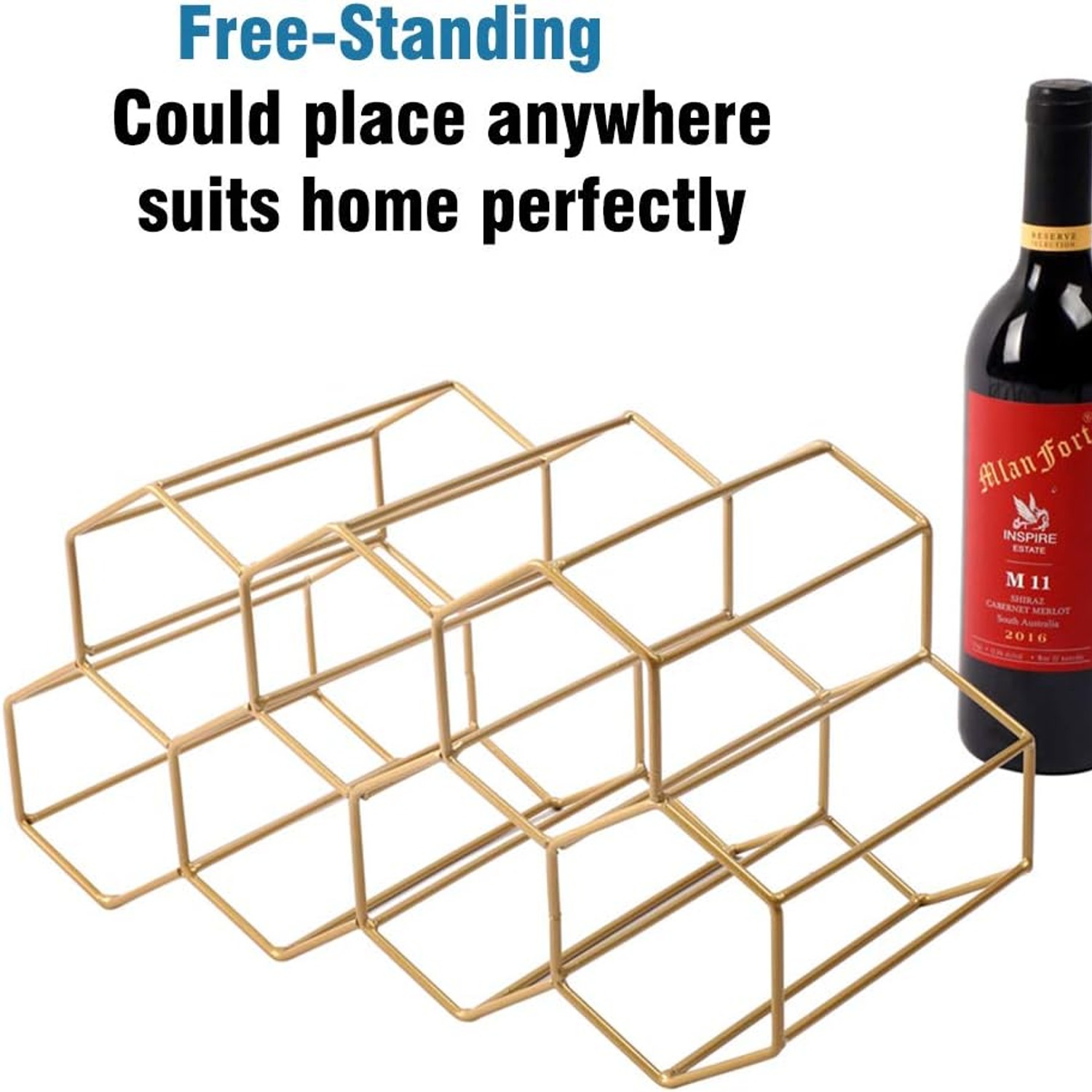
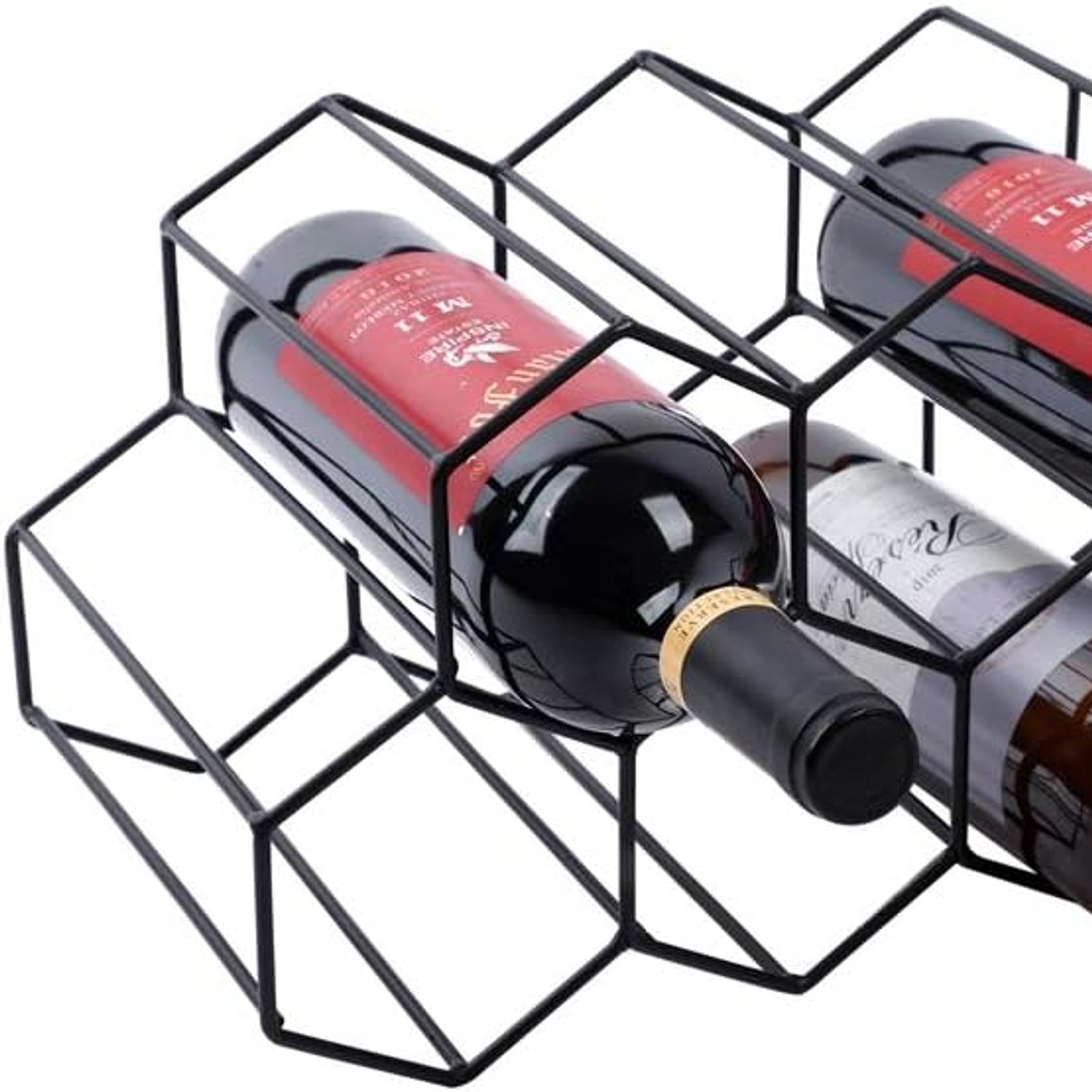
The design here is simple on purpose. A metal frame is formed into a honeycomb pattern of open cells. Each cell is roughly 10cm across, which is sized to cradle a standard wine bottle. You slide the bottle in neck first or base first, and the ring of metal holds it so it cannot roll.
Seven bottles sit in the cells. Two more rest in the channel that runs across the top of the frame. That is where the nine bottle count comes from. In practice people tend to use the top two spots for whatever is open or about to be opened, since those bottles are the easiest to grab.
The whole thing measures 36.8cm wide, 19.3cm deep and 19.3cm high. It weighs 748 grams empty. There is no assembly, which matters more than it sounds. Flat pack racks with bolts and allen keys have a habit of loosening after a few months of bottles going in and out. A single formed piece does not have that problem.
The finish is brushed gold. A brushed surface hides fingerprints and light marks far better than a mirror polish, which is handy in a kitchen where hands are rarely clean.
Who this rack suits
It suits people who drink wine but do not collect it. If you keep somewhere between a few bottles and a dozen in the house at any time, nine spots covers you with room to grow. That is most households.
It suits small kitchens. Under 20cm deep means it will sit behind a bench without crowding the working area, and it fits on open shelving where a taller rack would not. If you are hunting for the best small wine rack for bench use, the depth is the number to look at, not the width.
It suits renters. There is nothing to drill, nothing to mount, nothing to patch when you move out. You pick it up and take it with you.
It suits anyone setting up a bar area. On a cart or a sideboard it reads as part of the setup rather than as storage shoved in a corner.
Who is it not for? Serious cellarers. If you are laying bottles down for five or ten years, you need stable temperature and darkness, not a kitchen bench. Use this for your drinking stock and keep the investment bottles somewhere cool and dark.
How to choose between racks
A few things actually matter when you are comparing options.
Measure the space first. This is the step people skip and then regret. Get a tape measure out and check the width, the depth and the height clearance above. A rack that is 2cm too deep for your bench is useless no matter how good it looks. The 36.8 by 19.3 by 19.3 figures here are the ones to write down.
Count honestly. Buy for the number of bottles you normally have, not the number you imagine having. A rack that sits half empty looks sad, and one that is permanently overflowing defeats the purpose. Nine is a sensible everyday number.
Think about assembly. A no assembly rack is one less thing on the weekend list, and nothing can work loose over time. If you are comparing the best freestanding wine rack options, give preference to single piece construction.
Check the finish against your kitchen. Gold and brass tones sit well with timber, white, cream and black. They are less happy next to bright chrome and stainless steel in large amounts, though plenty of kitchens mix them deliberately. Brushed finishes are more forgiving day to day than polished ones.
Consider where it will actually live. A rack on a bench is seen constantly, so the look matters. A rack inside a cupboard only needs to fit and hold bottles. If it is going in a cupboard, the best wine rack for a cupboard is whichever one leaves the most usable shelf around it.
Getting the placement right
Wine has three enemies in a home: heat, light and vibration. None of them are hard to avoid.
Keep the rack away from the oven, the cooktop and the dishwasher. Appliance heat swings the temperature of nearby bottles up and down, and that cycling ages wine faster than steady warmth does. Avoid the top of the fridge too, since the motor runs warm and hums.
Keep it out of direct sunlight. A window that gets afternoon sun will cook bottles through the glass, and it will fade labels. Clear and light green bottles are the most vulnerable.
A quiet corner of the bench, a shelf in the pantry, a shaded sideboard or a lower cupboard are all good spots. A steady, moderate temperature beats a cold spot that fluctuates.
Looking after it
The care here is about as easy as it gets. Take the bottles out, wipe the frame with a soft damp cloth, then dry it with a towel. That is the full routine. Do it whenever you are wiping down the bench anyway and it will never build up grime.
Two things to avoid. Do not use abrasive pads or scouring powder, because they will scratch a brushed finish and leave patches that catch the light differently. Do not leave moisture sitting on the metal, especially in the cells where a damp bottle base has been resting.
If you are putting it on a delicate benchtop, stick a few small felt pads on the base. It takes two minutes and removes any chance of a scratch when you slide it across to clean.
Load bottles from the bottom cells upward. It keeps the weight low and makes the rack more settled while you are filling it. When you move it with bottles in, take them out first, or at least lift from underneath with both hands.
The short version
This is a nine bottle metal rack in a brushed gold finish, 36.8cm wide and 19.3cm deep, weighing 748 grams, with no assembly needed and a damp cloth for cleaning. It sits on a bench, a shelf, a bar cart or inside a cupboard, holds seven bottles in honeycomb cradles and two more across the top, and keeps your labels visible so you stop guessing what is open.
If your wine currently lives in three different places around the kitchen and none of them are good, this fixes it for the price of a decent bottle or two. Measure your bench, check the depth, and order it.