
The complete guide
How to Choose a Freestanding Wine Rack That Actually Fits Your Home
The problem with loose bottles
Most people do not set out to collect wine. It happens slowly. Someone brings a bottle to dinner, you buy a half case because it was cheaper that way, a bottle of fizz goes in the cupboard for an occasion that keeps not arriving. Within a year you have eight or ten bottles scattered across three rooms, standing upright in a cupboard that gets warm every time the oven runs.
That matters more than it sounds. Bottles stored standing up with natural cork slowly dry out at the seal, which lets air creep in. Bottles stored near heat age faster and less gracefully. And bottles stored in six different places mean you forget what you have, which is how a decent bottle ends up two years past its best behind the tinned tomatoes.
A freestanding rack solves a storage problem and a memory problem at the same time. Everything lies down, everything is visible, and everything is in one place.
What a 12-bottle tower actually does
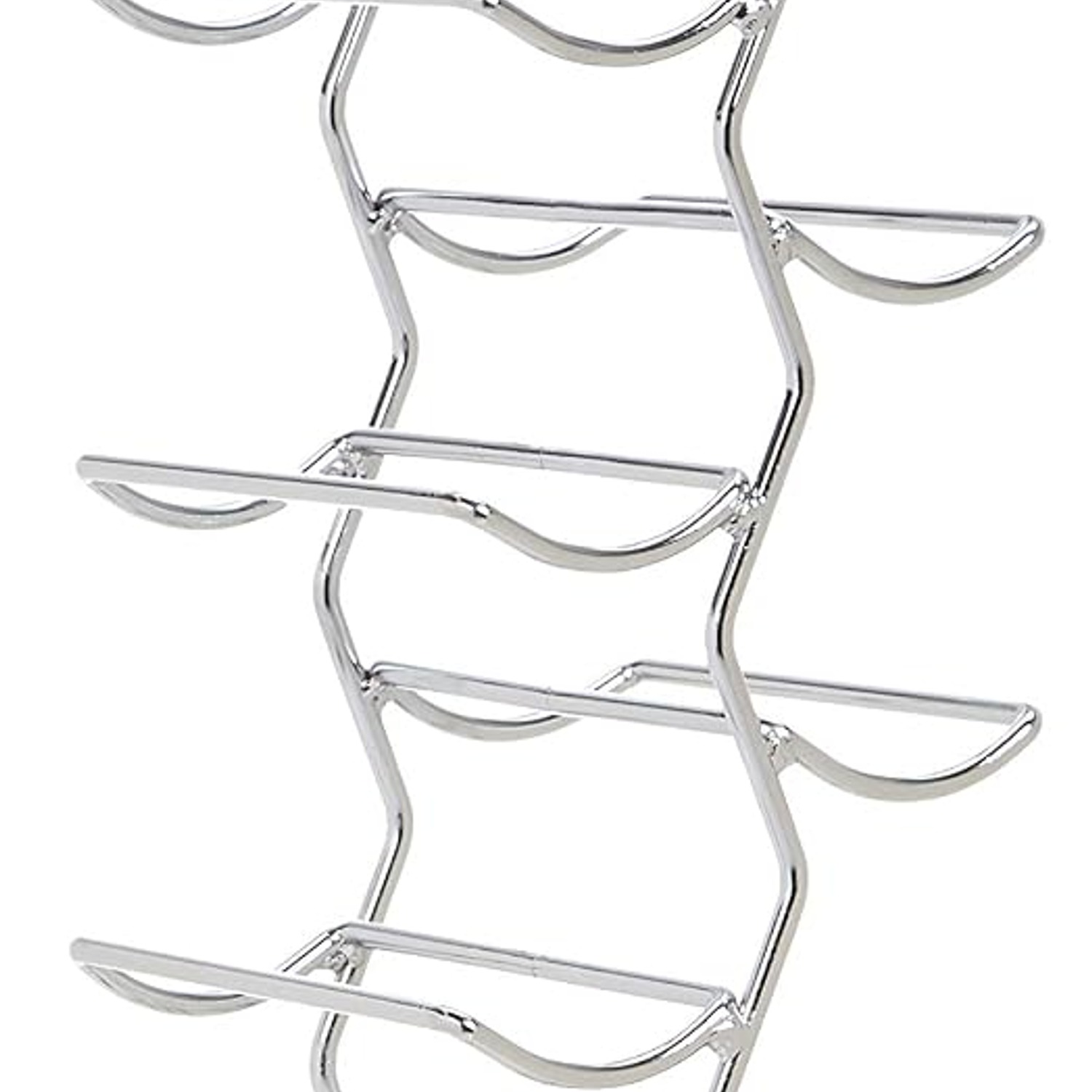
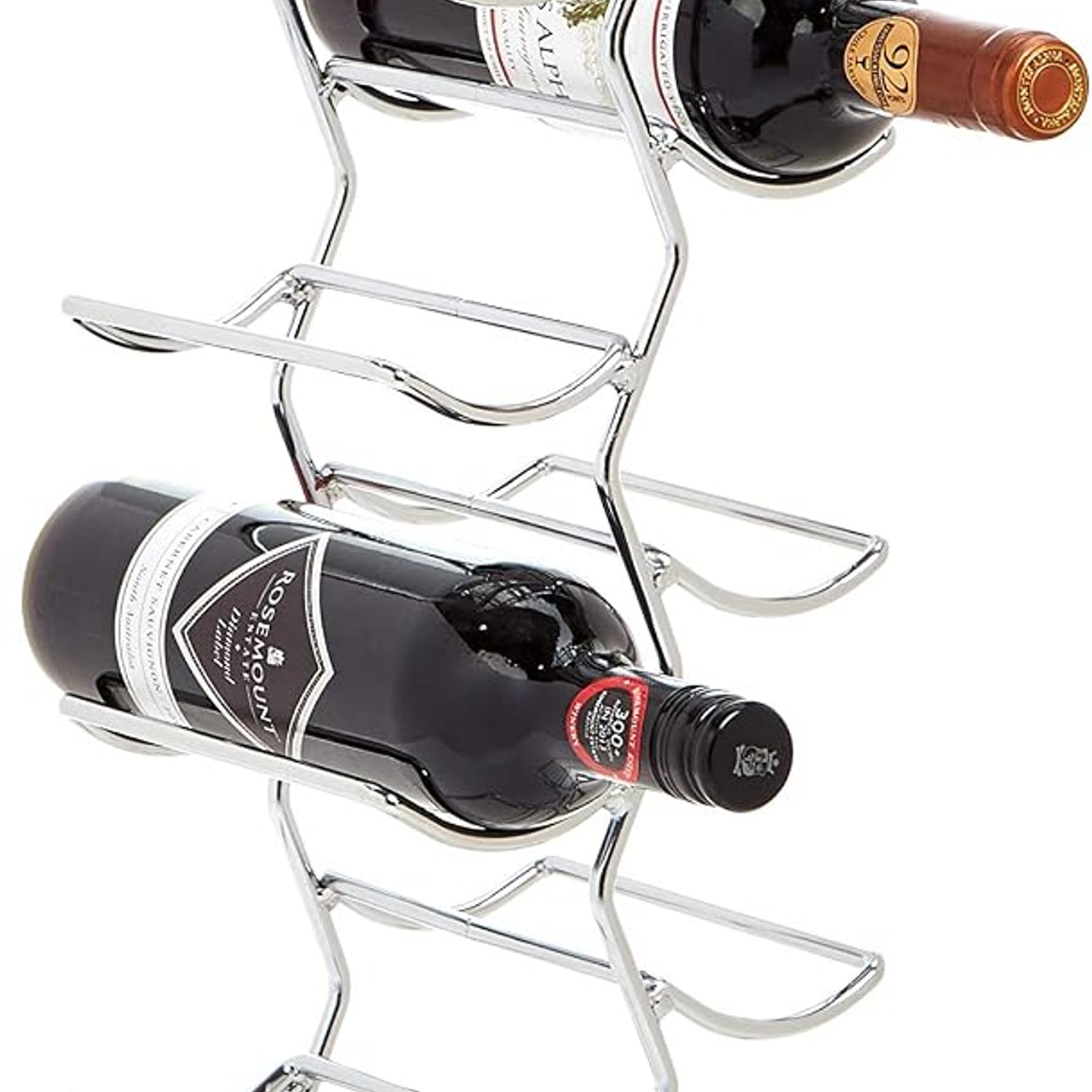
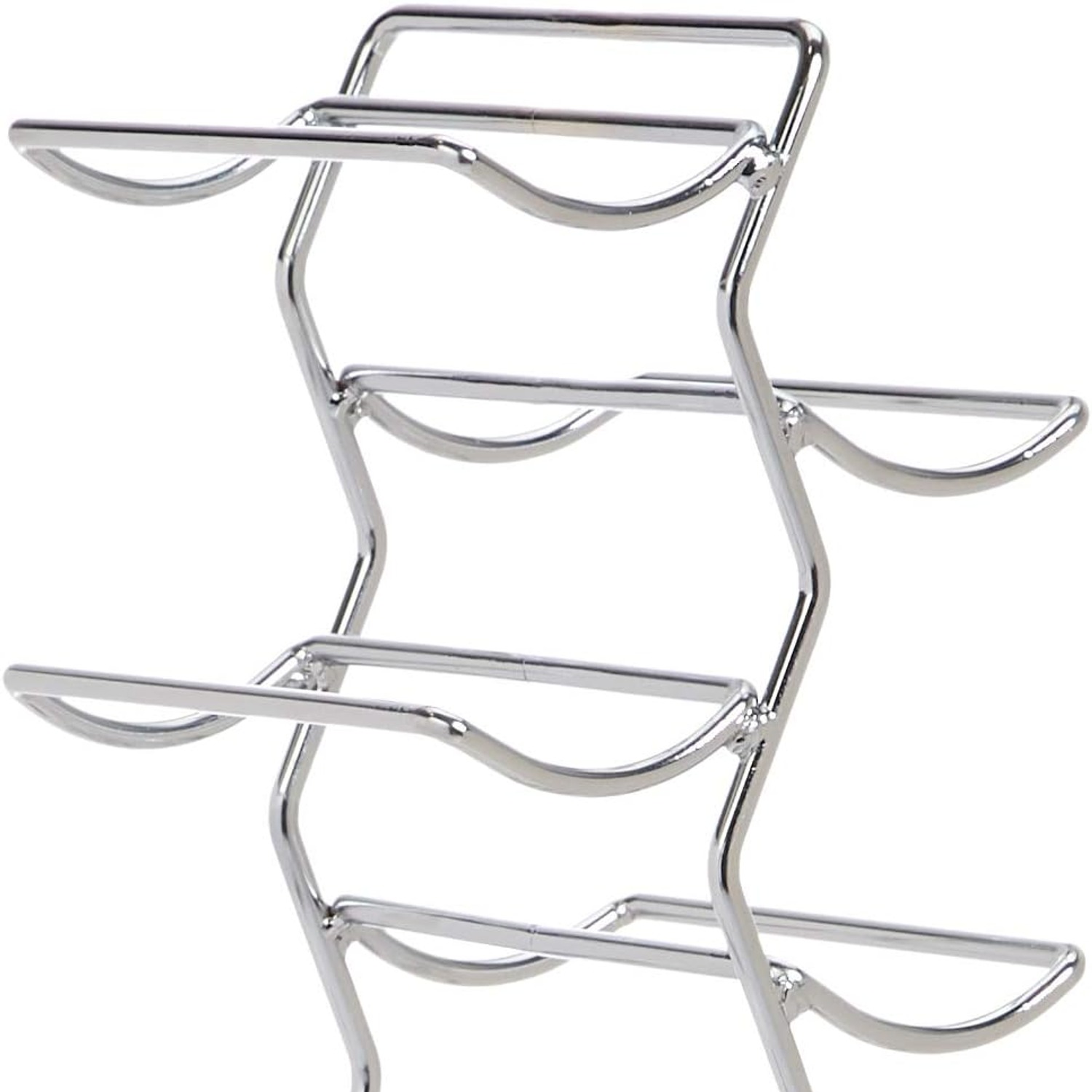
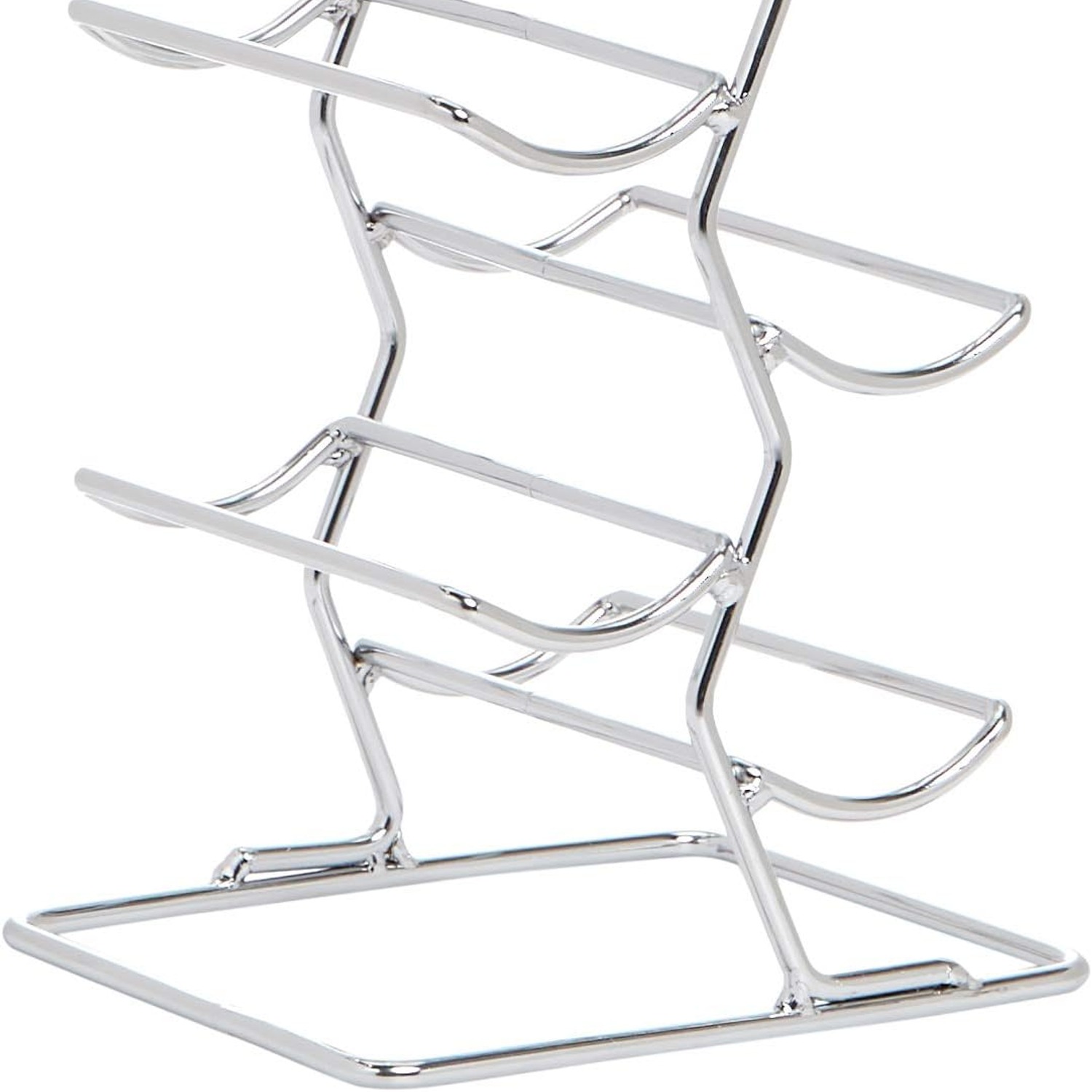
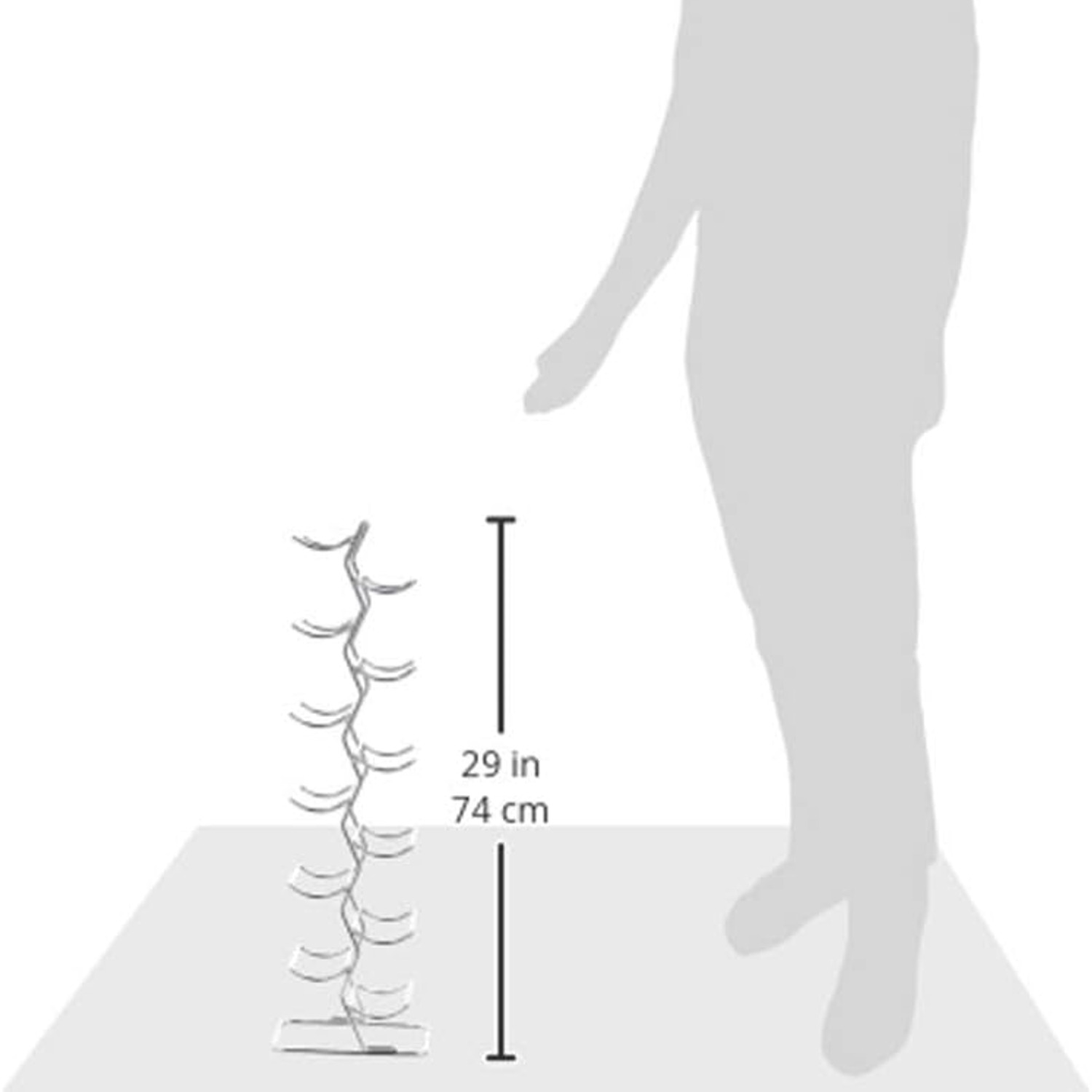
This particular rack is a tall, narrow chrome frame that holds twelve bottles on their sides. It stands 69.9cm high, which is roughly bench height, and takes up 21cm by 17cm of floor. That is smaller than most kitchen bins.
The shape is the whole idea. Instead of asking for a shelf, a cupboard or a stretch of bench, it asks for a strip of floor that was almost certainly doing nothing. The gap at the end of a cabinet run. The space between the fridge and the wall. The corner of a dining room where a chair never quite fits. A rack like this turns dead space into twelve bottles of storage.
Bottles sit horizontally in cradles. For anything sealed with real cork, that is the right orientation, because the wine stays in contact with the cork and the cork stays swollen and airtight. For screw caps it makes no difference to the seal, but it is still the neatest way to stack bottles in a small frame.
Capacity is worth thinking about honestly. Twelve bottles suits a household that buys by the half case and drinks through it over a few months. If you buy a case at a time and keep things for years, you will outgrow a twelve-bottle rack. If you keep two or three bottles on hand, you will never fill it. Twelve lands in the middle, which is why it is such a common number for the best 12 bottle wine rack designs.
Why chrome, and why it matters
Finish is not just decoration on a wine rack. It decides whether the thing blends in or sticks out for the next decade.
Chrome is bright, reflective and genuinely neutral. It does not commit to a timber tone, so it will not fight with oak floors or walnut joinery. It does not commit to a colour, so it will not clash when you repaint. Against stainless appliances it reads as a matched set. Against white cabinetry it reads as a highlight. In a darker home bar it catches whatever light is going and stops the corner feeling heavy.
The practical trade-off with any bright metal is that it shows fingerprints and water marks. The fix is simple and the care instruction for this rack says it plainly: wipe with a soft damp cloth, dry it, and keep abrasive cleaners away. Scouring powders and rough pads will scratch a plated surface and the dullness does not come back out. A minute of wiping every few weeks is all it asks.
Measuring before you buy
This is where most wine rack purchases go wrong. People buy on capacity and discover the thing does not physically fit the spot they pictured.
Take three measurements. Width of the gap, depth from wall to the front edge of whatever it sits beside, and height clearance if it is going under anything. For this rack you need 21cm of width and 17cm of depth, with 69.9cm of height clear above the floor. Add a couple of centimetres of width so you can actually slide bottles in and out without scraping knuckles on a wall.
Then look at the floor itself. A flat, hard surface is ideal. Thick carpet lets a narrow base sink unevenly, and an uneven tile or a floorboard that has lifted will put the frame slightly out of plumb. Neither is dangerous, but a loaded rack sitting dead level is a more stable rack.
Think about traffic too. The best floor standing wine rack placement is somewhere out of the main path through a room. A narrow tower in a doorway is an ankle magnet, especially for anyone carrying a plate.
Who this suits
Apartment dwellers get the most out of a shape like this. When every square metre is accounted for, going vertical in 21cm of width is the only sensible way to store a dozen bottles. It is one of the best small apartment wine rack formats for exactly that reason.
Renters do well with it too. There is nothing to mount, nothing to drill, no wall damage to patch at the end of a lease. You stand it up, you fill it, and when you move you unload it and carry it out under one arm.
It works for someone setting up a home bar who wants the bottles visible rather than hidden. Chrome and glass look good together, and twelve bottles on display do a lot more for a corner than twelve bottles in a cupboard.
It also makes a genuinely useful gift. There is no flat-pack to wrestle with, the look is neutral enough to suit almost any home, and it answers a problem the recipient has probably been quietly ignoring.
Who it does not suit: serious collectors with dozens of bottles ageing for years, who need temperature control rather than a rack. And anyone with very young children in the house should think carefully about where a tall narrow tower of glass bottles sits.
Loading it properly
Fill from the bottom up. This sounds obvious and plenty of people do the opposite because the top cradles are at a comfortable height. Keeping weight low makes the whole thing steadier, and that is worth more than saving yourself a small bend.
Push each bottle in so it seats fully in the cradle rather than perching on the lip. A bottle that is half in will rock when you take out the one next to it.
Put the bottles you are drinking soonest where you can reach them easily, and the ones you want to leave alone lower down or further back. A rack is a reminder system as much as a storage system, so the layout should reflect how you actually drink.
Keep it away from the oven, the dishwasher and any sunny window. Heat ages wine quickly and sunlight does unpleasant things to white wine in particular. A cool, shaded spot with stable temperature beats a prettier spot that bakes every evening.
Care over the long run
Chrome is low maintenance, not no maintenance. A damp cloth and a dry-off handles dust and the odd fingerprint. For a drip of spilled wine, warm water and a soft cloth, straight away, before it dries sticky.
Avoid anything abrasive, and avoid strong solvents. Plated finishes are thin by nature and neither scratches nor chemical dulling can be reversed. Keep the rack out of consistently damp rooms, because moisture sitting on metal over months is how corrosion starts.
Check it is still sitting level every so often, especially if you have moved it or if the floor has shifted. And unload before you move it. Twelve full bottles is a serious amount of weight to swing around in a frame designed to be carried empty.
The short version
A twelve-bottle chrome tower is a simple solution to a common mess. It stands 69.9cm tall in 21cm of floor width, holds a dozen wine or champagne bottles lying down the way corked wine should be stored, needs no assembly, and wipes clean with a damp cloth.
Measure your gap first. Stand it somewhere cool and out of the walkway. Load from the bottom. Wipe it occasionally and skip the scouring pad. Do that and the rack will quietly do its job for years, which is really all you want from wine bottle storage.