
The complete guide
How to Choose a Foldable Wooden Wine Rack for a Small Kitchen
The problem with most wine racks
Wine racks have a habit of taking up more room than the wine does. You buy one to tidy up the bottles cluttering the bench, and six months later the rack itself is the permanent clutter: half empty, slightly in the way, impossible to move without unloading it first.
That is the gap a foldable wooden wine rack fills. It does the job when you have bottles to store, and it disappears when you do not. For anyone in a flat, a small terrace house, a caravan or a share kitchen, that flexibility matters more than capacity. Ten bottles is plenty for most households. Ten bottles plus a rack you can fold away is better.
How this one works
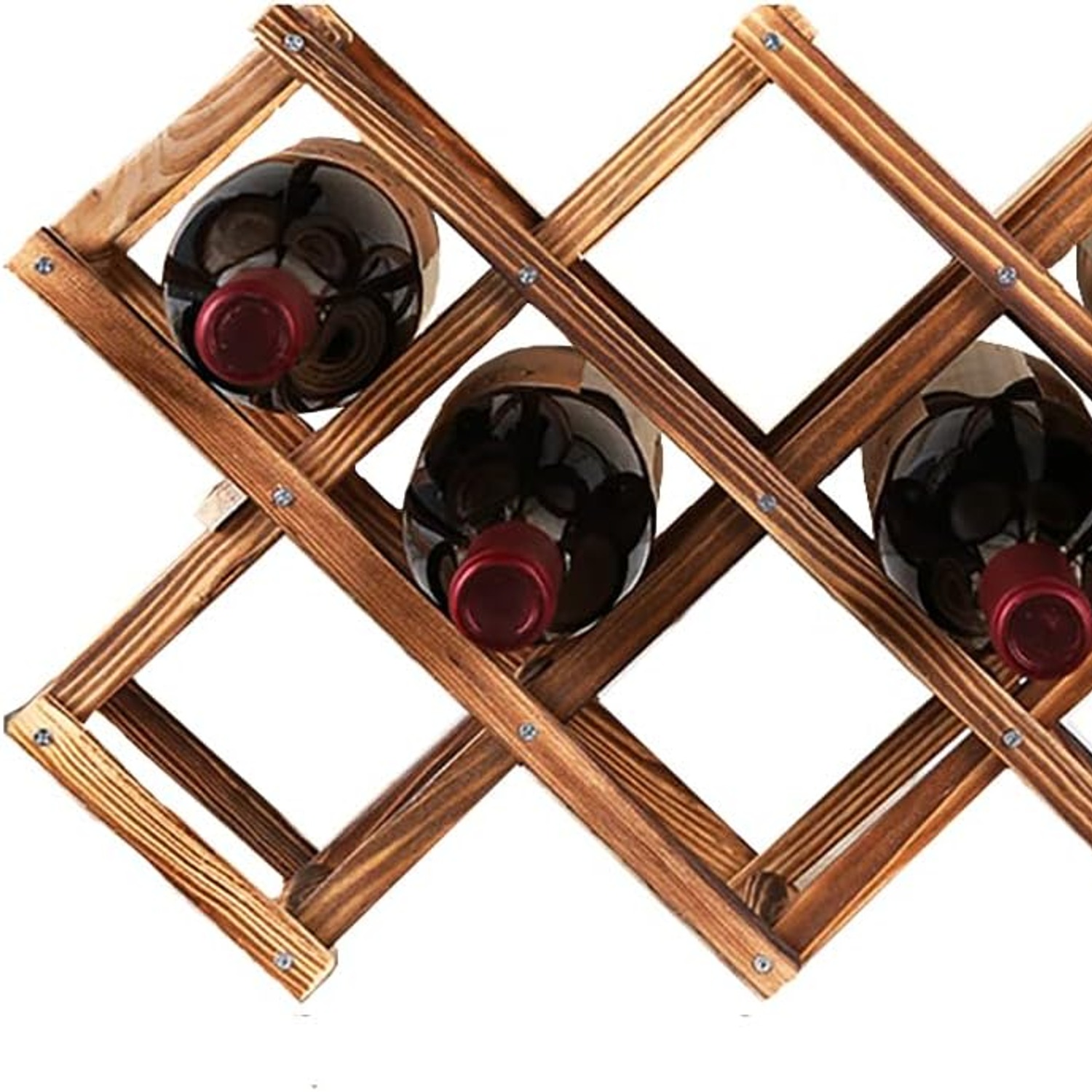
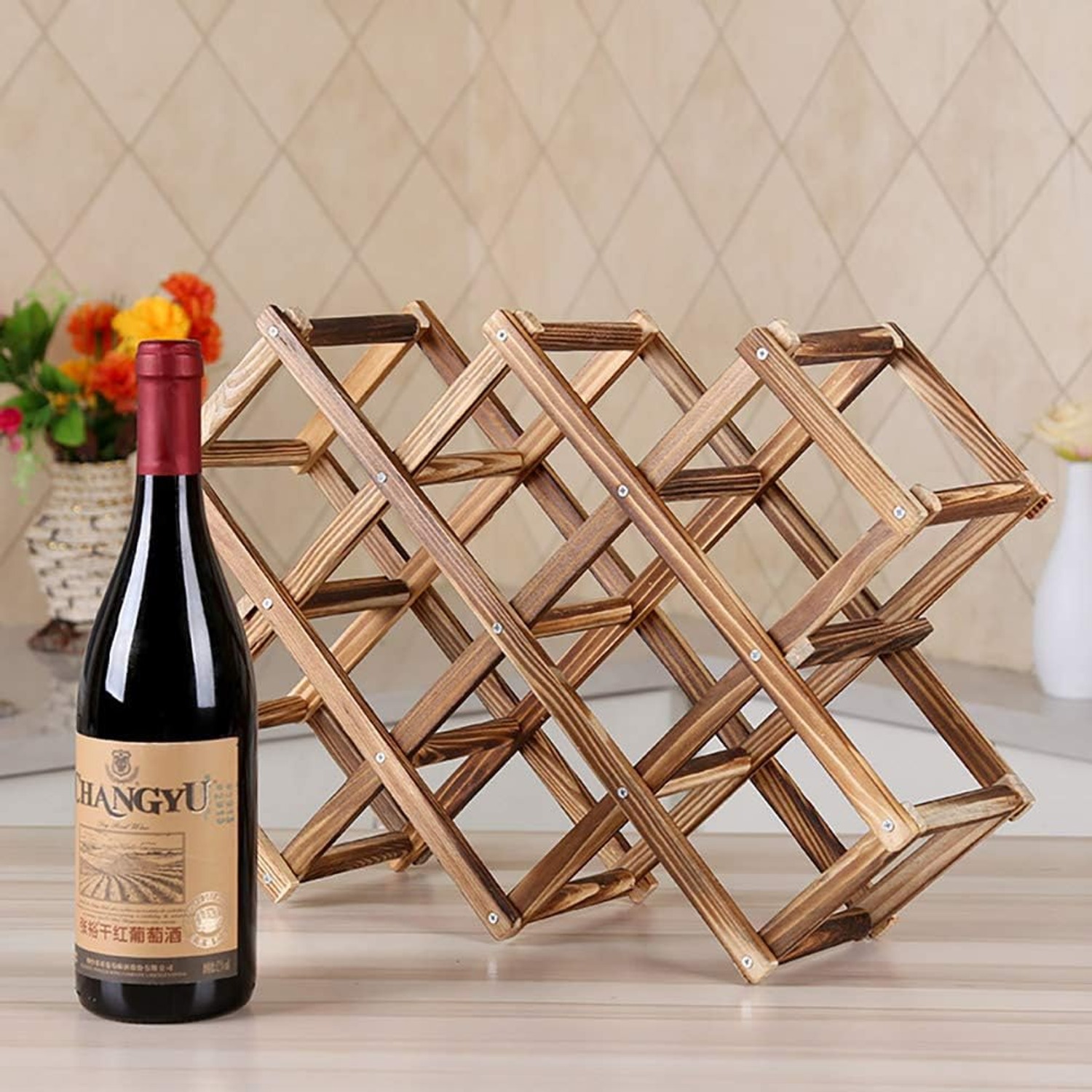
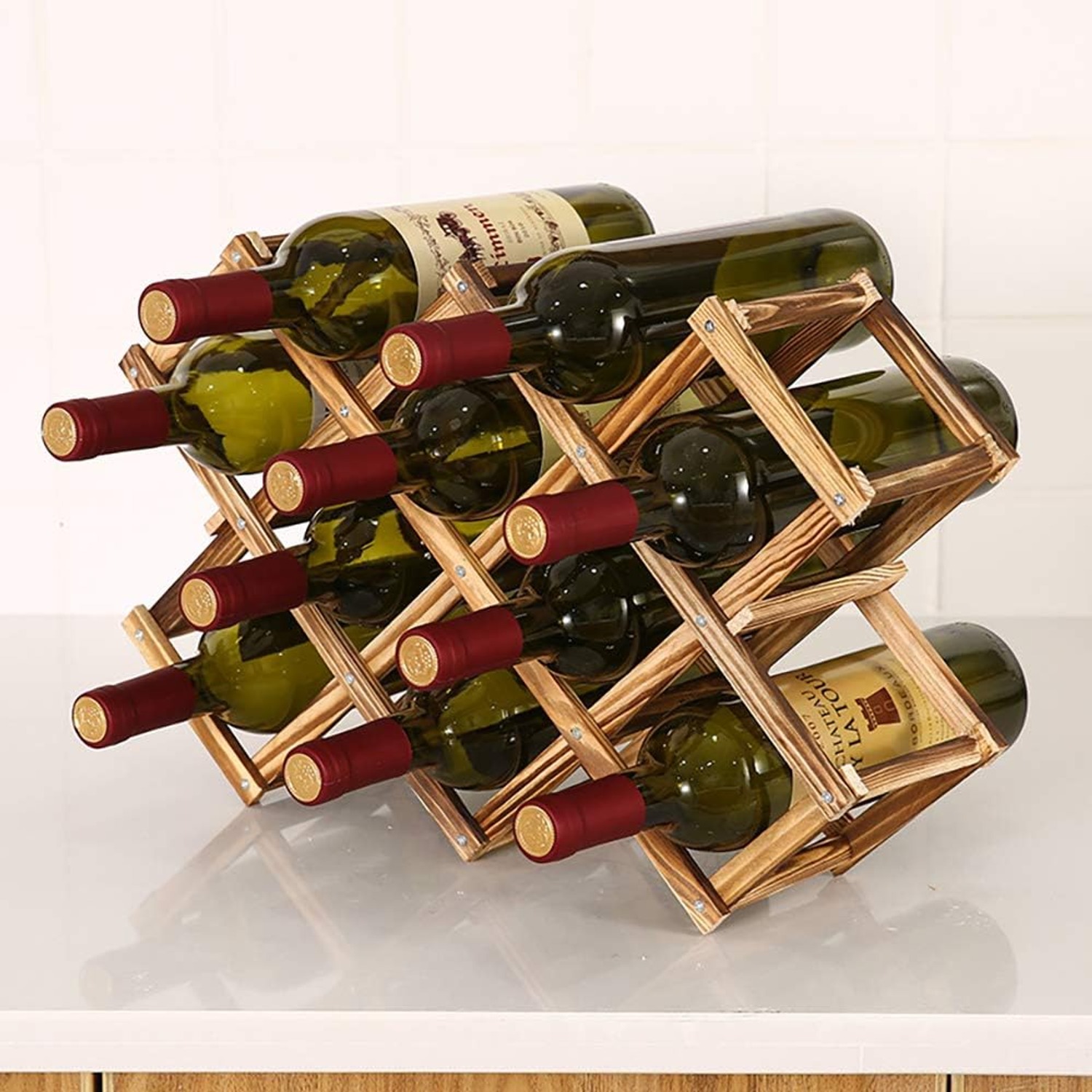
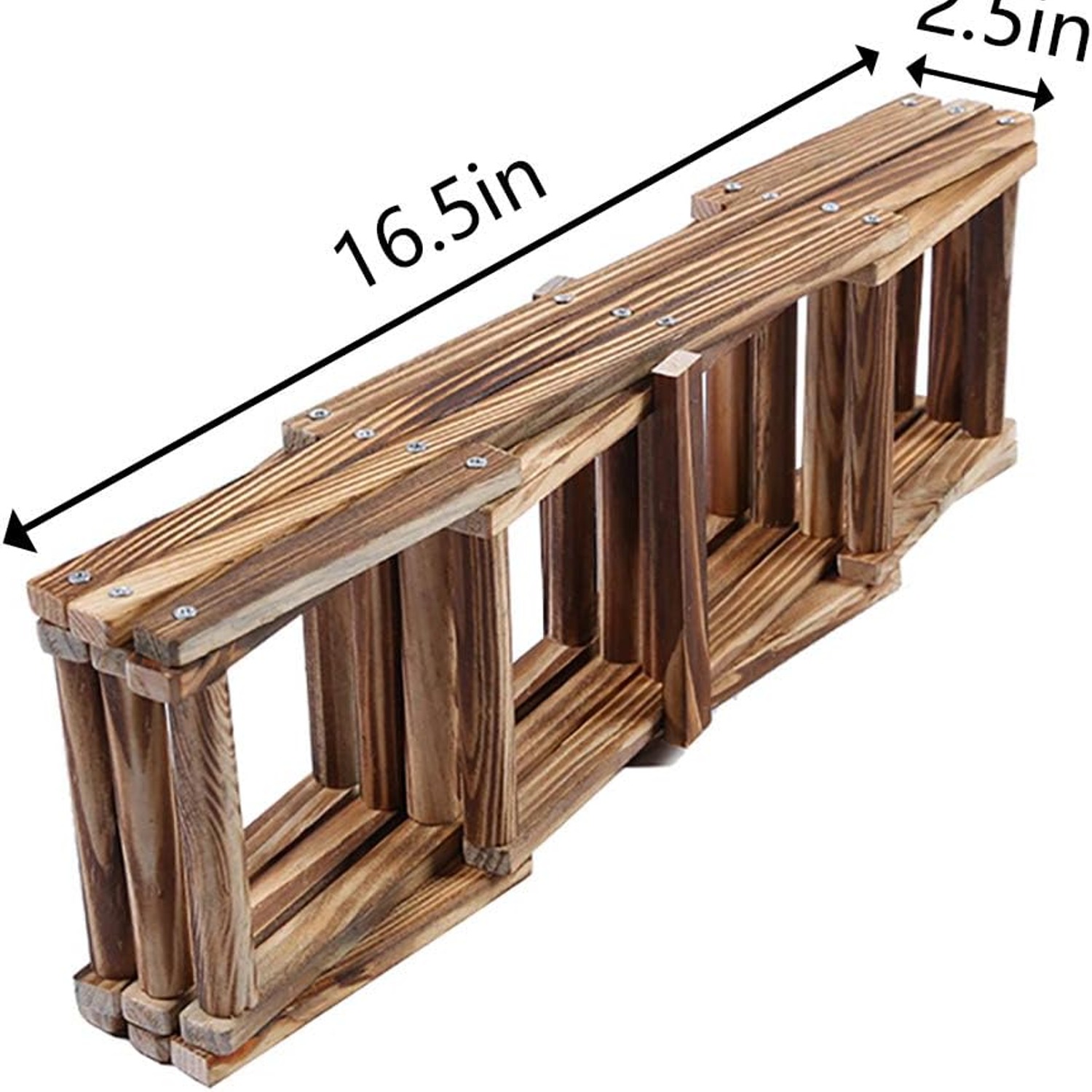
The rack is made of wood, finished brown with a brushed surface. It arrives folded flat. You open it out, stand it on a level bench or shelf, and load bottles into the slots. There is no assembly stage, no hardware bag and no diagram to puzzle over. That sounds like a small thing until you have spent an evening with an allen key and a sheet of symbols.
Bottles sit horizontally. This is the traditional way to keep corked wine, and the reason is simple. Lying flat, the wine stays in contact with the cork. A wet cork swells slightly and keeps its seal, so less air sneaks in. Stand a corked bottle upright for a long stretch and the cork dries, shrinks and lets the wine oxidise sooner. If you drink everything within a week it barely matters. If you buy by the case and work through it slowly, it matters a lot.
Horizontal storage also stacks better. Bottles nest against each other instead of needing individual upright slots, which is how a rack this size gets to ten bottles without sprawling across the whole bench.
The numbers you need before you buy
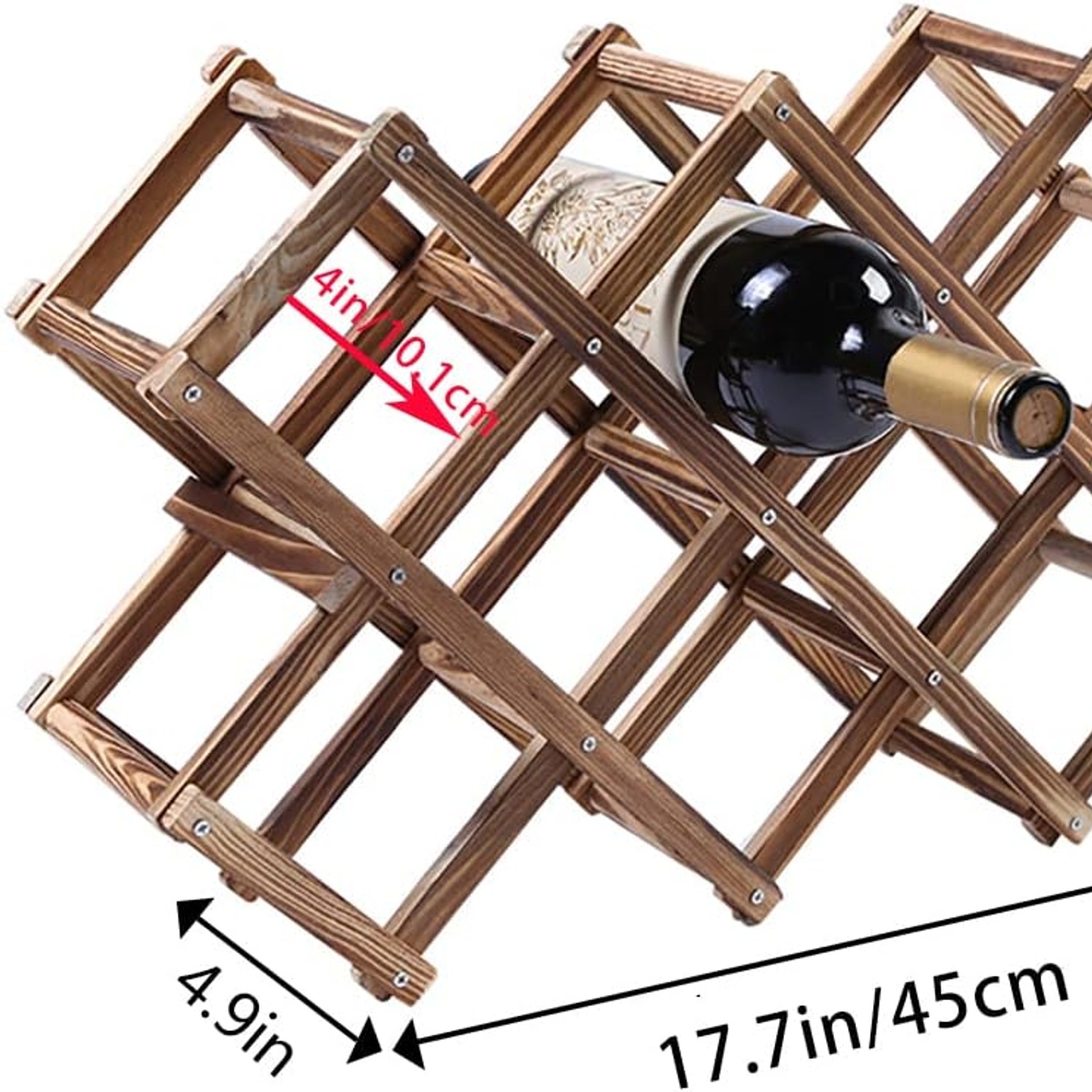
The listed product dimensions are 12.7 cm deep by 30.5 cm wide by 44.5 cm high, and the listing gives a separate size reading of 12.2 x 17.7 x 4.9 inches. The rack weighs 540 grams.
Take two measurements at home before you order. First, the depth of your bench or shelf, because a rack that overhangs the front edge will get knocked. Second, the vertical clearance if you are placing it under an overhead cupboard or a floating shelf. People get caught by the second one more often than the first.
If your bench is shallow, a sideboard, a bar cart or the top of a low bookcase can be a better home. The listing covers table top and floor stand mounting, so a dry corner of the floor is also an option if you have nowhere else.
Who it suits
This rack is a good fit if you keep a modest, rotating stash rather than a cellar. Think a case of everyday red, a few whites for the fridge rotation and a nicer bottle saved for a birthday. It is the kind of countertop wine storage that handles the bottles you are actually going to drink this season.
It also suits people who move house often or live somewhere temporary. Fold it, put it in a bag, unfold it in the new kitchen. No disassembly, no lost screws.
Venues get value from the folding design too. A bar can run several racks on a busy Friday and store them flat on Monday. The same goes for hotels and restaurants where storage space behind the scenes is always short.
Where it is less suitable: long term cellaring of valuable wine. Nothing about a timber bench rack controls temperature or humidity, and a kitchen swings between both. For bottles you plan to hold for years, you want a cool, dark, stable space, and ideally a dedicated cellar or wine fridge.
Choosing between rack styles
A few things separate one rack from another once you start comparing.
Capacity is the obvious one, but it is worth thinking about honestly. A twenty bottle rack sounds generous until you realise you have never owned twenty bottles at once, and now you have a mostly empty structure on the bench. Buying for the number of bottles you genuinely keep is usually the better call.
Footprint matters more than capacity in a small kitchen. Measure the space first, then shop. A narrow, taller rack often works better against a wall than a wide, shallow one.
Material changes both the look and the care routine. Timber is warm, quiet and forgiving of knocks, and it ages into a kitchen rather than standing apart from it. Metal racks are usually slimmer but can rattle and scratch benches. Plastic is cheap but tends to look it.
Portability is the point of difference here. A fixed rack is a piece of furniture. A folding wine rack is a tool you get out when you need it. If your kitchen doubles as a workspace, a homework table or a place the dog sleeps under, being able to clear the bench in ten seconds is genuinely useful.
Finally, check whether assembly is required. Flat pack racks can arrive with warped parts or missing fasteners, and assembly introduces joints that loosen over time. A rack that unfolds has fewer ways to go wrong.
Looking after it
Care here is refreshingly simple. Wipe the timber with a dry cloth. If something sticky lands on it, a barely damp cloth will lift it, but dry the wood straight afterwards. Timber and standing water do not get along.
Skip the harsh cleaners, bleach sprays and scouring pads. They can strip or dull the brushed finish. You also want to keep the rack out of direct sun, away from the oven and clear of the dishwasher steam vent, since repeated heat cycles are hard on both wood and wine.
Load and unload gently. Slide bottles in rather than dropping them, and always fold the rack empty. When you pack it away, choose a dry cupboard rather than a damp garage or an outdoor shed.
One habit worth building: rotate your bottles. Put new arrivals at the back and bring older ones forward, the same way you would with tins in the pantry. It stops a bottle sitting forgotten at the far end for two years.
Gifting it
This makes an easy gift, which is not something you can say about most homewares. It needs no assembly, it is light at 540 grams, and it folds flat so it wraps and posts without fuss. Add a bottle in the first slot and you have a complete housewarming present. It works equally well for someone who has just moved into their first flat and for the friend who always hosts.
The short version
If you want somewhere sensible to keep ten bottles without surrendering your bench permanently, this foldable wooden wine rack covers it. Solid wood, brushed brown finish, horizontal slots to keep corks moist, no assembly, and a frame that folds flat when you are done.
Check your clearance against the 44.5 cm height and your bench depth against the 12.7 cm depth, keep it out of the sun, wipe it with a dry cloth, and it will quietly do its job for years. For everyday drinking wine in a kitchen that does not have room to spare, that is exactly the right amount of rack.