
The complete guide
How to Choose and Fit an Under Cabinet Stemware Rack
The problem with storing wine glasses
Wine glasses are awkward. They are tall, they are fragile, and they refuse to stack. Put them in a cupboard and you lose a whole shelf to a handful of glasses standing in a loose huddle. Leave them on the bench and they collect dust, get knocked over, and eat into the space you actually need for cooking. Put them in a box in the garage and you stop using them altogether, which rather defeats the point of owning nice glassware.
Most of us end up with a compromise that nobody likes. The everyday tumblers get the convenient shelf. The stemware gets shoved to the back, behind the cereal bowls, where retrieving one glass means moving four other things first. That friction is why the good glasses only come out at Christmas.
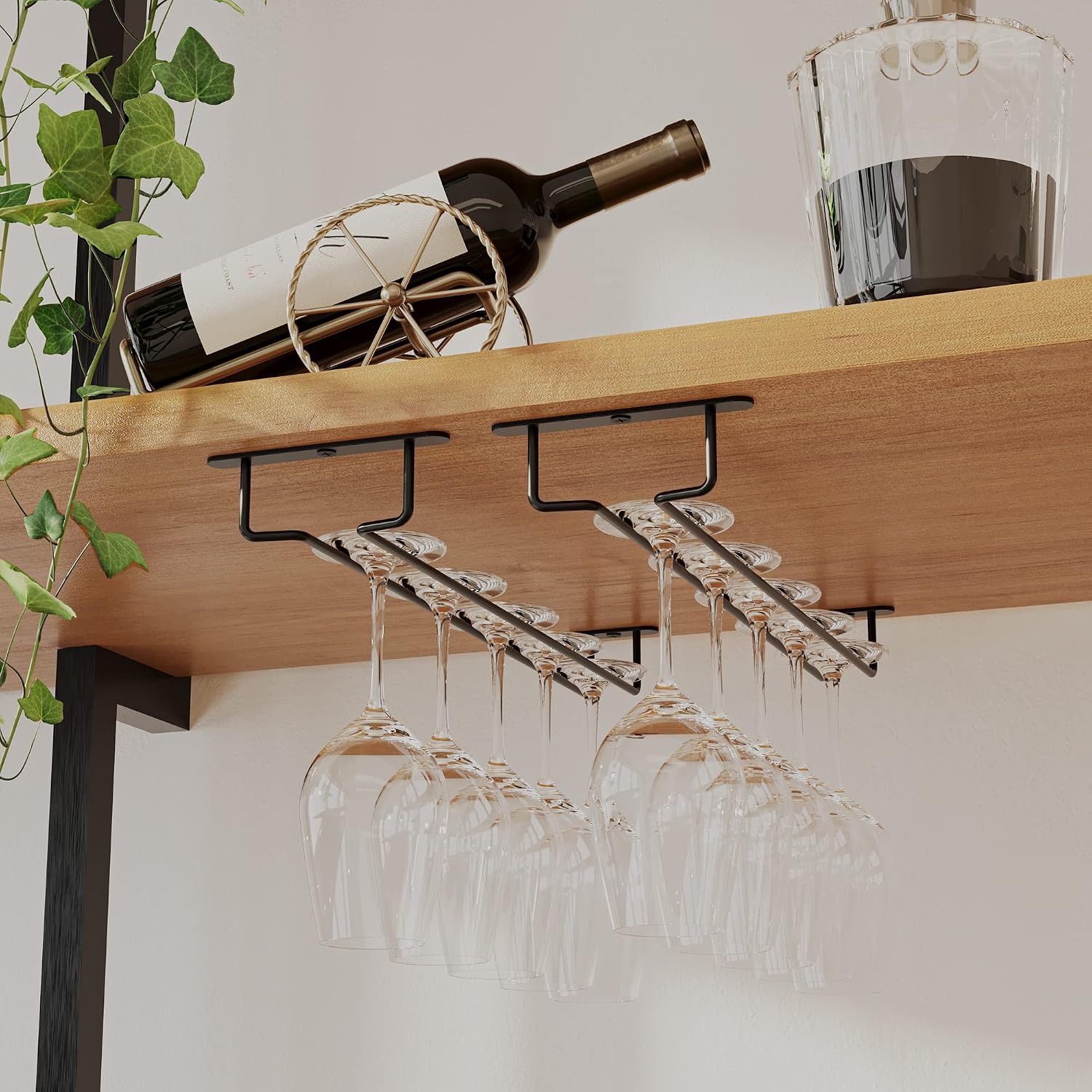
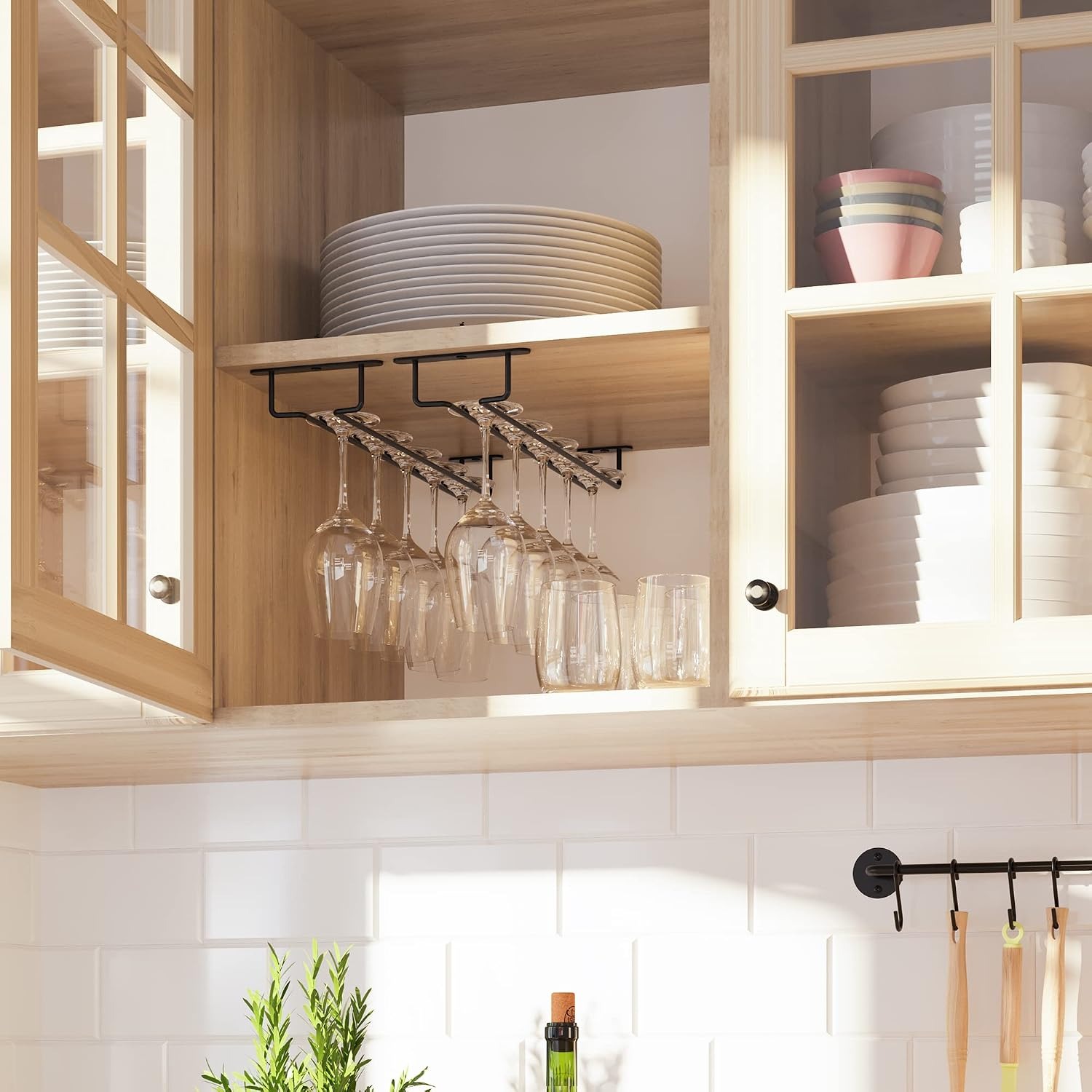
An under cabinet glass holder fixes the problem by using space that was never doing anything. The strip of air between your wall cabinets and your bench top is dead zone. Hang a rack there and your glasses live in plain sight, upside down, out of the dust, and within arm's reach of the bench where you pour.
How a hanging stemware rack works
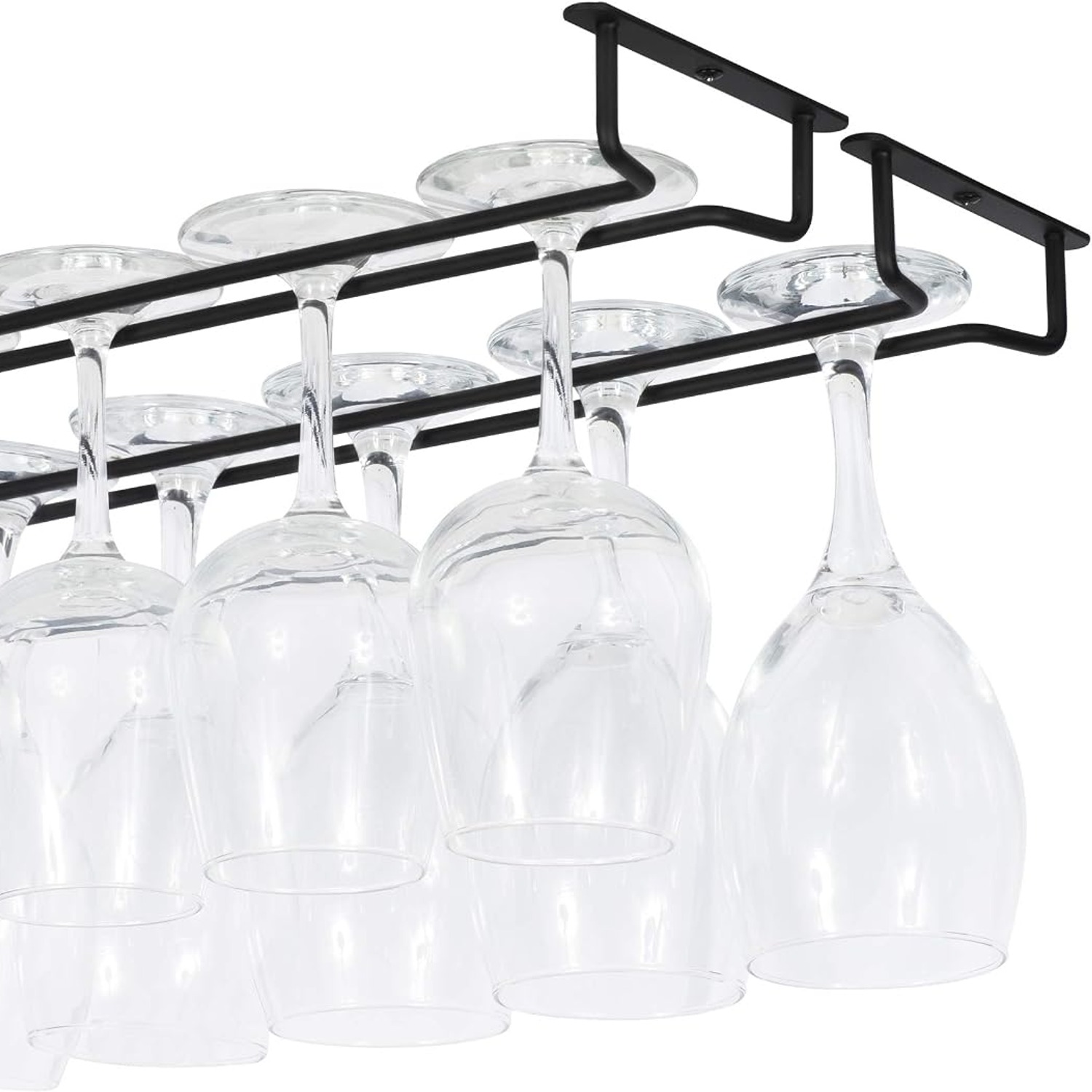
The mechanics are simple. The rack screws to the underside of a cabinet, shelf or overhang. It has rows of parallel slots. You slide a glass in so the stem sits in the slot and the base of the glass sits above the rails, which stops it dropping through. The bowl hangs free below.
That orientation does three useful things at once. Dust lands on the foot of the glass rather than inside the bowl, so glasses stay cleaner between uses. Any residual water drains out instead of pooling, which is why these racks double neatly as a glass drying rack. And because the glasses hang separately, they never clink against each other in a cupboard.
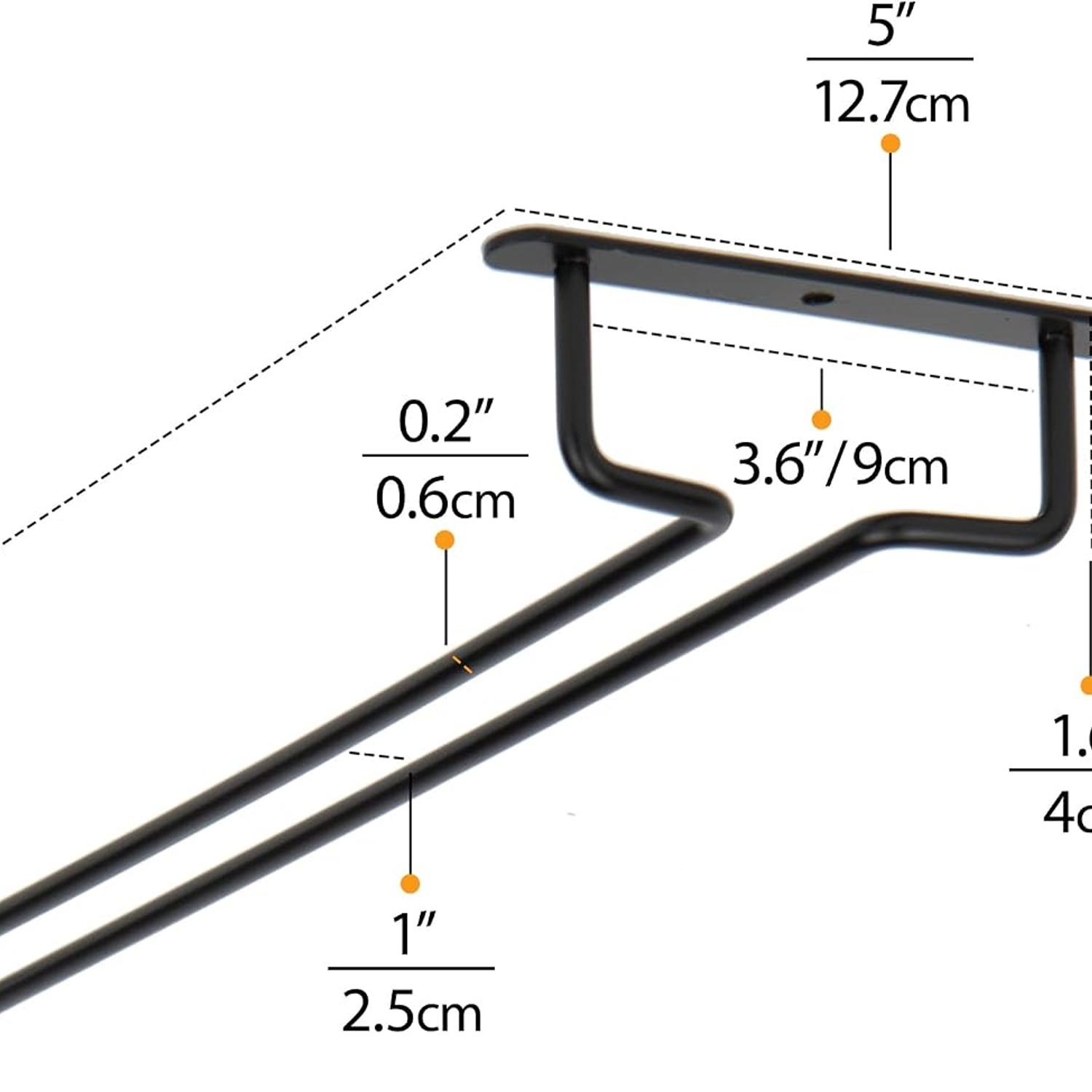
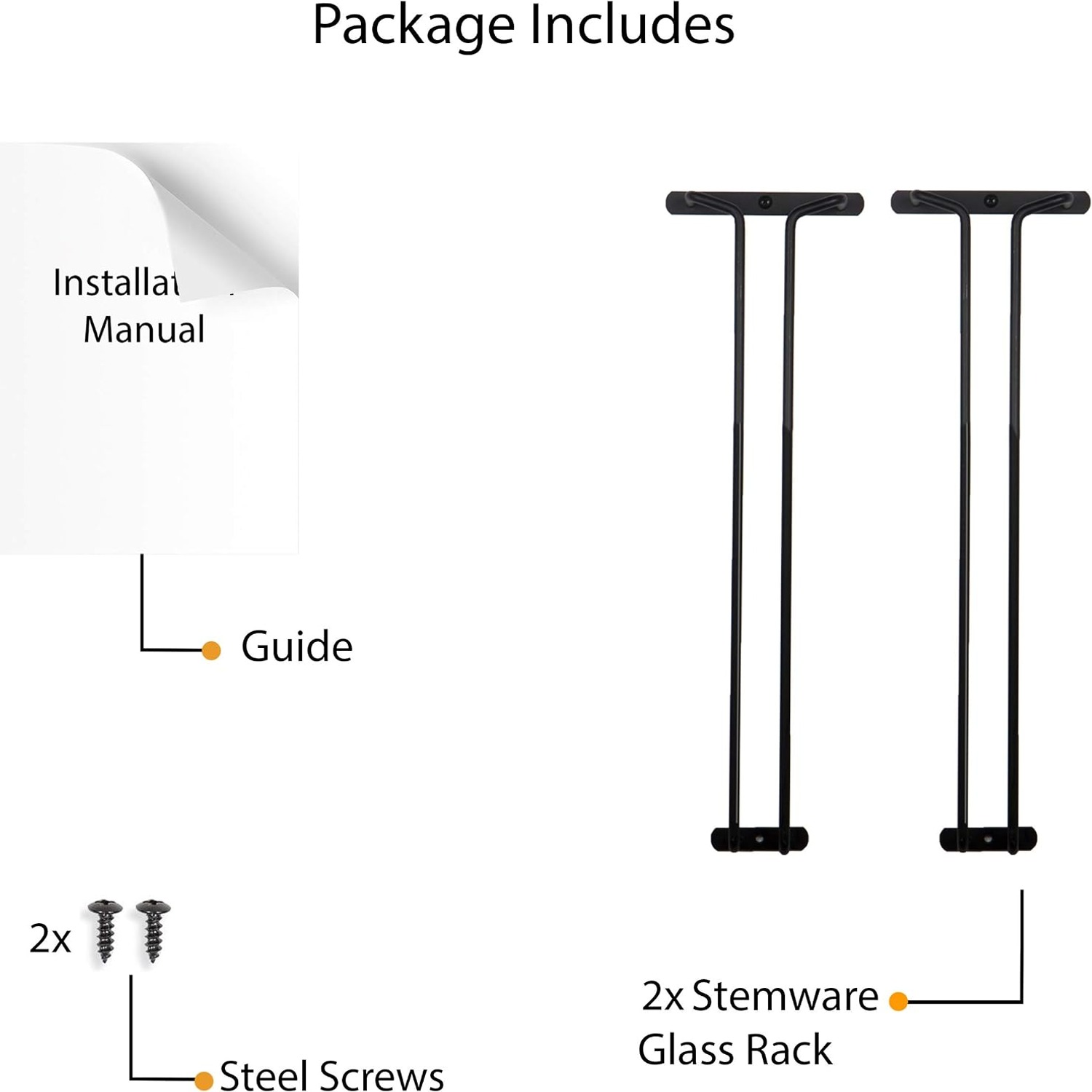
This particular model is a set of two racks, each with two rows. Each rack measures 43.2 cm wide and 12.7 cm deep, standing 4.1 cm high. The finish is painted black and rust resistant, which is a sensible combination for a space that sees steam from the kettle and splashes from the sink. The listed shelf weight capacity is 5 pounds per rack, and each rack itself weighs about 0.5 pounds.
Who this suits
Small kitchens benefit most. When bench space is tight, every item you can move off the counter and onto a wall is a win. A two-pack gives you a decent amount of storage without claiming any new floor or bench area.
People who entertain regularly get the convenience angle. When friends arrive unannounced, glasses that are already hanging and ready beat glasses buried behind the mixing bowls. There is a real difference between storage that is tidy and storage that is usable.
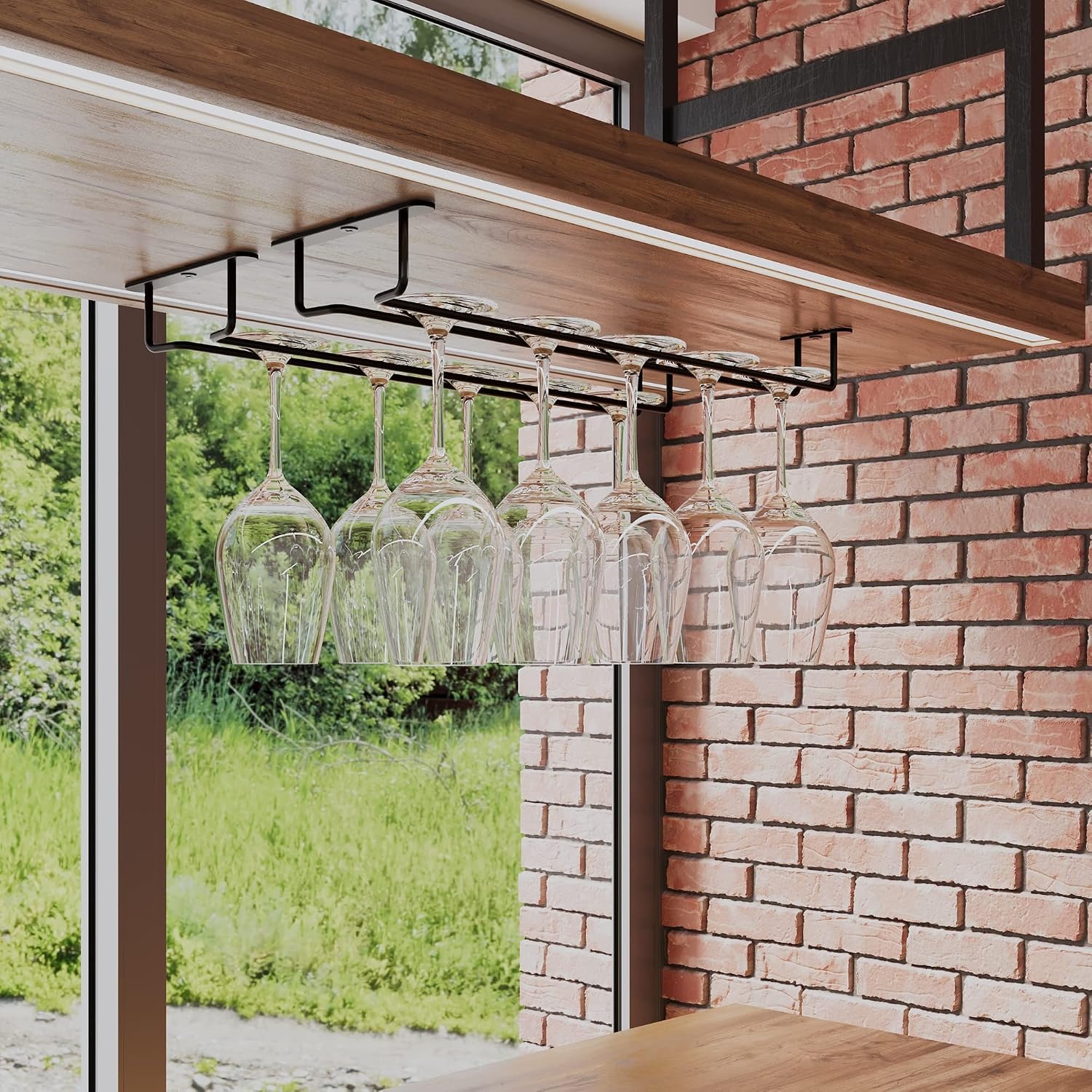
It also works for anyone building a home bar. Mount a rack under a buffet shelf, a hutch, a credenza or a bar cart's upper tier, and a plain sideboard starts to look like a proper drinks station. Because the racks are sold in pairs, you can put one in the kitchen and one wherever the drinks actually get poured.
Renters should think about it too, with a caveat. Fitting requires screws, so there will be small holes. Under a cabinet, those holes are out of sight and simple to fill when you move out. Still worth a glance at your lease.
Working out whether it fits
Before anything else, measure three things.
First, the width of your available run. Each rack needs 43.2 cm of continuous, flat underside. If your cabinet has a decorative lip, a light valance, or a rail along the front edge, measure the flat area behind it.
Second, the depth. At 12.7 cm deep, the rack will not project much, but check it does not sit so far forward that hanging glasses are in the path of anyone chopping at the bench.
Third, and most importantly, the vertical clearance. Measure from the underside of the cabinet down to the bench. Then measure your tallest glass from foot to rim. Add two or three centimetres so you can lift a glass clear of the slot without catching the rim on the bench. Champagne flutes are usually the tallest thing in the collection, so measure those rather than a standard wine glass.
If the clearance is short, you have options. Mount the racks under a shelf rather than a cabinet, where there is more open air below. Or hang only your shorter glasses on the rack and keep the flutes elsewhere.
Fitting it properly
The racks arrive pre-mounted in form, with the hardware supplied, so the work is in the positioning rather than any construction.
Start by holding a rack up where you want it and marking the screw positions in pencil. A small spirit level, or even a level app on your phone, is worth the thirty seconds. A rack that sits slightly off-level is obvious once glasses are hanging from it, because the stems will all lean the same way.
Check what you are screwing into. The underside of a solid timber or quality plywood cabinet base will hold screws well. Thin particleboard is less reliable. If the base feels flimsy, use shorter screws so you do not punch through into the shelf above, or add a strip of timber inside the cabinet as backing.
Drill small pilot holes first. This reduces the chance of splitting the material and makes the screws drive straight. Then fit the rack, snug the screws, and test it empty by giving it a gentle tug before you load any glassware on it.
If you are fitting both racks in a row, mark out the full run before you drill anything. Even spacing between the two is what makes the finished result look planned rather than improvised.
Living with it day to day
Load sensibly. The 5 pound capacity per rack is the number to work from, not the number of empty slots. Heavy crystal adds up faster than you expect, so if your glasses are substantial, use fewer of them per rack and spread the rest across both.
Slide glasses in and out rather than forcing them. The contact point is the stem, which is the strongest part of a wine glass, but the stem is also the bit that snaps if you twist it. A smooth, straight motion is all that is needed.
Cleaning is quick. Wipe the rack with a damp cloth when you clean your cabinet fronts, and dry it rather than letting it air dry. Keep abrasive pads and strong solvents away from the painted surface. Grit sitting in the slots is the main thing that causes scratches on stems over time, so an occasional wipe through the slots helps.
Every few months, run a screwdriver over the fixings. Kitchens expand and contract with heat and humidity, and fasteners loosen a fraction over a year. A quarter turn now and then keeps everything tight.
The short version
If you own wine glasses you rarely use because they are inconvenient to reach, this is the fix. Two racks, two rows each, black painted and rust resistant, 43.2 cm wide and slim enough to tuck under most overhangs. Hardware comes in the box and installation takes an afternoon at most.
Measure your clearance before you order, because that is the one dimension that decides whether it works. Mind the 5 pound capacity. Then enjoy a kitchen where the good glasses are the easy ones to grab.