
The complete guide
How to Choose a Countertop Wine Rack That Actually Fits Your Kitchen
The problem with keeping wine in a cupboard
Wine has a habit of ending up wherever there is a gap. A couple of bottles behind the cereal, one standing on the fridge, another lying on its side in the pantry that rolls to the back every time the door swings. You forget what you have. You knock a bottle over reaching for something else. And when guests arrive, you are digging through a cupboard instead of just picking one.
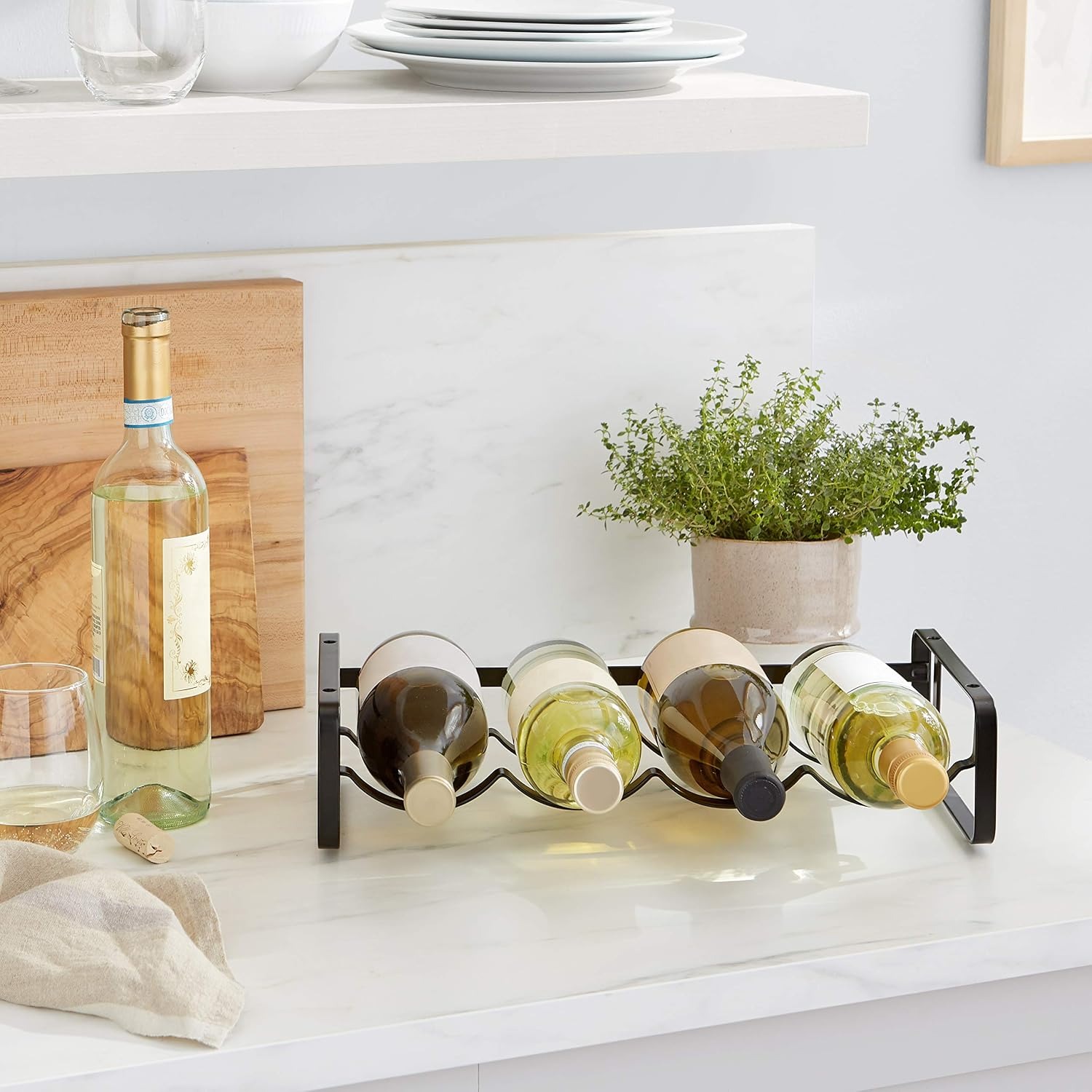
A small countertop rack fixes that in about ten seconds. Four bottles, out in the open, each in its own spot. You can see the labels, so you stop buying duplicates of the one you did not like. You can grab one without moving anything. And the bench stops collecting stray bottles because they now have somewhere to go.
That is the whole argument for a bench rack. It is not a cellar, and it is not pretending to be. It is a landing spot for the bottles you are actually going to drink in the next month or two.
How a stackable wine rack works
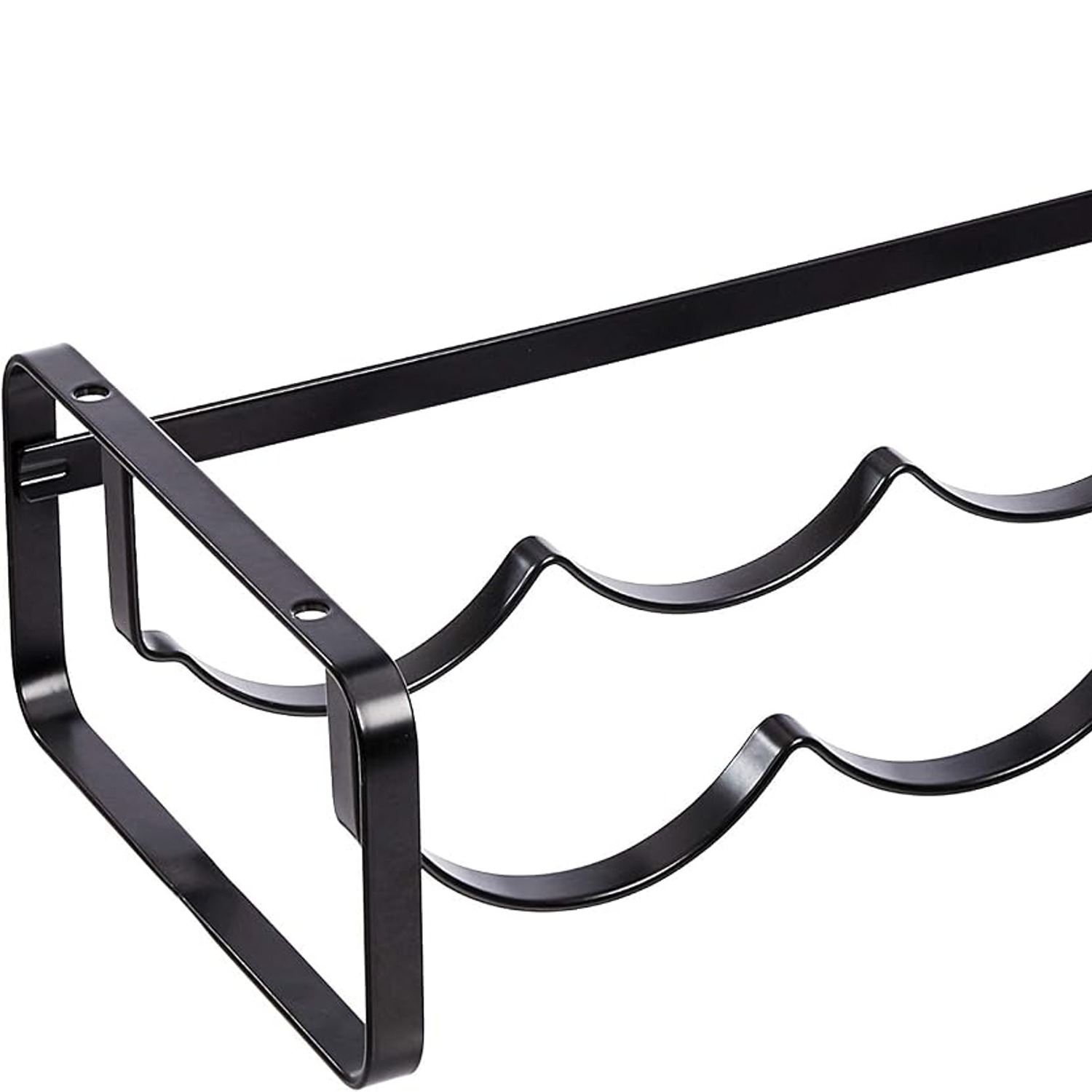
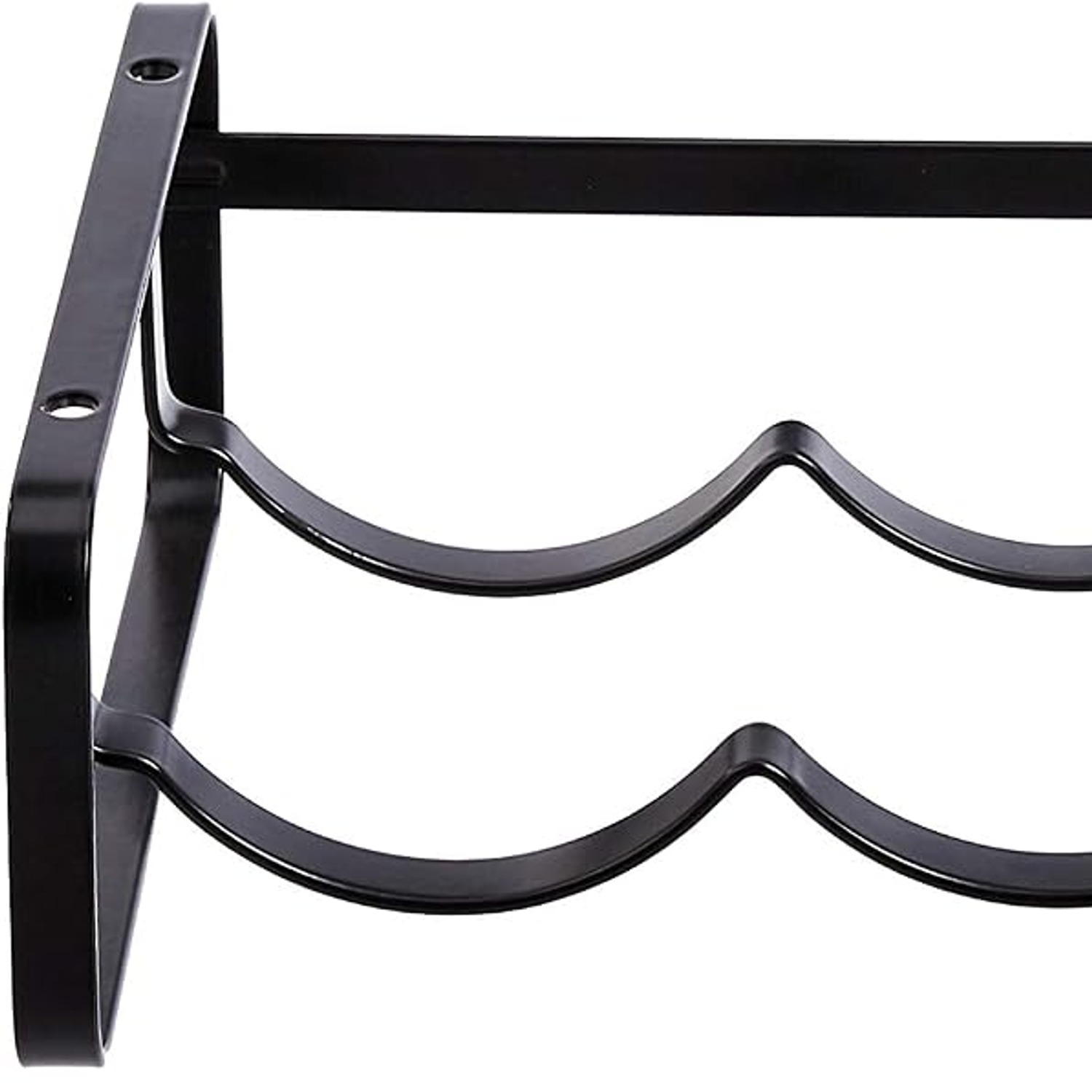
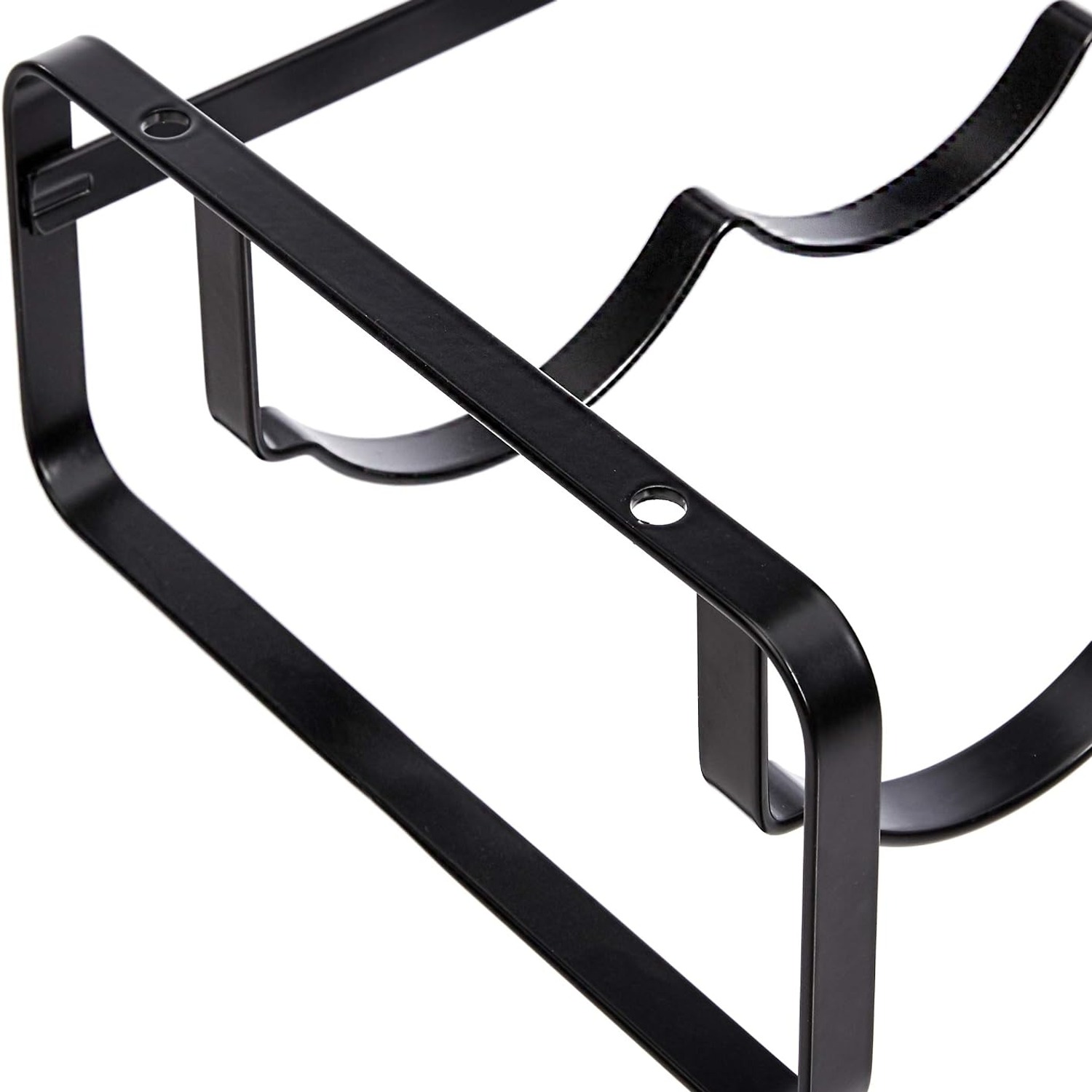
The design here is a wave. Instead of flat bars, the steel is pressed into shallow dips, and each dip holds one bottle. The curve is what stops the bottle rolling. Set a bottle down on a flat shelf and it drifts until it hits something. Set it in a shaped cradle and it stays where you put it.
Bottles lie flat rather than standing up. That is deliberate. A cork needs to stay in contact with the wine to stay swollen and sealed. If it dries out it shrinks, air creeps in, and the wine goes flat and dull. If everything you buy has a screw cap this matters less, but horizontal storage still uses space better, since four bottles lying down take up far less height than four standing.
Stacking is the second idea. One rack holds four. Put a second rack on top and you have eight in the same bench footprint. A third gets you twelve. The dimensions stay the same width and depth, you just build upward. This is handy because most people underestimate how fast a collection grows. You buy the rack for four bottles, then a case arrives, and suddenly you need more.
Who this suits
Apartment dwellers and renters get the most out of it. You cannot drill a wall-mounted rack into a rental without a conversation you would rather not have, and freestanding floor cabinets eat space you do not have. A rack that sits on a bench or a shelf with no fixings at all sidesteps all of that. When you move, it goes in a box.
It also suits people who drink wine rather than collect it. If you keep six to twelve bottles on hand and turn them over regularly, you do not need temperature control or a locked cabinet. You need somewhere tidy and reachable. The best compact wine storage for that kind of drinker is simple, low and out of the way.
Shared houses do well with it too, because each bottle is visibly separate. People can see whose is whose without opening a cupboard.
Who it does not suit: anyone laying down serious bottles for years. A kitchen bench is warm, bright and subject to temperature swings, which are the three things long-term storage needs to avoid. If you are ageing wine properly, you want a cool, dark, stable spot, and ideally a dedicated unit. This rack can still live in that cupboard or cellar, it just should not be the only thing standing between a good bottle and a hot afternoon.
Working out the size you need
Start with the space, not the rack. Three numbers matter.
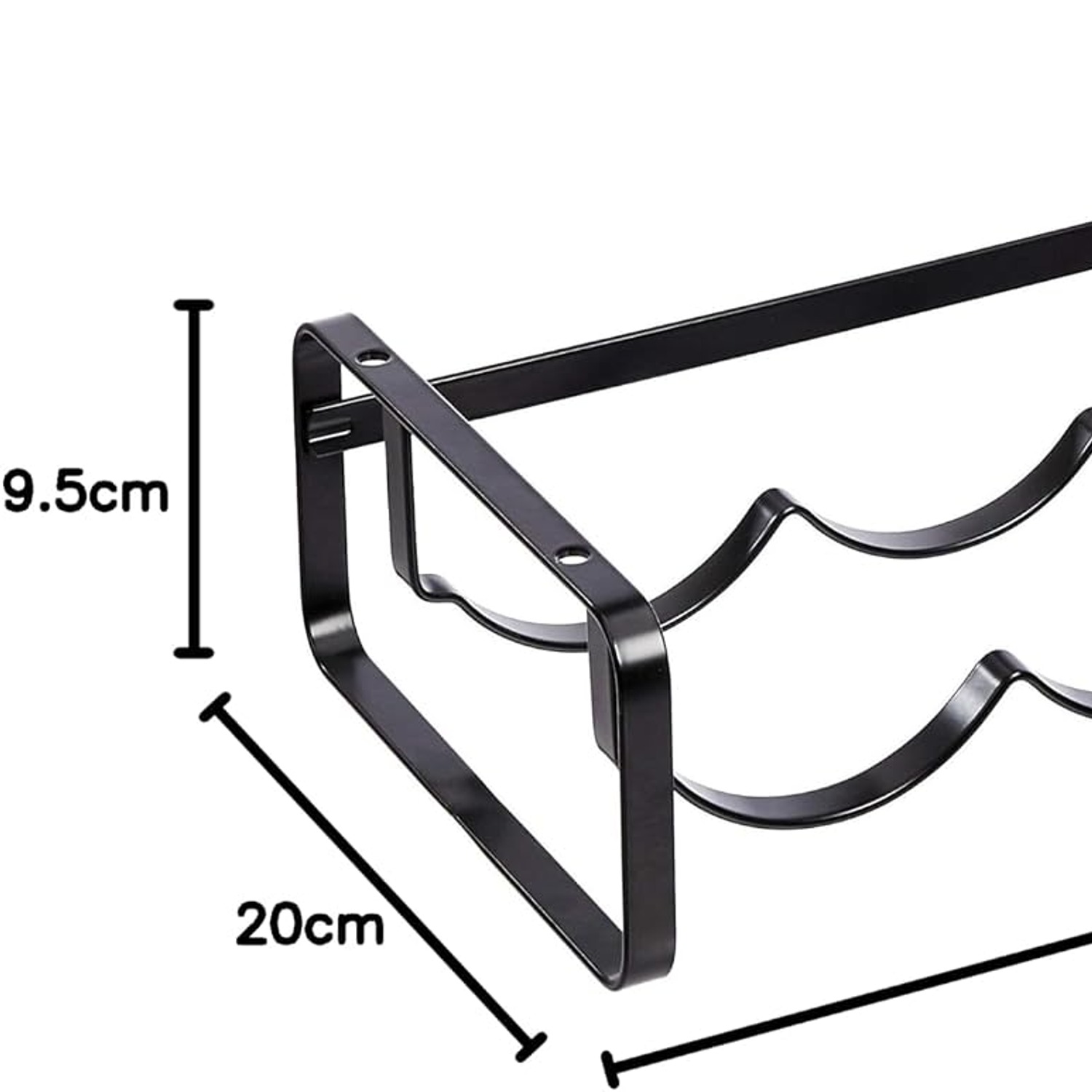
Width is the easiest. This one is 40 cm across, roughly the width of a microwave. Run a tape measure along the bench or shelf and make sure you have that plus a little breathing room on each side.
Height is where people get caught out. The rack is 20 cm tall, but bottles sit in it, and a stacked second tier doubles that. If it is going under an overhead cupboard or on a pantry shelf, check the clearance above. Twenty centimetres for one tier, around 60 cm if you are planning three.
Depth is 9.5 cm for the rack itself, but a wine bottle is roughly 30 cm long and lies across the bars, so your shelf needs to be deep enough for the bottle, not just the frame. A standard kitchen bench handles this easily. A narrow floating shelf might not.
If you are torn between sizes, think about what you actually keep at home rather than what you would like to keep. Four bottles covers most weeks. Eight covers a dinner party and the weeks around it.
Material and finish
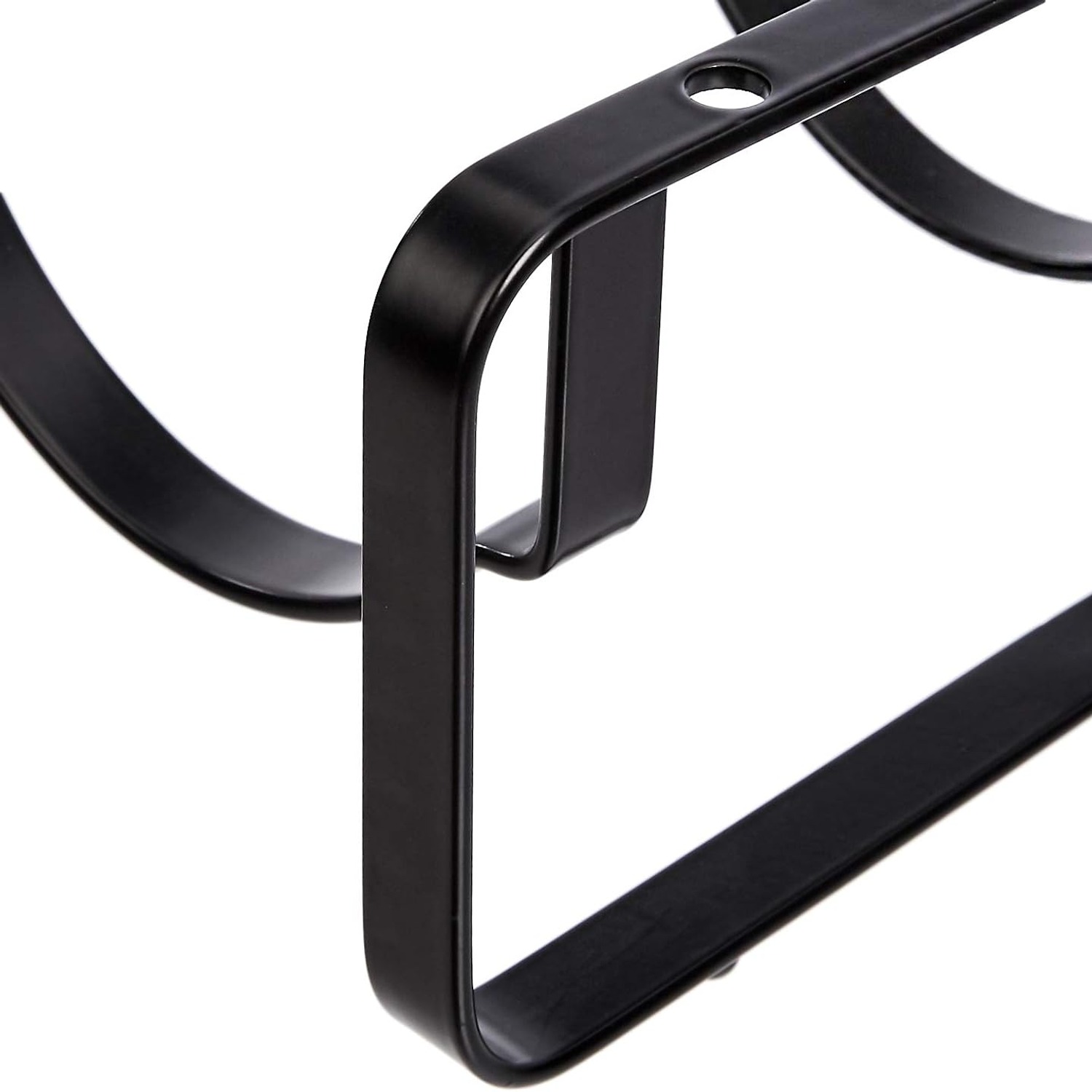
Steel is the sensible choice for a bench rack. It stays rigid under the weight of four full bottles, which together run to about five kilograms. Timber racks look warm but can bow over time in a humid kitchen. Thin wire racks flex. Alloy steel, like the frame here, holds its shape.
The black finish is a practical pick rather than a decorative one. Dark metal sits quietly next to timber benches, stone, laminate and painted cabinets. It shows less dust than pale finishes and does not fight with whatever else is on the bench. If you are after a black wine rack specifically because your kitchen hardware is dark, it will match without effort.
One thing to treat gently: any painted or coated metal can mark if you drag glass across it. Lift bottles in and out rather than sliding them, and the finish will stay even for years.
Looking after it
Care is about as easy as it gets. A dry cloth over the bars every couple of weeks keeps dust down. That is the care instruction given for this product and it is genuinely all it needs.
If something sticky lands on it, a cloth wrung out almost dry works, followed straight away by a dry wipe. Do not let water sit in the dips. Skip scouring pads, powders and strong solvents, which can scratch the coating and leave dull patches.
Check the base now and then if the rack lives near a sink or kettle. Steel handles ordinary kitchen humidity fine, but standing moisture is not a friend to any metal finish. Keeping it dry is the whole maintenance routine.
Placement tips that make a difference
Keep it away from the oven, the dishwasher vent and the kettle. Heat is the fastest way to age wine badly, and those three spots cycle hot and cool all day.
Keep it out of direct sun. Light breaks wine down, which is why so many bottles are green or brown glass in the first place. A shaded corner of the bench or an interior shelf is better than a windowsill.
Put it where you can reach the labels. Half the point of a bench rack is seeing what you have. If the rack ends up behind the toaster, you are back to the cupboard problem.
If you stack tiers, push the column back against a wall or splashback rather than leaving it free on an open bench. It is stable, but there is no reason to test that with your elbow.
The short version
This is a four-bottle steel rack, 40 cm wide, 20 cm tall and 9.5 cm deep, finished in black, weighing 635 g. Bottles lie flat in shaped cradles so they do not roll. There is nothing to assemble and nothing to mount. Matching racks stack to add tiers when four is not enough.
Buy it if you keep a handful of bottles on hand and want them visible, tidy and off the cupboard floor. Measure your height clearance first, keep it away from heat and sun, and wipe it with a dry cloth now and then. That is the whole job.