
The complete guide
How To Choose And Fit An Under Cabinet Wine Glass Rack
The problem with storing stemware flat
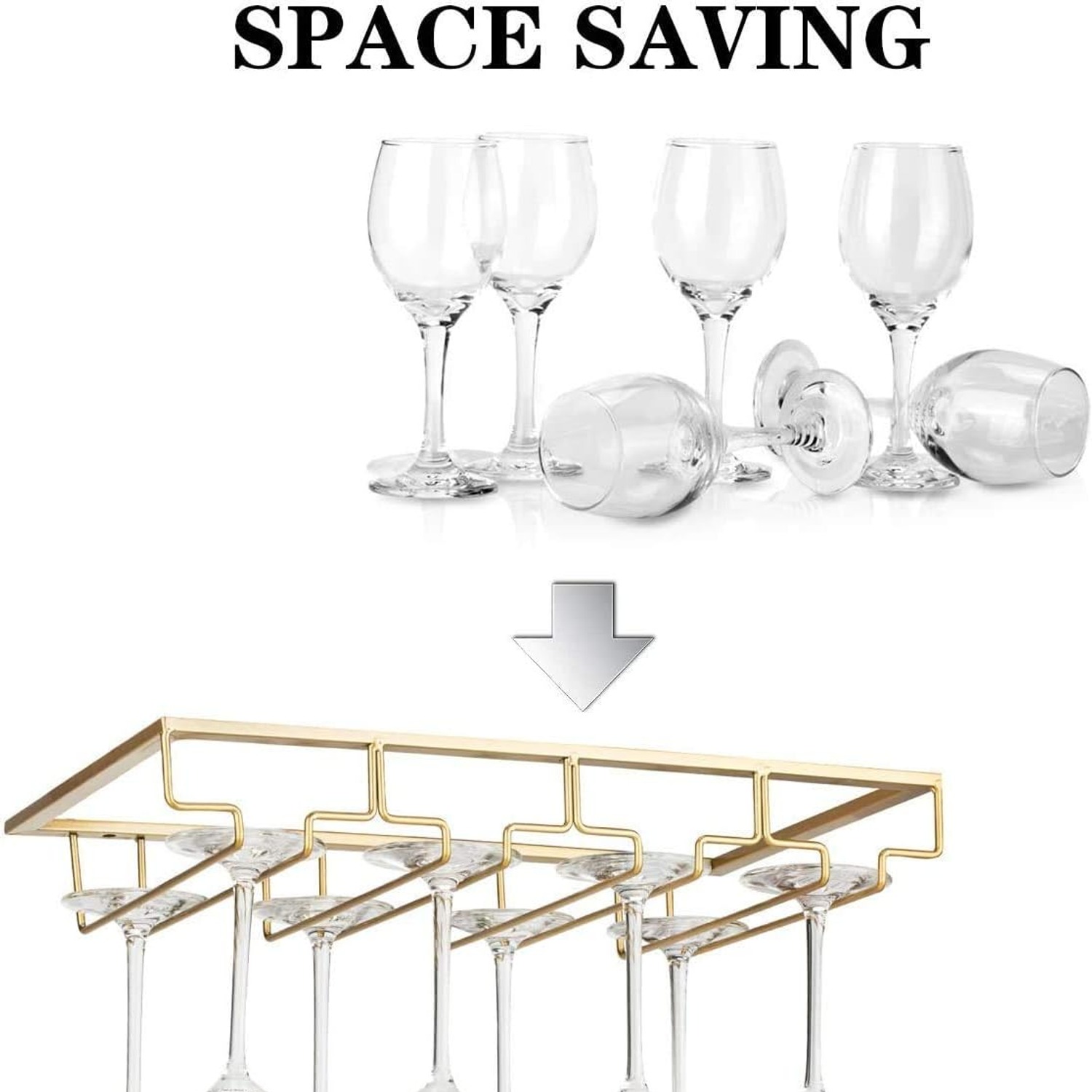
Wine glasses are badly behaved objects. They are tall, they are fragile, and they refuse to stack. Put six of them on a shelf and they eat a whole level of your cupboard, leaving a band of wasted air above them that nothing else can use. Push them together to save room and the rims start touching, which is exactly where chips begin.
Then there is the drying problem. A washed glass left upright on the bench traps moisture in the bottom of the bowl. Left bowl down on a tea towel, it does not get airflow and holds a damp smell. Neither is great, and both leave glassware sitting on a bench you probably wanted clear.
Hanging is the old solution, and it is still the good one. Bars have hung glasses from overhead rails forever because it keeps the bowls apart, lets them drain and dry, and makes it quick to grab one with a free hand. An under cabinet wine glass rack brings that idea into a home kitchen without needing a ceiling frame or a renovation.
How the rack actually works
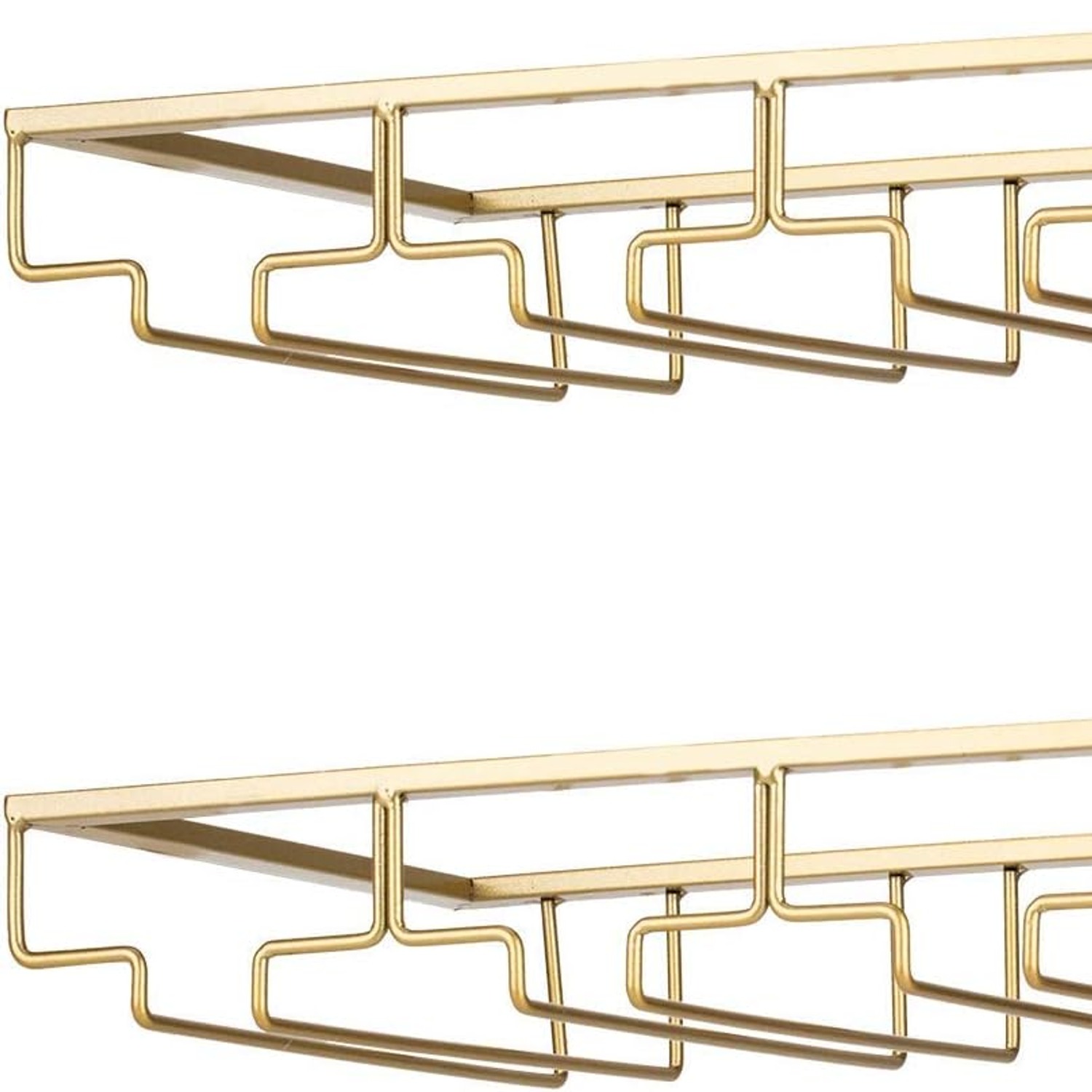
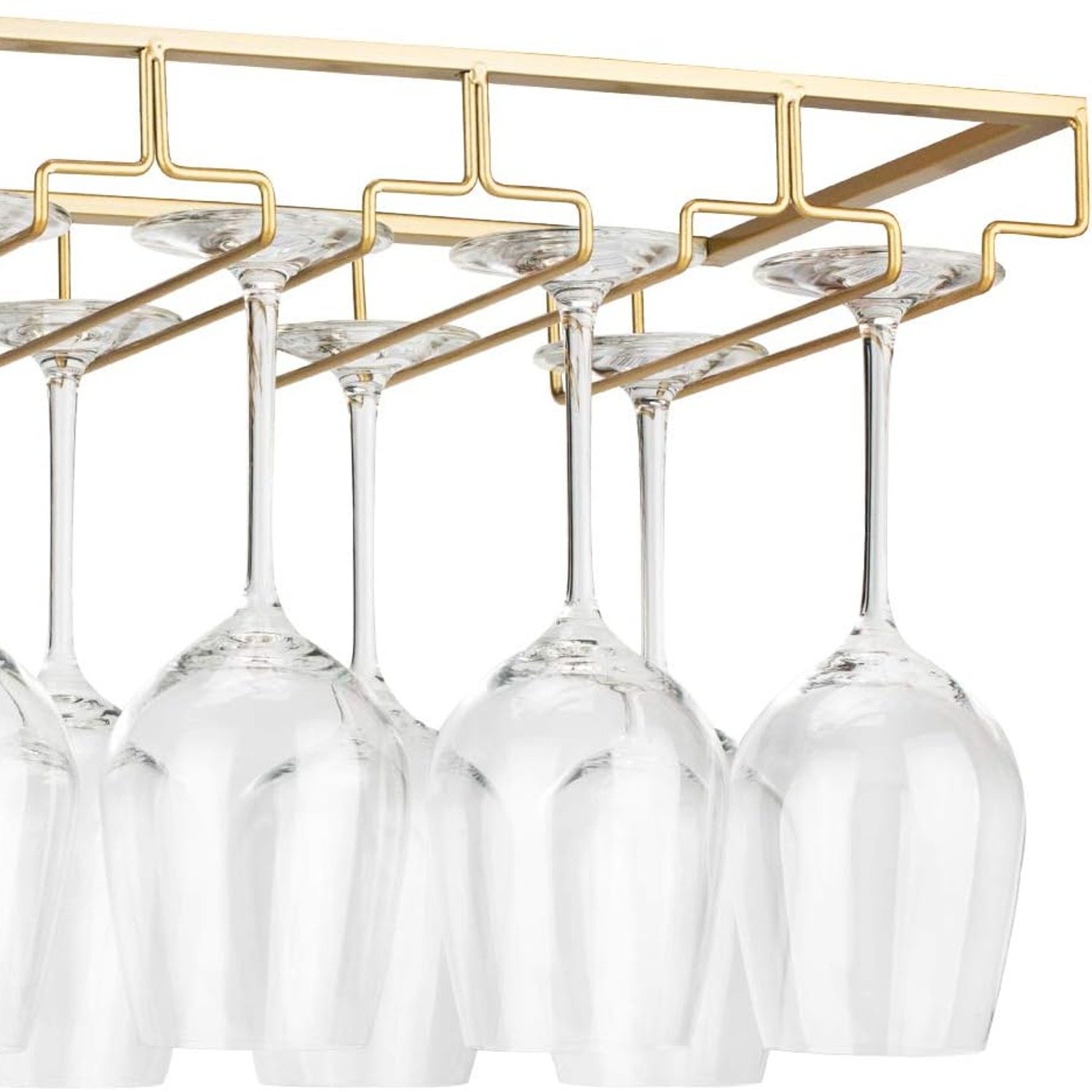
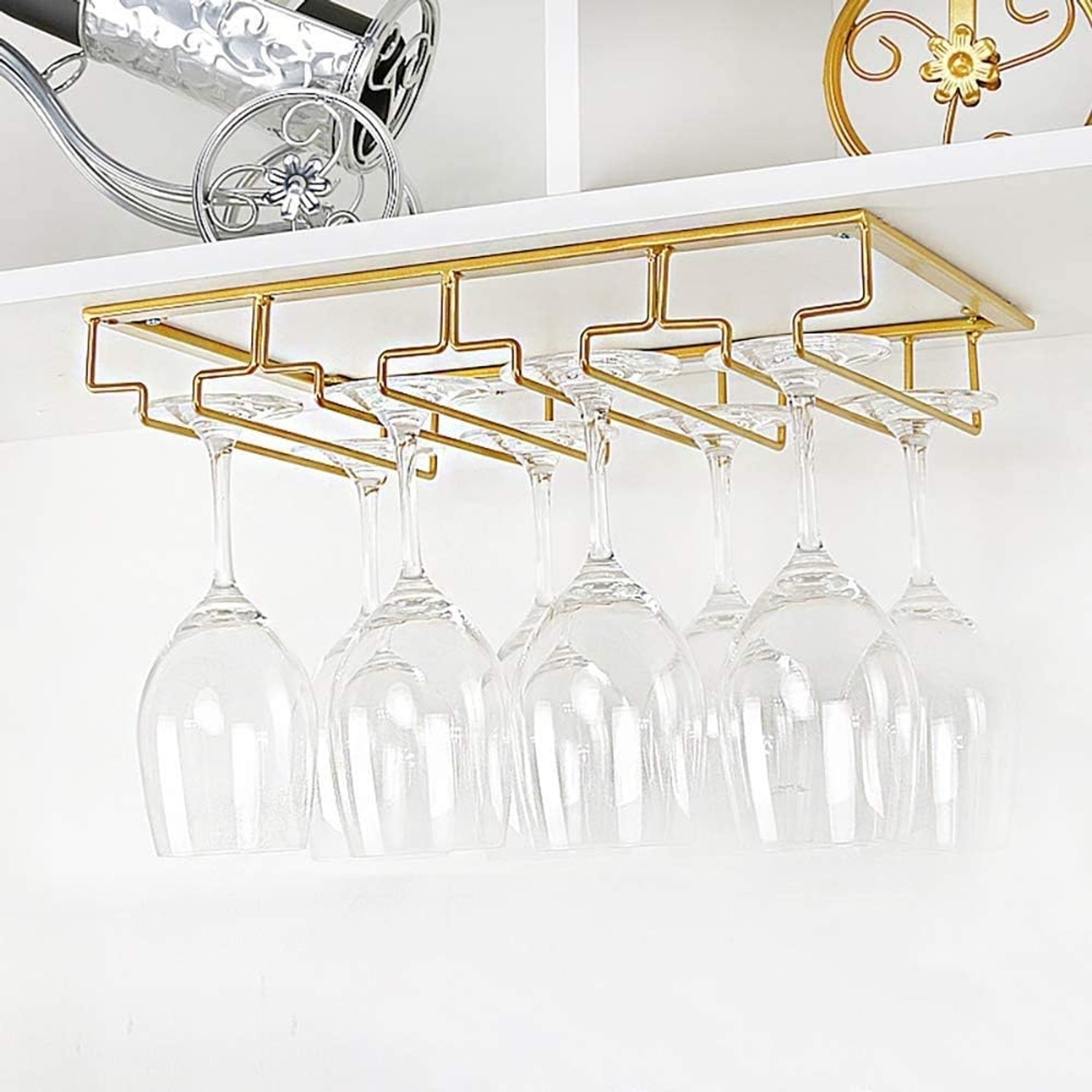
The design is simple on purpose. Two rails run front to back under the cabinet, with a gap between them sized to take the stem of a glass. You tilt the glass, slide the stem into the gap from the open end, and let the base of the glass rest on top of the rails. The bowl now hangs below, with air all around it.
To get a glass out, you slide it back the way it came. That sideways motion is what makes a hanging wine glass rack safe to use one handed. There is no lifting a heavy bowl over a lip, and no reaching into a dark cupboard hoping you do not knock the glass next to it.
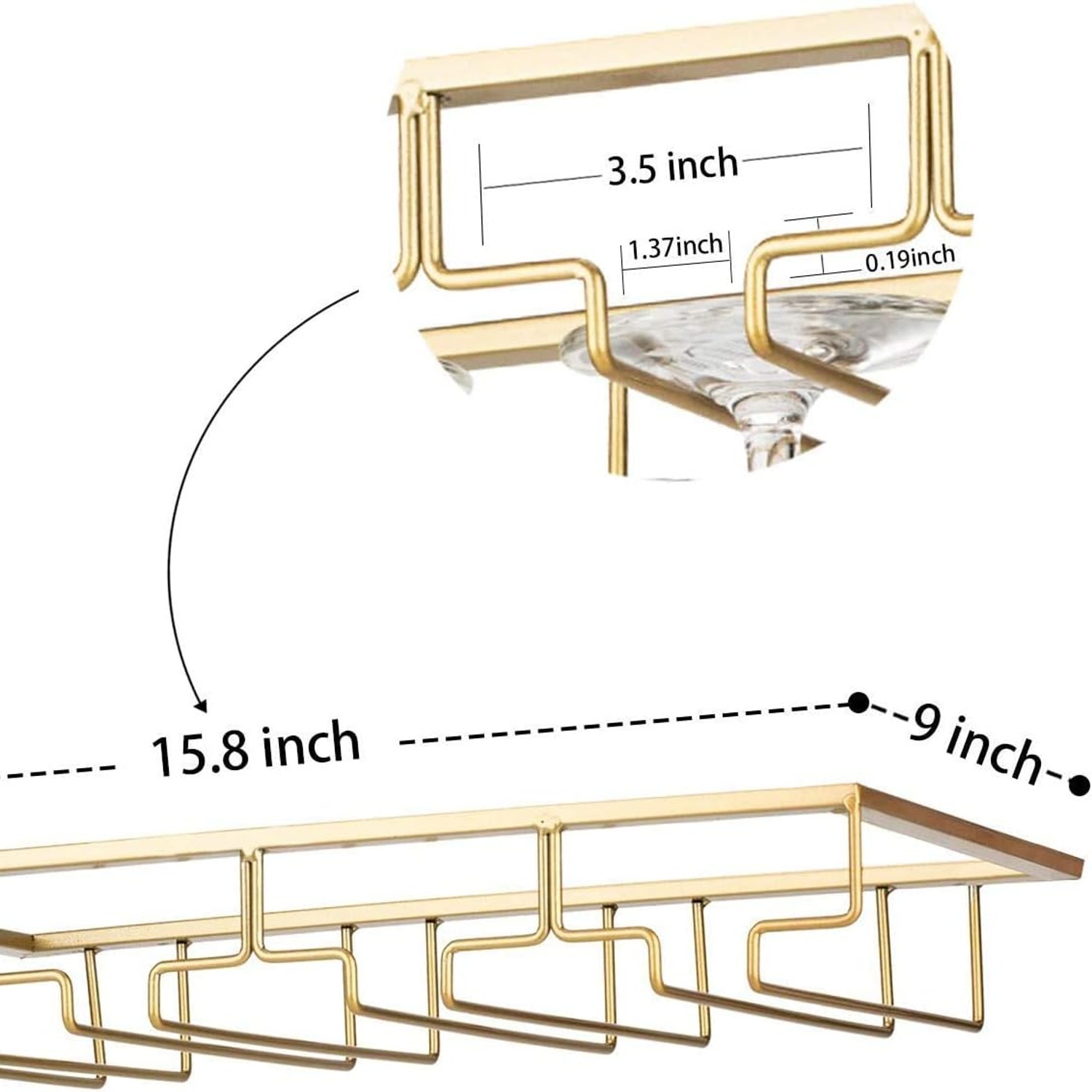
This set gives you two racks. Each is 34.3 cm deep, 24.3 cm wide and 8.2 cm high, with a metal frame and a gold powder coated finish. The listed shelf weight capacity is 816 grams per rack, which is worth noting before you load it. Assembly is required and the mounting hardware is supplied.
Measuring before you buy
Three measurements decide whether a rack like this will work for you.
The first is cabinet depth. Standard wall cabinets are usually deep enough for a 34.3 cm rail, but shallow cabinets, open shelves and some older units are not. Hold a tape against the underside and measure from the back wall to the front edge. If the rack would stick out past the front, it becomes something you walk into.
The second is clear width. Measure the flat run under the cabinet where nothing is in the way, then subtract space for cabinet doors that swing or any under cabinet lighting already fitted. A 24.3 cm wide rack needs that much clear surface plus a finger of breathing room on each side.
The third is the drop below the cabinet. Stand under it with a glass in hand and see how much room there is between the cabinet base and the bench or the splashback. The rails add 8.2 cm, and then the glass itself hangs below that. A flute is tall. If the cabinet sits low over a bench, check that you can still slide a glass in without tipping it against the surface below.
Choosing where to put it
Position matters more than people expect. The convenient spot is not always the right one.
Near the dishwasher or sink is handy because you can hang glasses straight after washing and let them drain. The downside is splash and steam, so keep enough distance that you are not spraying the rails every time you rinse a pot.
Over a bench you use for food prep is less ideal. Flour, oil mist and crumbs drift upward more than you would think, and hanging bowls catch what floats past. A quieter stretch of cabinet, away from the cooktop, keeps glasses cleaner for longer.
Near where you actually pour is the smartest choice of all. If your bottles live in a cupboard by the fridge, put the stemware holder there. A kitchen wine glass storage spot that sits two steps from the corkscrew is the one you will keep using.
For a home bar or a butler's pantry, the same thinking applies. Mount above the bottles rather than above the ice bucket, and leave clearance for the tallest glass you own.
Fitting it properly
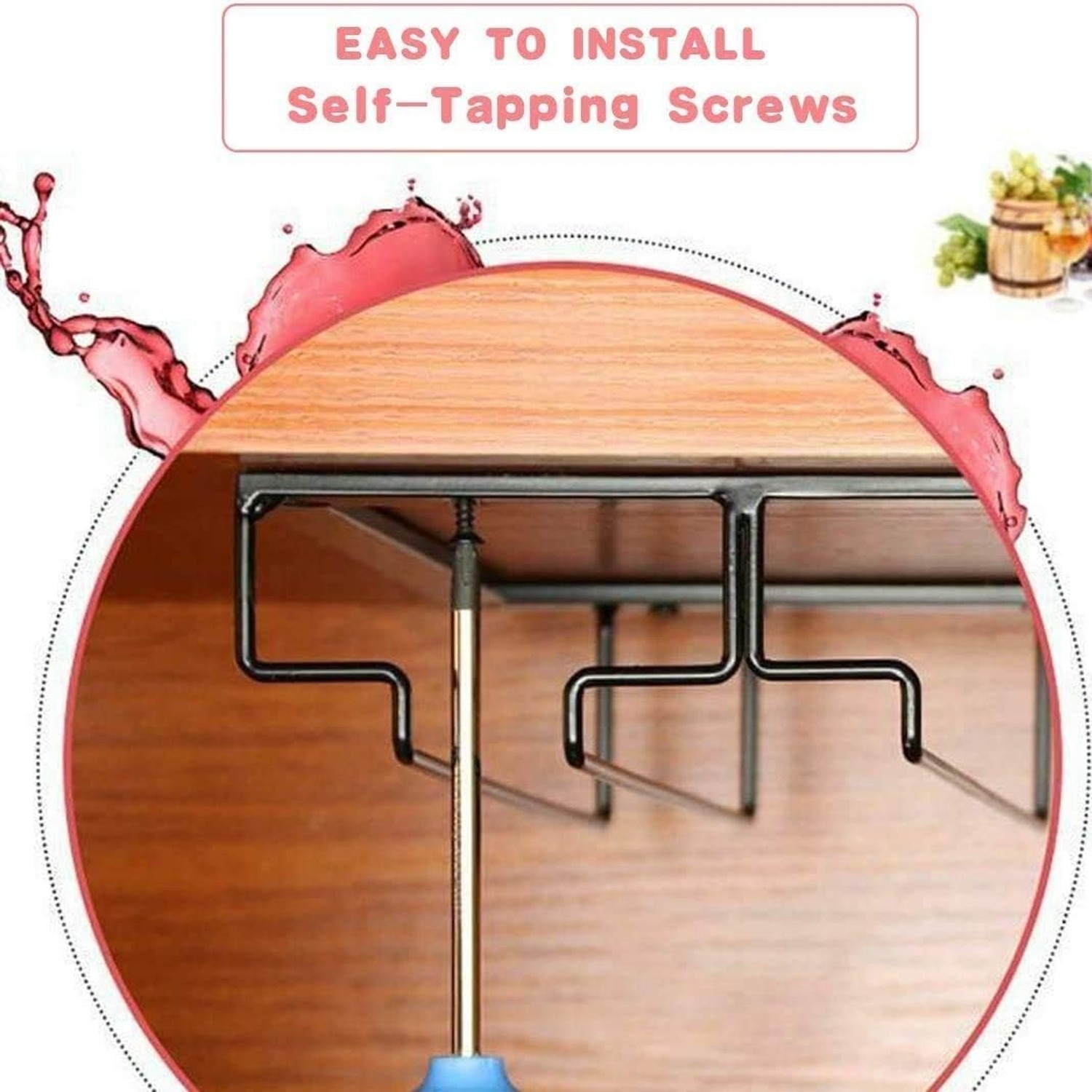
Mark first, drill second. Hold the rack in place, mark the screw points with a pencil, and check the marks with a level before you touch a tool. If you are mounting both racks, work off one reference line so they end up parallel. A rack that slopes even slightly will let glasses creep toward the low end.
Check what is above the cabinet base before you drill. In most kitchens it is an empty shelf, but it can be the floor of a cupboard holding plates, and a screw that pokes through will scratch them. Use a fixing length suited to the material thickness.
Cabinet bases are often thin particle board or plywood. A pilot hole stops the board splitting and makes the screw bite cleanly. If the base feels flimsy, consider mounting to a solid timber rail or a different cabinet rather than hoping for the best.
Once the rack is up, load it gradually. Hang one glass, give it a gentle push, and watch for movement. Then fill the rail, respecting the 816 gram capacity and spreading weight evenly rather than loading one end.
Keeping it looking good
Powder coating is tough, but it is not armour. Wipe the rails with a soft damp cloth and dry them right away. Leave the abrasive pads and the bleach sprays for other jobs, because both can dull a coated finish over time.
Every few months, run a finger along the rails for dust and check the screws are still firm. Timber moves with the seasons and fixings can loosen slightly. A quarter turn now is better than a surprise later.
If a glass starts to drag going in or out, look for a build up of residue in the channel rather than forcing it. A quick clean usually fixes it.
Who it suits
Small kitchens benefit most, because the swap frees an entire shelf. Apartment dwellers, share houses and anyone who entertains more often than their cupboard allows all get the same win. People building a home bar glass rack setup like it because the stemware stays visible and reachable.
It is less suited to households with very heavy crystal, where the weight capacity becomes the limiting factor, and to kitchens with unusually shallow or very low cabinets. It also will not hold stemless glasses or tumblers, since the whole design depends on a stem.
The short version
An under cabinet wine glass rack takes a strip of unused space and turns it into useful, tidy storage. This two pack gives you a pair of 34.3 cm by 24.3 cm metal rails in a gold powder coated finish, each rated to 816 grams, with hardware included and assembly required.
Measure your cabinet depth and clear width first. Pick a spot away from the cooktop but close to where you pour. Mark carefully, pilot your holes, and load the rails evenly. Do that, and your glasses stop crowding a shelf, stop chipping against each other and start drying properly, all while staying within easy reach.