


The complete guide
How To Choose And Install A Wall Mounted Wine Bottle Rack
The problem with storing wine in a normal house
Wine is awkward to store. Bottles are heavy, they are the wrong shape for most shelves, and they really want to lie down rather than stand up. So they end up in the places where nothing else fits. The back of a low cupboard. A cardboard box in the laundry. A cluster on the bench that slowly migrates towards the toaster.
None of that is a disaster. But it has two real costs. The first is space, because wine takes up bench and cupboard room you would rather use for something you touch every day. The second is that you forget what you own. A bottle lying at the back of a cupboard behind the slow cooker is effectively invisible, and invisible bottles get drunk on a Tuesday instead of saved for the dinner you bought them for.
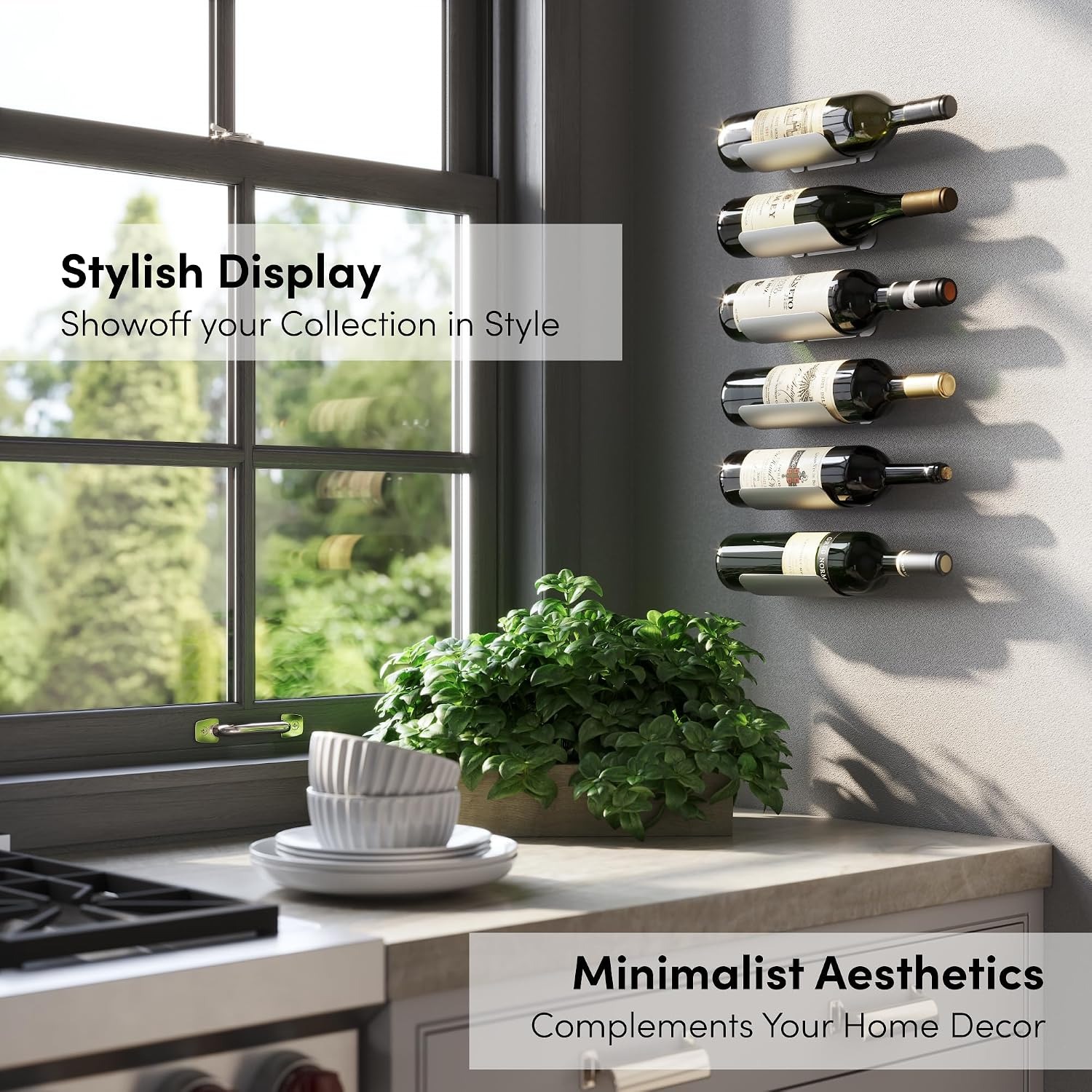
A wall mounted wine bottle rack fixes both problems at once by moving the whole collection to a surface nobody else is using. Walls in kitchens and dining rooms are mostly empty from about waist height upwards. Put six bottles there and you have reclaimed a shelf, made your collection visible, and added something to look at.
How this style of rack actually works
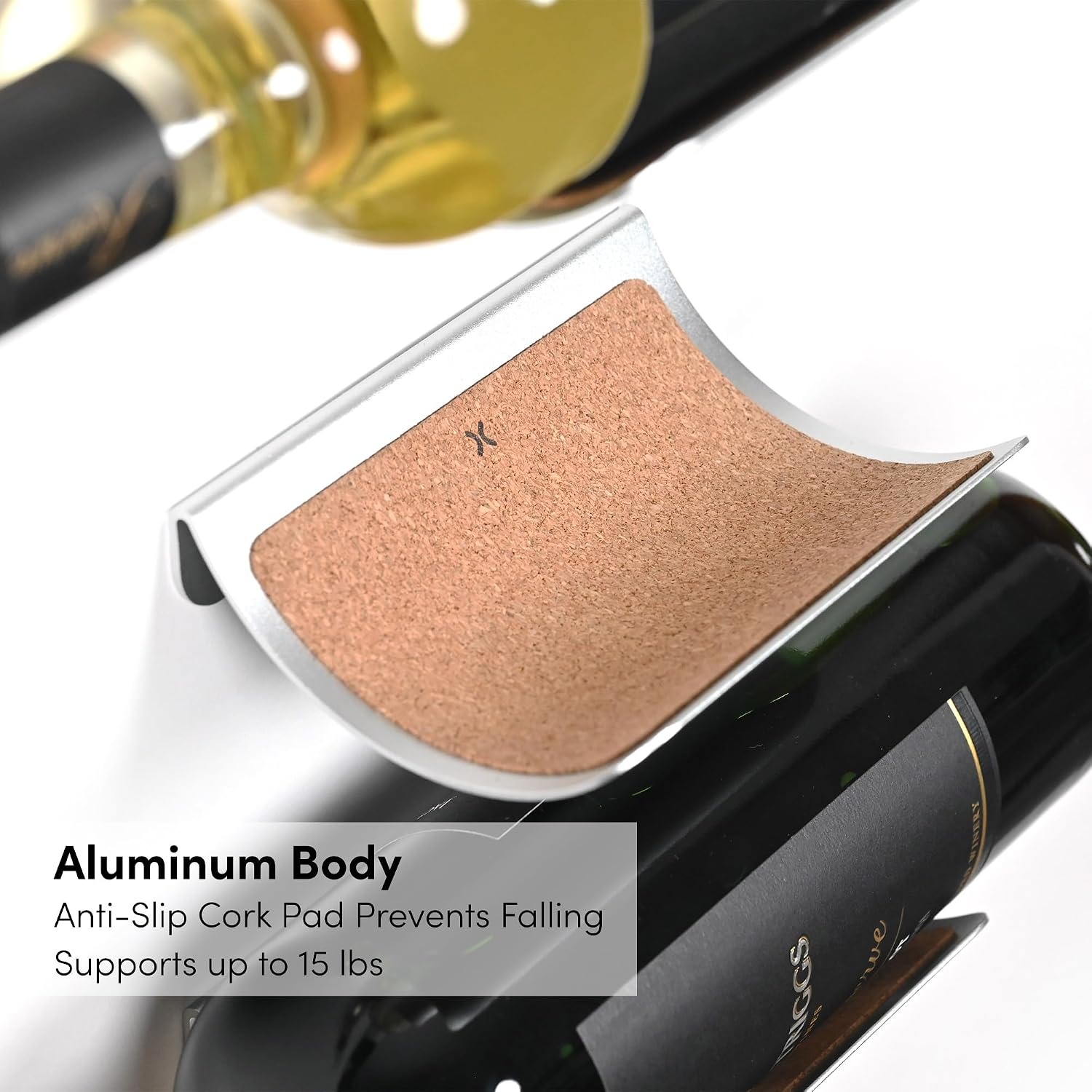
This is not a single frame with six slots. It is six separate cradles that each mount on their own. Each one is a small semicircular piece of aluminium, 9.1 cm deep by 12.7 cm wide by 2.8 cm high, lined on the inside with non-slip cork padding. The bottle lies on its side, resting in the curve, with the cork lining cushioning the glass and adding enough grip to keep it from creeping.
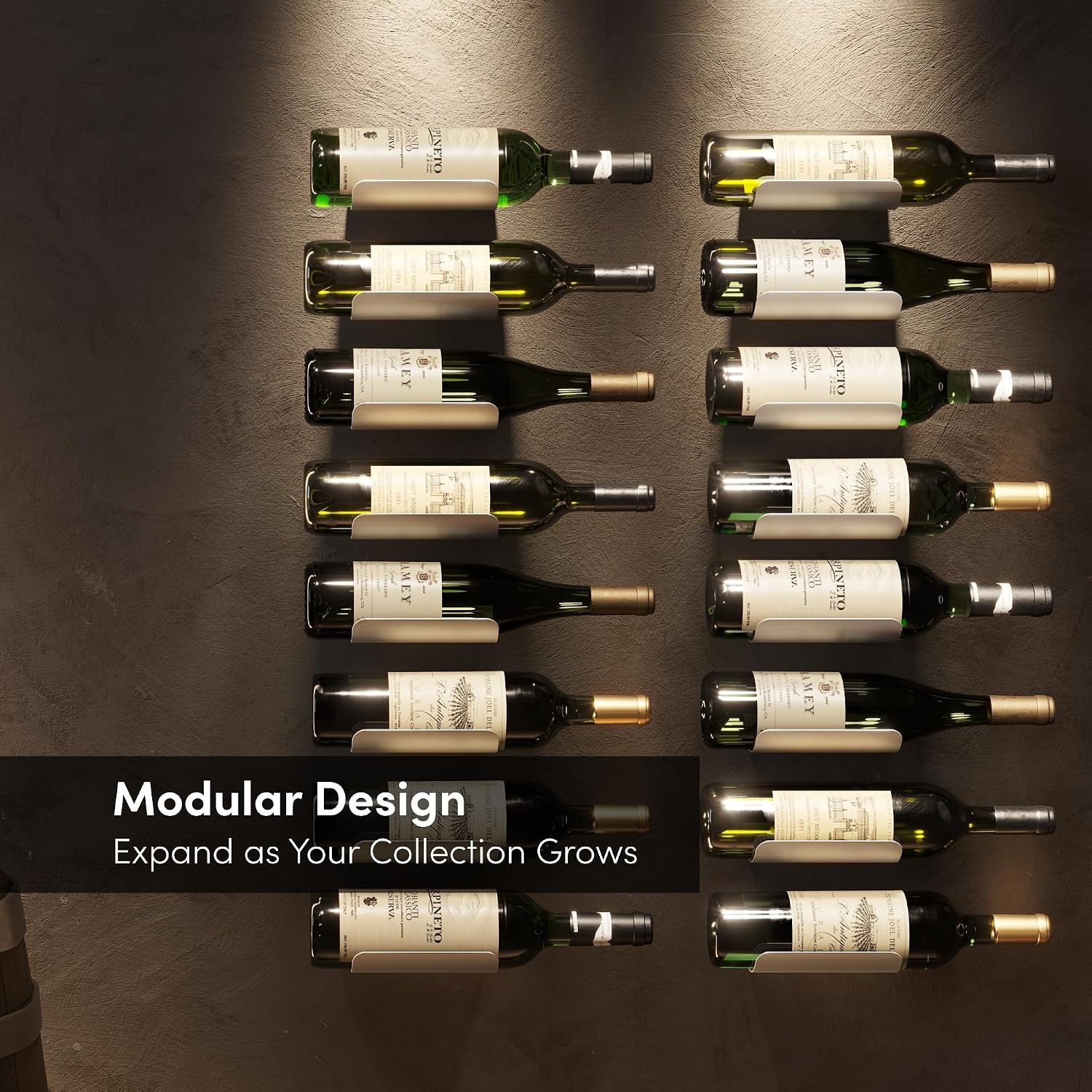
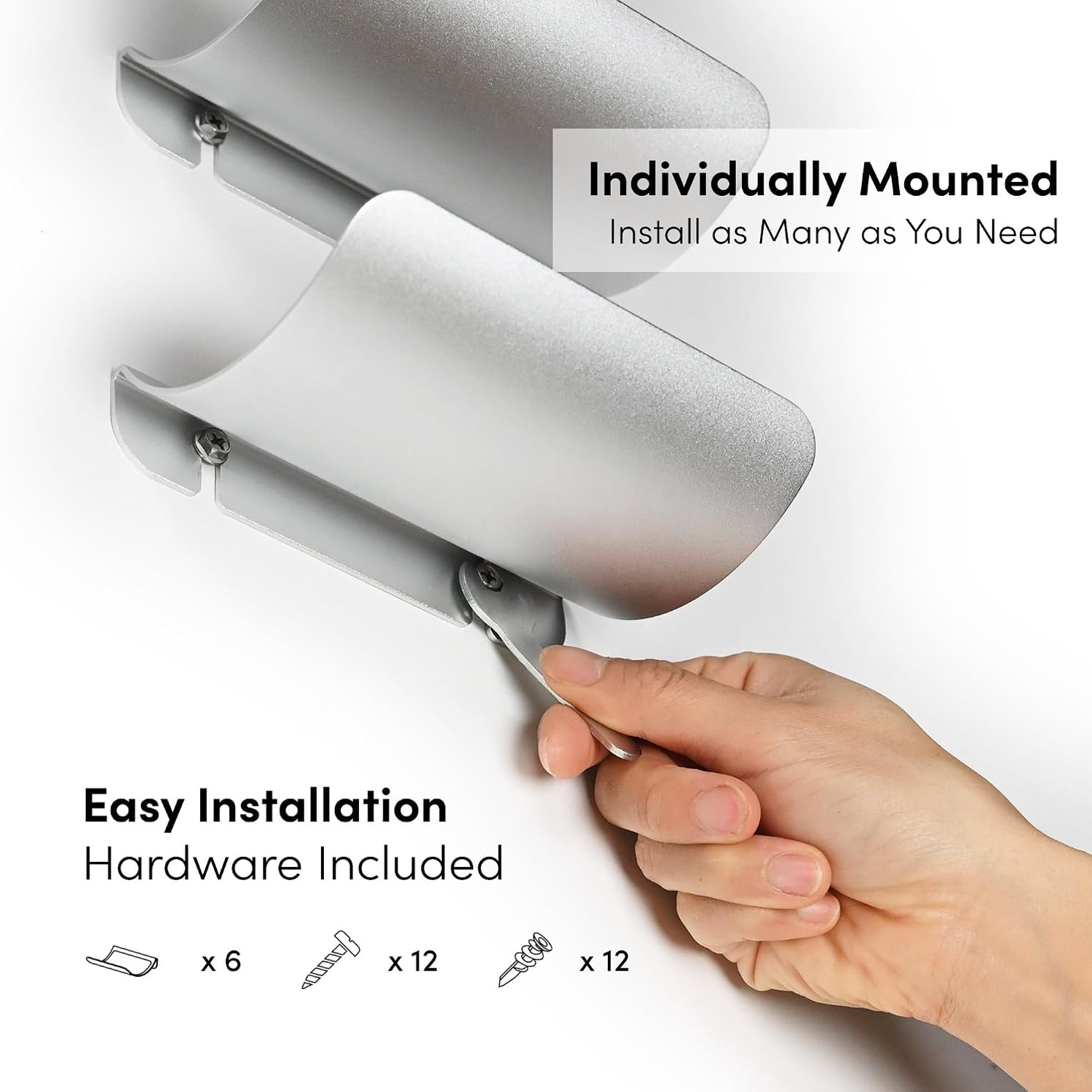
The individual mounting is the part that matters most, and it is worth thinking about before you buy. A fixed frame locks you into one shape. Six separate pieces mean you choose the shape. You can run a straight horizontal line above a sideboard, stack a column in the narrow strip of wall beside the fridge, or scatter them in a staggered pattern so the bottles read as a wall feature rather than storage. You can also split the set, three in the kitchen and three in the dining room, if that suits the house.
Because there is no backing panel, the finished effect is that each bottle appears to float against the paint. That is the whole appeal of a floating wine rack arrangement, and it is why these look better on a plain wall than a busy one.
Why aluminium and anodizing matter
The cradles are solid aluminium with a clear anodized finish. Anodizing is an electrochemical process that thickens the natural oxide layer on the surface of the metal. In plain terms, it makes the outside harder and more resistant to marking than raw aluminium, and it holds a consistent colour instead of wearing patchy.
The practical result is a silver tone that is soft rather than mirror-bright. That is useful, because a highly polished finish fights with everything around it and shows every fingerprint. A quiet anodized silver sits comfortably next to stainless appliances, brushed tapware, white tile and pale timber. It also does not date the way a strong colour or a heavy industrial black can.
Aluminium is light, too. Each cradle weighs 68 grams, which is less than a small apple. All of the real load on your wall comes from the bottle itself, not the hardware, so the strength of the fixing is what you should think about rather than the weight of the rack.
Who it suits
This kind of aluminium wine bottle rack earns its keep in small spaces more than large ones. If you have a dedicated cellar or a tall freestanding rack with room for fifty bottles, six wall cradles are decoration. If you live in an apartment, a unit, a terrace, or any kitchen where the bench is already crowded, they are genuinely useful.
It also suits people who buy wine a few bottles at a time rather than by the case. Six is roughly a fortnight's worth of interesting bottles for most households, which is the right number to have on display and within reach. Anything you are cellaring long term is better off somewhere dark and temperature-stable.
Finally, it works for people who want their storage to look intentional. A row of bottles on an open shelf looks like clutter. The same bottles spaced evenly on a wall look like a decision.
How to plan your layout before you drill
This is the step people skip, and it is the one that makes the difference between a neat result and six slightly wonky holes.
Start by laying your bottles out on the floor or a table in the pattern you are considering. Measure the widest point of the bottle, usually the shoulder, and add a few centimetres of clearance so neighbouring bottles never touch. Wine bottle diameters vary more than you would expect, with Burgundy-shaped bottles noticeably wider than Bordeaux ones, so plan around your widest bottle rather than your average one.
Next, think about reach. Mount the row low enough that you can lift a bottle out without going up on your toes, and high enough that you are not knocking into it when you work at the bench. Above a sideboard or at upper-cupboard height usually lands about right.
Then mark your positions in pencil on the wall, step back, and look at them from where you normally stand in the room. Adjust before you drill. A spirit level or a laser line is worth the trouble here, because the eye is very good at spotting a row of bottles that is slightly out of true.
Fitting it to your wall
Drywall anchors, screws and a wrench come in the box, along with instructions. For plasterboard, the supplied anchors are what you want. Where one of your marked positions happens to line up with a stud, use the stud, because a screw into solid timber is always stronger than an anchor in board.
For brick, tile, concrete or render, you will need a masonry drill bit and plugs rated for that material. That is standard practice for anything you hang on a hard wall, and the cradle hardware itself does not change.
Two small habits help. Drill slowly and keep the bit level, so the hole does not open up and loosen the anchor. And check the fixings a few months after installation, then occasionally after that, because any wall mounted item benefits from a quick tighten over time.
Living with it and keeping it clean
Care is simple. Wipe the aluminium with a soft damp cloth and dry it off. Avoid scouring pads, abrasive powders and harsh solvents, all of which can dull an anodized surface. Keep the cork padding dry, brush dust off it now and then, and wipe up any drips rather than letting the cork stay damp.
When you take a bottle out, lift it rather than dragging it across the cradle. That protects the label and keeps the cork lining in good shape. If you ever rearrange the kitchen or move house, the cradles come off, the holes get filled, and they go back up somewhere new.
One thing worth knowing: bottles on display are exposed to light and to whatever the room temperature does across a day. For everyday drinking wine over a few weeks, that is fine. For a bottle you are saving for years, somewhere cool and dark is still the better home.
The short version
Six individual aluminium cradles, each one lined with non-slip cork, each one mounted separately so you choose the pattern. Clear anodized silver finish, 9.1 x 12.7 x 2.8 cm per piece, 68 grams each, with drywall anchors, screws, a wrench and instructions in the box. Assembly is required, and it is a mount-and-tighten job rather than a build.
It suits small kitchens, apartments, home bars and dining rooms where bench space is tight and the walls are doing nothing. Measure your widest bottle, plan the layout on the floor first, use a level, and pick the right fixing for your wall type. Then wipe it with a damp cloth every so often and leave it alone.