

The complete guide
How to Choose and Fit a Wall Mounted Wine Rack
The problem with storing wine on the floor
Most homes do not have a cellar. What they have is a cupboard, a bit of bench, and maybe a cardboard box in the corner of the laundry. Wine ends up spread across all three. You buy a nice bottle, you put it somewhere sensible, and three weeks later you cannot remember where sensible was.
Floor storage has a second problem. It takes up the one thing a small kitchen or apartment never has enough of, which is floor area. A freestanding wine cabinet can swallow half a metre of depth and still only hold a dozen bottles. Meanwhile there is a perfectly good stretch of empty wall beside the fridge doing nothing.
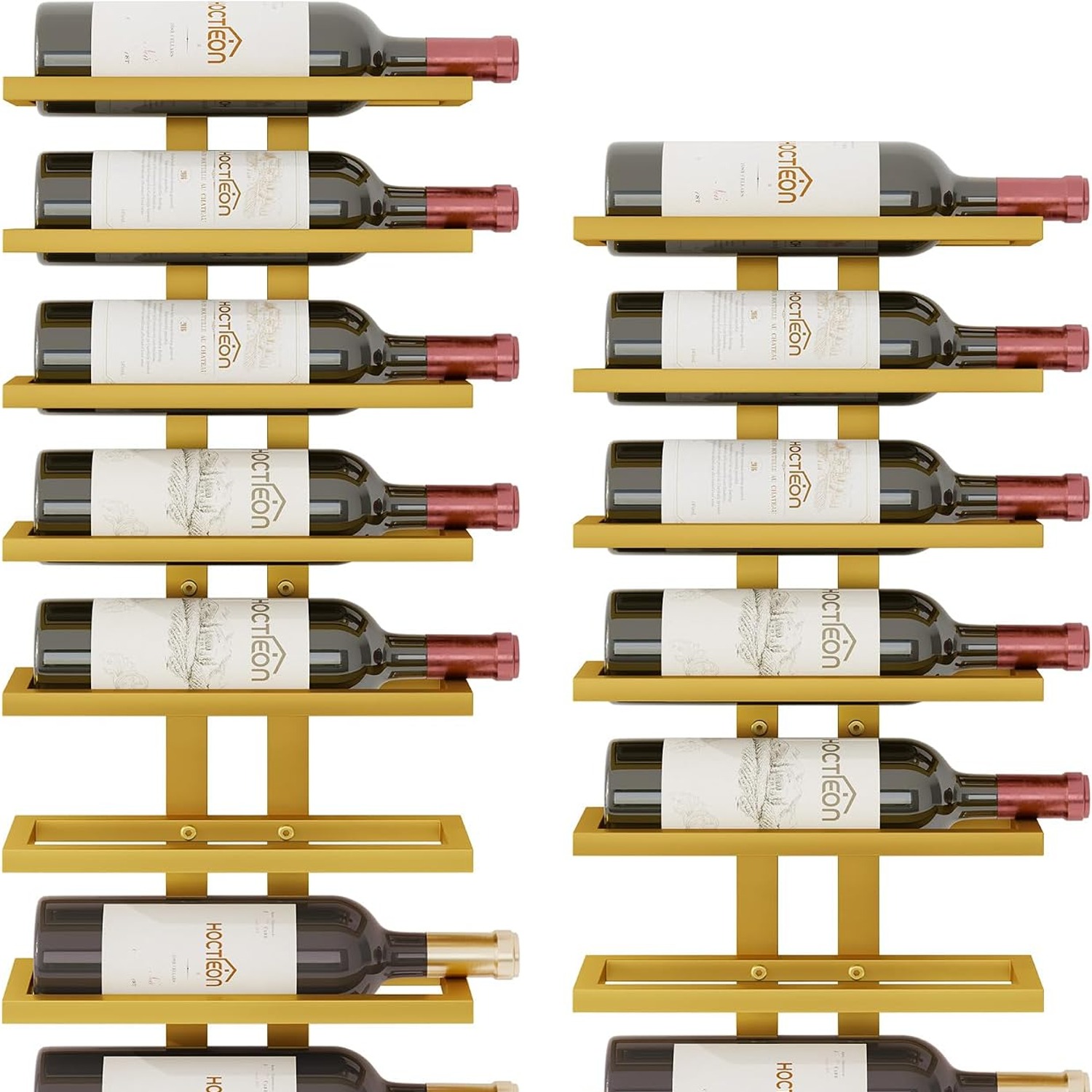
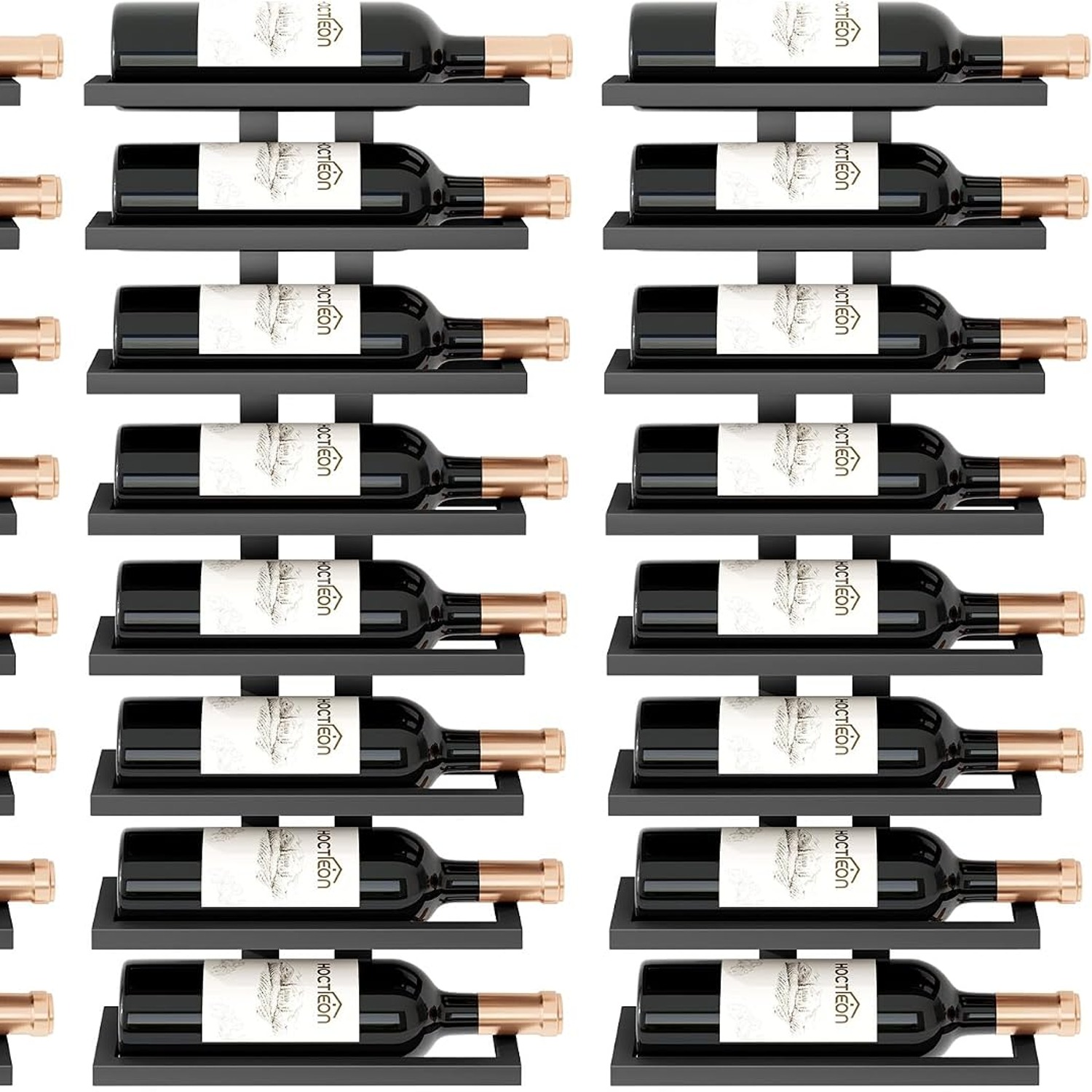
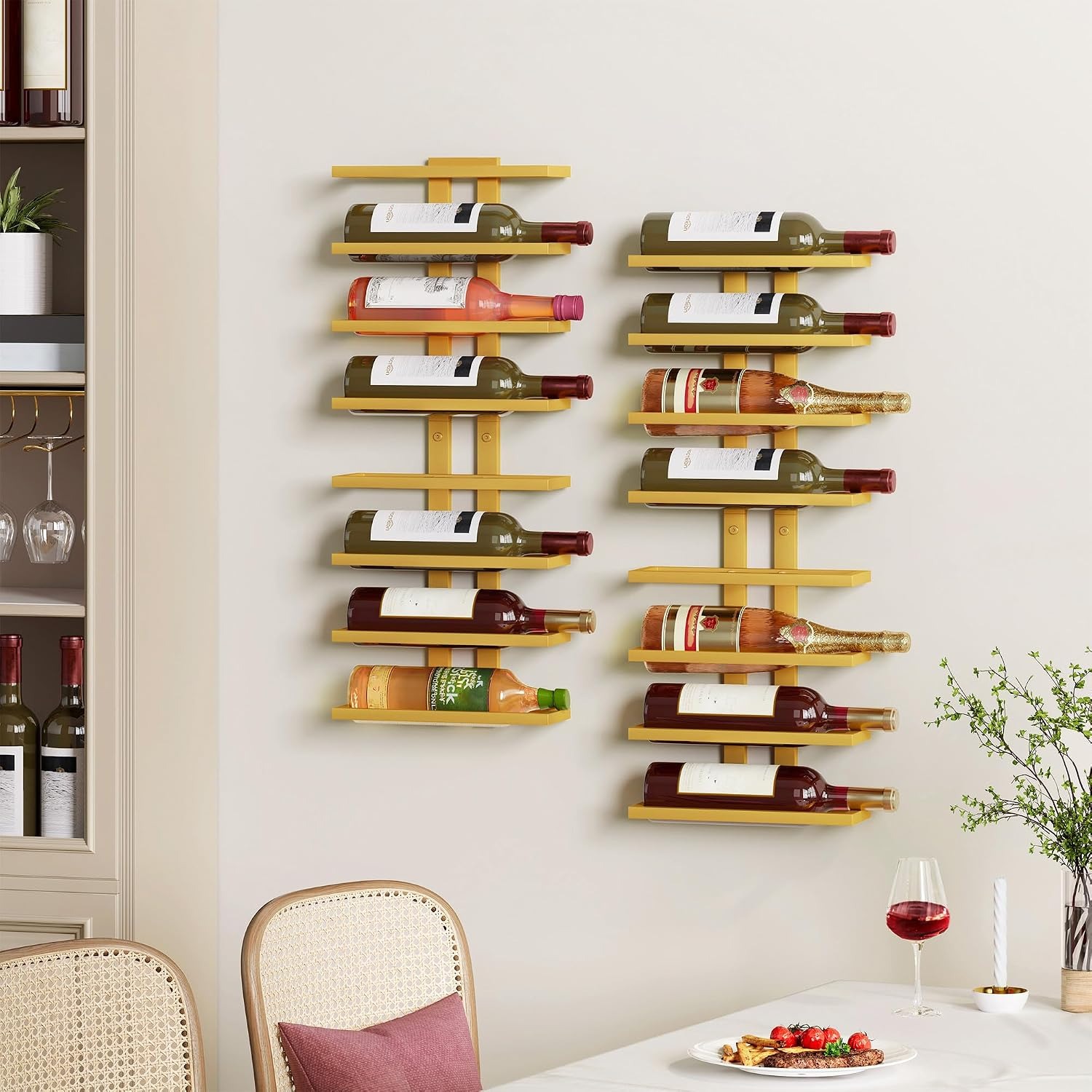
That is the gap this set fills. Two racks, eight tiers each, mounted flat to the wall. Sixteen bottles stored in roughly 10 cm of depth, labels facing out, everything visible without crouching or shuffling boxes.
How a tiered wall rack actually works
The design is simple on purpose. Each rack is a vertical metal spine with eight horizontal cradles welded along it. A bottle slides into a cradle and rests on its side, neck pointing out. The weight sits on the frame, the frame sits on the wall, and the wall does the real work.
Horizontal storage is the traditional method and there is a reason for it. A natural cork needs to stay damp to hold its seal. Stand a corked bottle upright for a year and the cork dries, shrinks slightly, and lets air creep in. Lying flat keeps wine against the cork. Screw caps do not need this, but since most collections are a mix, horizontal is the safer default.
The staggered tiers also do something useful for daily life. You can read every label from across the room. No pulling four bottles out to find the one you wanted, no guessing from the foil colour.
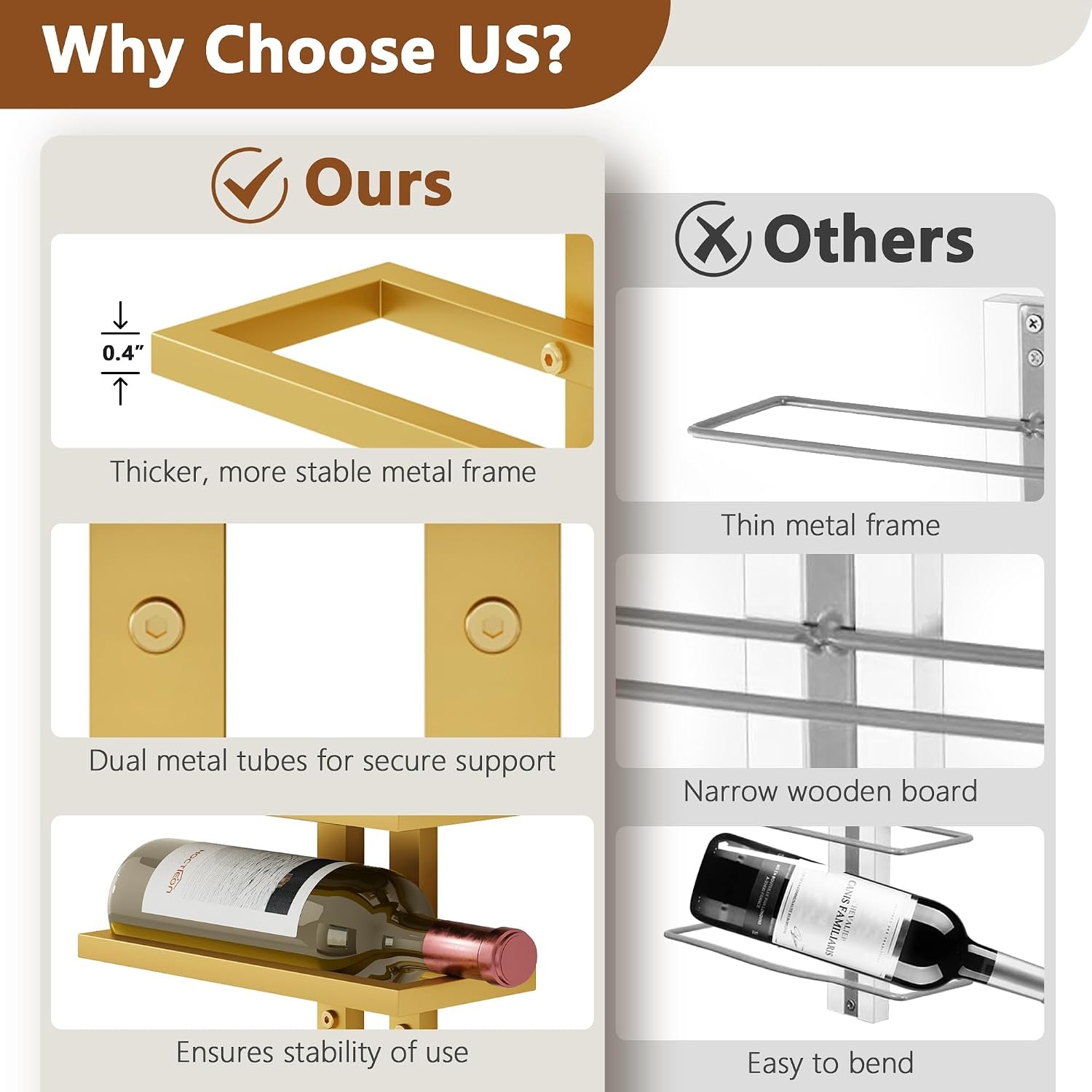
Each rack here is 71.7 cm tall, 27.5 cm wide and 10.3 cm deep, and the set weighs 3.06 kg before you add anything to it. The frame is metal with welded joints, finished in yellow, which is a deliberate choice. This is meant to be seen.
Who this suits
Apartment dwellers get the most obvious benefit. When floor space is the scarce resource, going vertical is the only move left. A narrow strip of wall between a doorway and a cabinet is usually dead space, and 27.5 cm of width is not much to ask for.
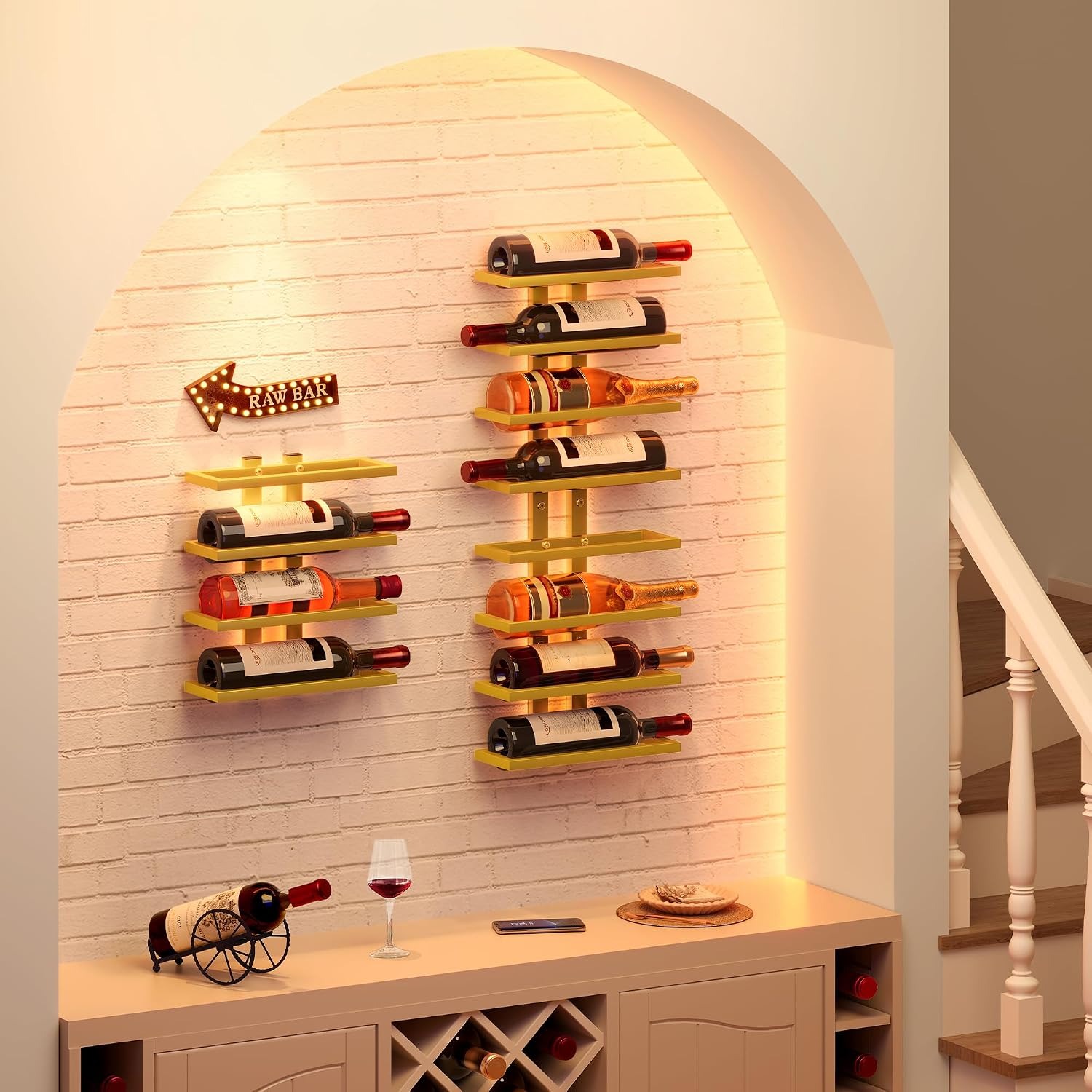
Anyone building a home bar corner will find it useful too. A wall mounted wine rack above a sideboard turns a plain surface into something that looks arranged rather than accumulated. The yellow finish reads as a design decision, not storage furniture trying to hide.
It also suits people who are only just starting to keep more than a couple of bottles around. Sixteen is a sensible first capacity. It is enough to hold a mixed case plus a few extras, without encouraging you to buy wine purely to fill empty slots.
Two groups should think twice. If you are storing bottles you intend to age for years, a wall in a warm kitchen is the wrong environment regardless of the rack, and you want a cool, dark, stable spot instead. And if your lease forbids any wall fixings at all, this is not the product for you, because it does need screws.
Choosing where to put it
Start with the wall, not the rack. Three things decide whether a spot works.
First, what is behind the plaster. Timber studs are ideal. Brick and concrete are also fine and often easier, since masonry anchors are forgiving. Plain plasterboard with nothing behind it needs proper heavy-duty anchors rated well above the load you plan to hang. Sixteen full bottles across two racks adds up quickly, so this is not the place to improvise with whatever is left in the junk drawer.
Second, the conditions. Keep the rack away from direct sunlight, which fades labels and cooks wine. Keep it away from heat sources like an oven, a dishwasher vent or a radiator. A north-facing interior wall in a hallway often beats a sunny kitchen wall, even if the kitchen seems more convenient.
Third, the clearance. You need room to slide a bottle in and out of every tier, including the top one. Hold a bottle up against the wall at the planned height before you drill. If you are stacking the two racks vertically, leave a gap between them so the lower rack's top tier is still easy to reach.
Fitting it without drama
The set arrives flat with numbered parts, an installation guide and installation tools. The numbering is the part that saves time, because you are matching labels rather than guessing which bracket goes where.
Dry-fit first. Assemble a rack on the floor, hold it against the wall, and mark your holes with a pencil while someone checks the level. A spirit level or a phone level app is worth the thirty seconds; a rack that is two degrees off looks wrong once bottles are in it, and bottles do not sit level on a crooked frame.
Drill, plug, screw, then test with your hand before any wine goes near it. Push down on the frame with real weight. If anything shifts, pull it off and use bigger fixings. It is a five-minute fix now and a very bad afternoon later.
Then load from the bottom up. Filling the top first makes the rack top-heavy while the lower fixings are still settling, and it makes you reach over full tiers.
Living with it
Dust gathers on horizontal metal, so give the frame a wipe with a damp cloth every few weeks and follow with a dry cloth to stop water marks. Skip abrasive pads and strong cleaners on the painted finish.
Lift bottles out rather than dragging them. Glass sliding against paint will eventually leave scuff lines on the cradles. It is a small habit that keeps the rack looking new for years.
Every few months, give the wall screws a check. Normal house movement and the odd knock can loosen a fixing slowly enough that you never notice until it matters. A quarter turn with a screwdriver is all it usually takes.
If you rotate stock, keep the oldest bottles at eye level where you will actually see them. Wine that ends up in the bottom tier tends to stay there.
Getting more out of a two-pack
Because you get two racks, you have real flexibility. Side by side is the standard layout and gives you a clean block of sixteen. Stacked gives you a tall column for a narrow nook. Split across two rooms works if you keep whites in the kitchen and reds somewhere cooler.
The second rack does not have to hold wine at all. The same tiers take rolled towels in a bathroom, which is a tidy way to use a unit you have no wall space for in the kitchen. Tall pantry jars, water bottles and even rolled yoga mats have all been pressed into service. Just keep the weight sensible.
The short version
This is a sixteen-bottle wall mounted wine rack sold as two eight-tier units. Each is welded metal, 71.7 cm tall and only 10.3 cm deep, which is why it fits where other wine storage does not. The set weighs 3.06 kg, arrives with numbered parts, a guide and tools, and needs assembly plus wall mounting.
Spend your effort on two things. Pick a wall that is cool, out of direct sun and solid enough to take the load, and buy fixings rated for the job. Do that and the rack will hold your wine, show your labels and free up your bench for the next decade.