
The complete guide
How to Choose a Wall Wine Rack with Glass Holder
The problem with storing wine in a normal kitchen
Wine takes up more room than people expect. A case is 12 bottles, and 12 bottles laid flat in a cupboard swallow an entire shelf. Stand them up and they tip. Leave them on the bench and you lose the only clear surface you had. Then there is the stemware, which is tall, awkward and fragile, and which seems to attract dust no matter where you put it.
Most homes end up with the collection scattered. Two bottles by the kettle, four in the pantry, a half case still in the delivery box under the stairs, and the good glasses in a cupboard you need a step stool to reach. You stop knowing what you own. Bottles you meant to keep get opened on a Tuesday because they were the ones within reach.
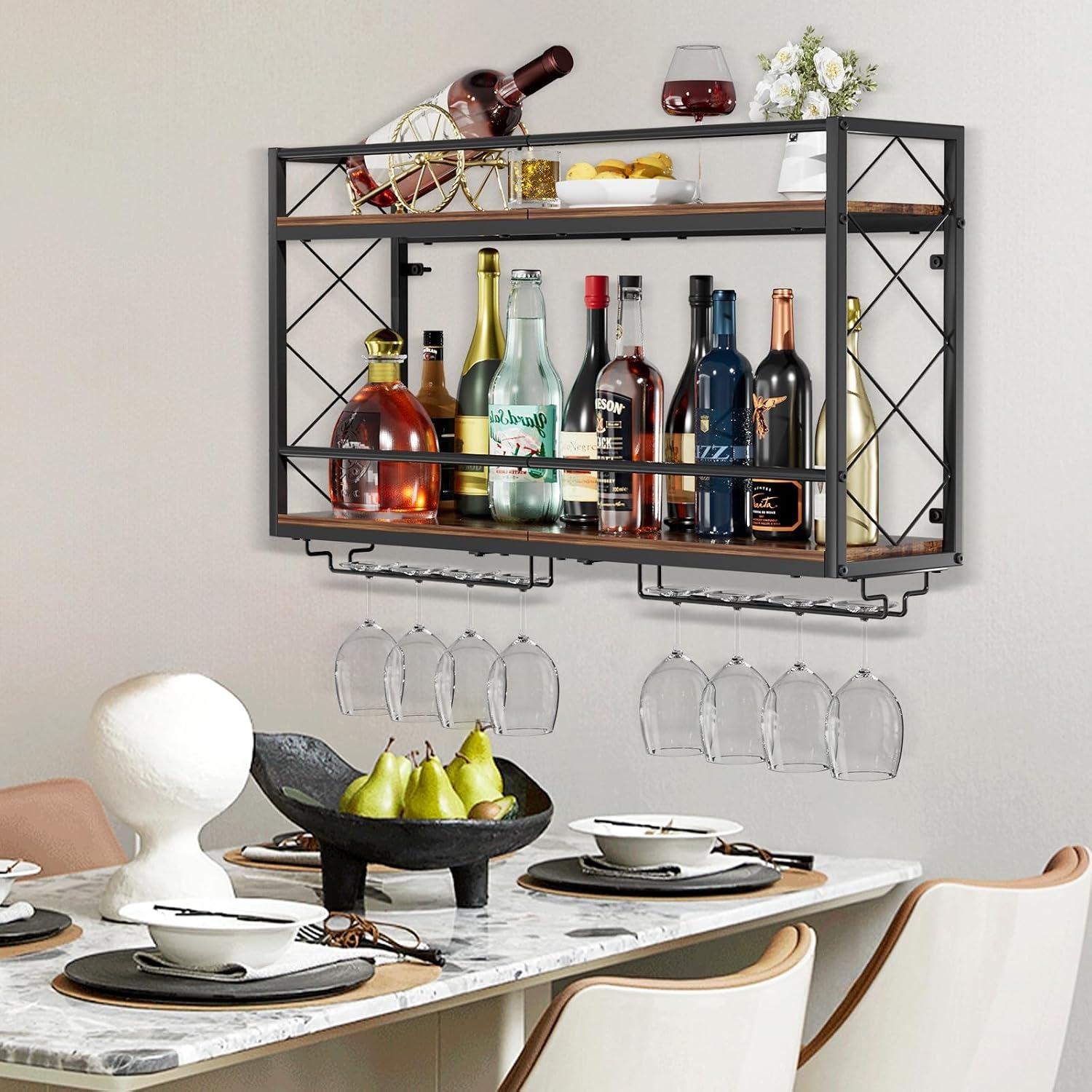
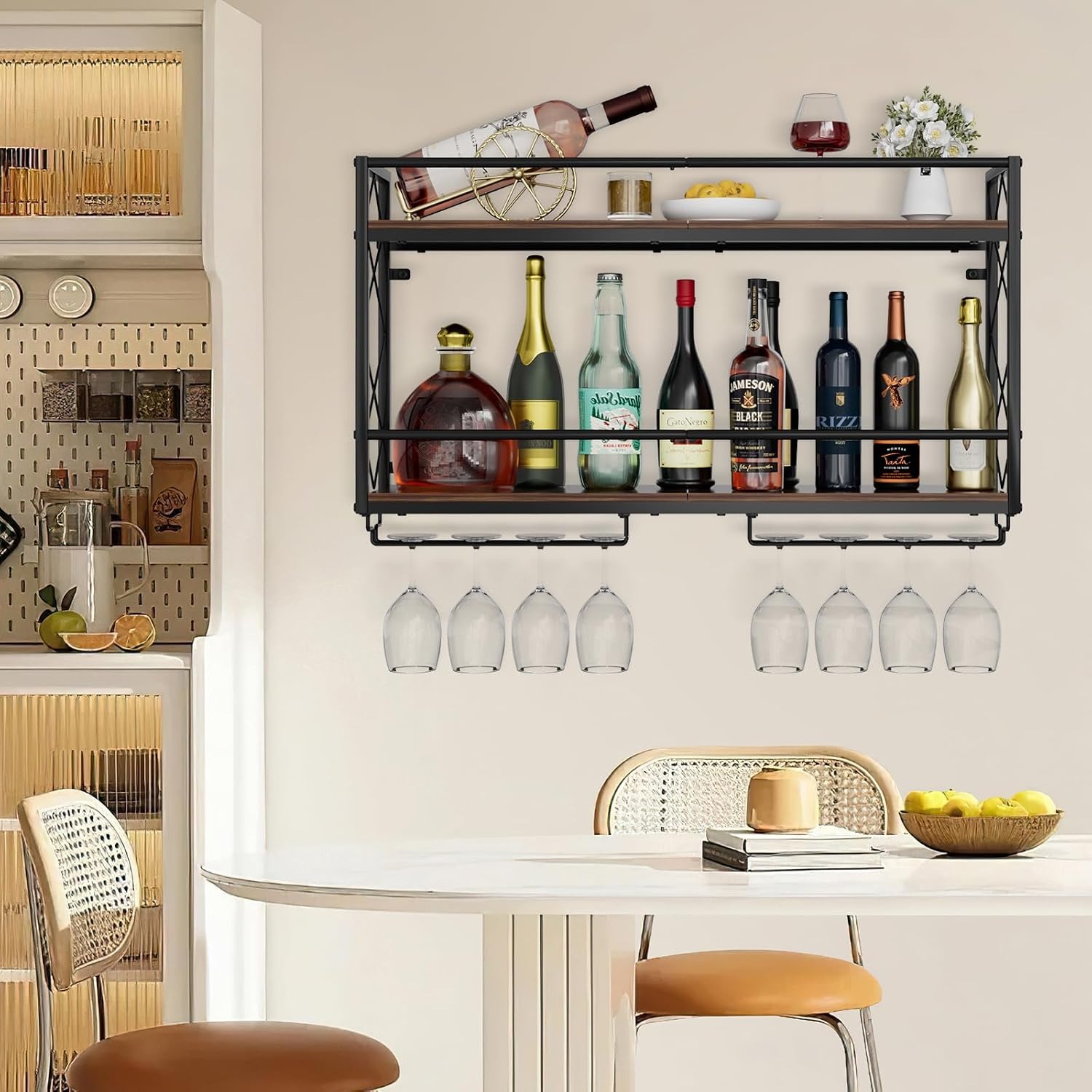
A wall wine rack with glass holder fixes this by moving everything to a surface you were not using anyway. The wall above a sideboard, the gap beside a fridge, the end of a galley kitchen, the stretch of hallway heading to the dining room. None of that space was doing anything. Hang a rack there and suddenly your bottles are visible, your glasses are hanging ready, and your bench is clear.
How this rack works
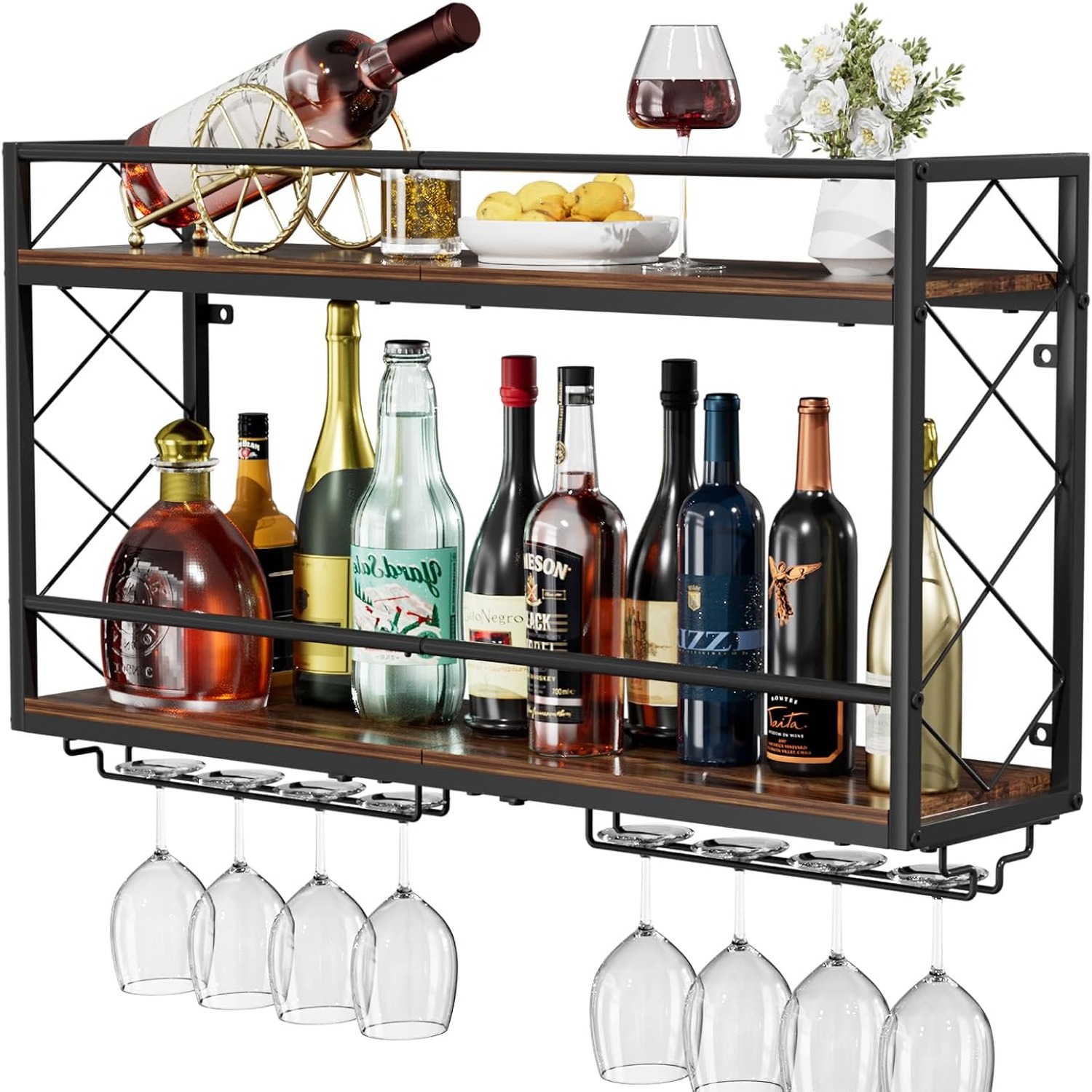
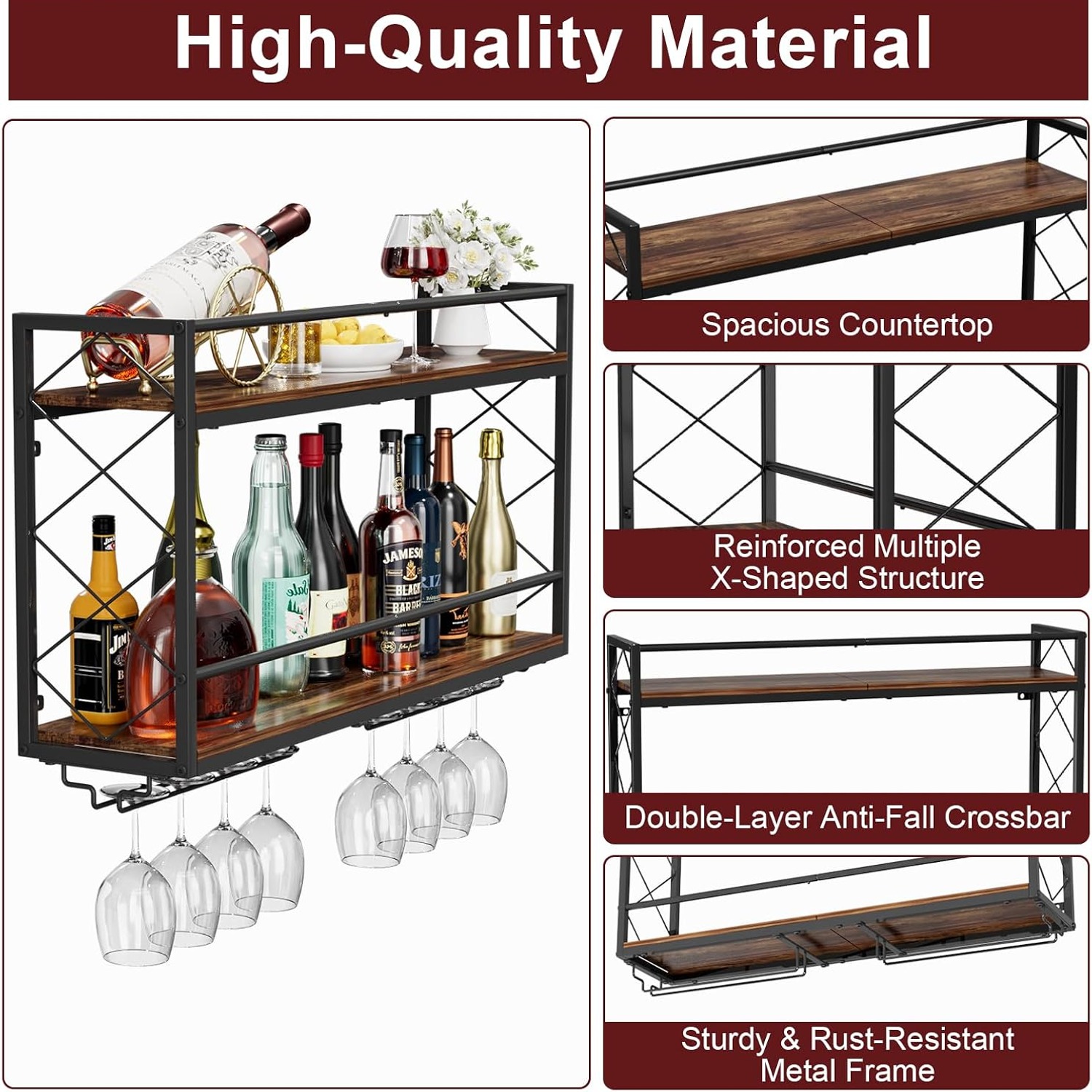
The design is simple, which is why it works. Two engineered wood shelves run horizontally across the unit. Bottles lie on their sides across them, cradled so they cannot roll off. Between the two shelves you get a total capacity of 12 bottles, a full case, which is a sensible number for a home that buys wine regularly without running a cellar.
Lying bottles flat is not just about saving space. With cork-sealed wine, keeping the bottle horizontal means the wine stays in contact with the cork. A cork that stays damp stays swollen, and a swollen cork keeps air out. Air is what turns good wine into something you tip down the sink. If everything you drink has a screw cap, this matters less, but horizontal storage is still the tidier way to stack bottles.
Underneath the bottle shelves sit the metal stemware rails. Glasses slide in stem-first and hang upside down, held at the base of the stem. Hanging them bowl-down keeps dust out of the part you drink from, and it keeps delicate rims away from hard surfaces. It also gets your glasses out of the cupboard, which frees up another shelf.
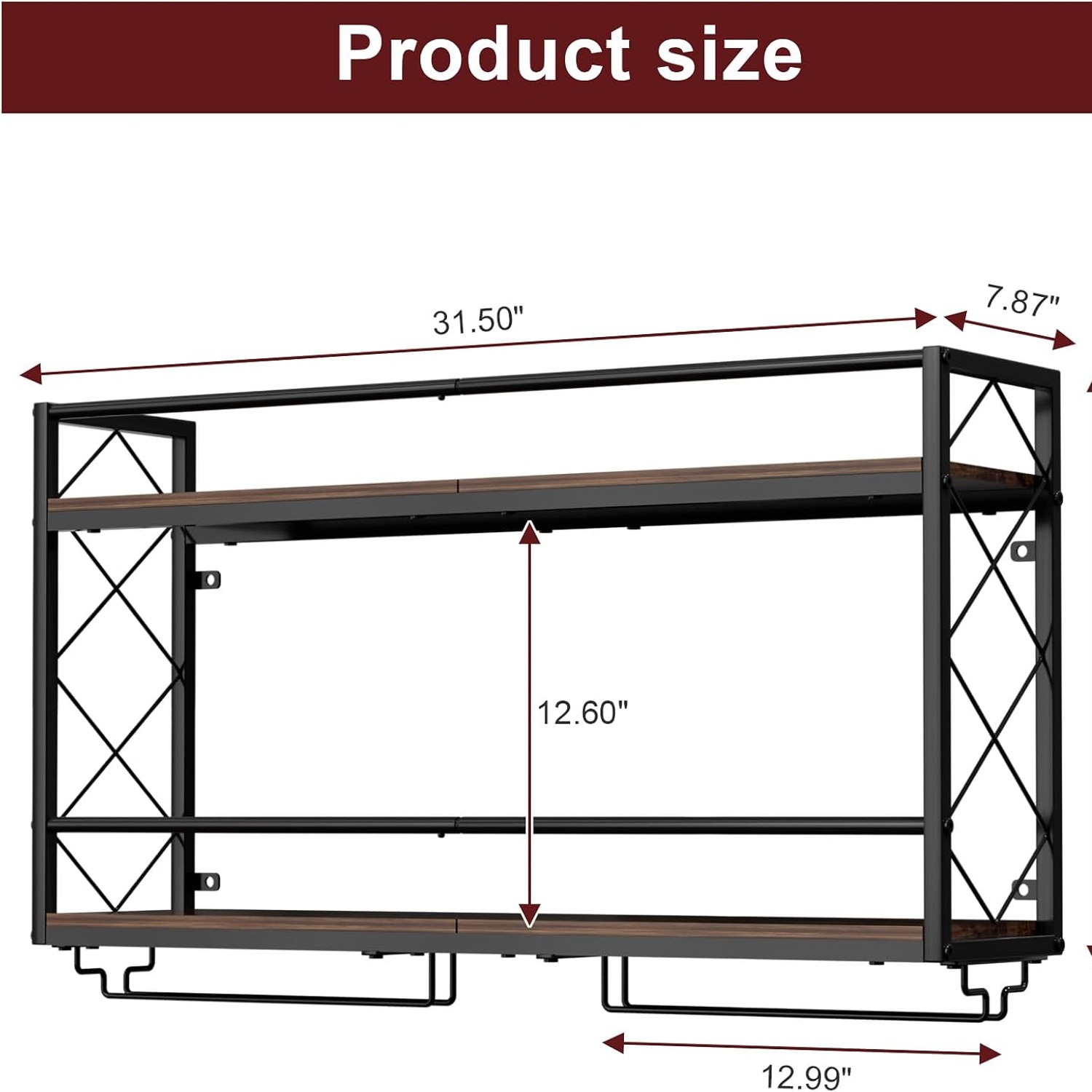
The unit is built from metal and engineered wood, with a painted finish on the metal. It measures 80.5 cm wide, 49 cm deep and 20 cm high, and weighs 4.54 kg empty. The brown colour and the vintage-leaning shape keep it from looking like office shelving, which matters when it is going on a wall people can see.
Who it suits
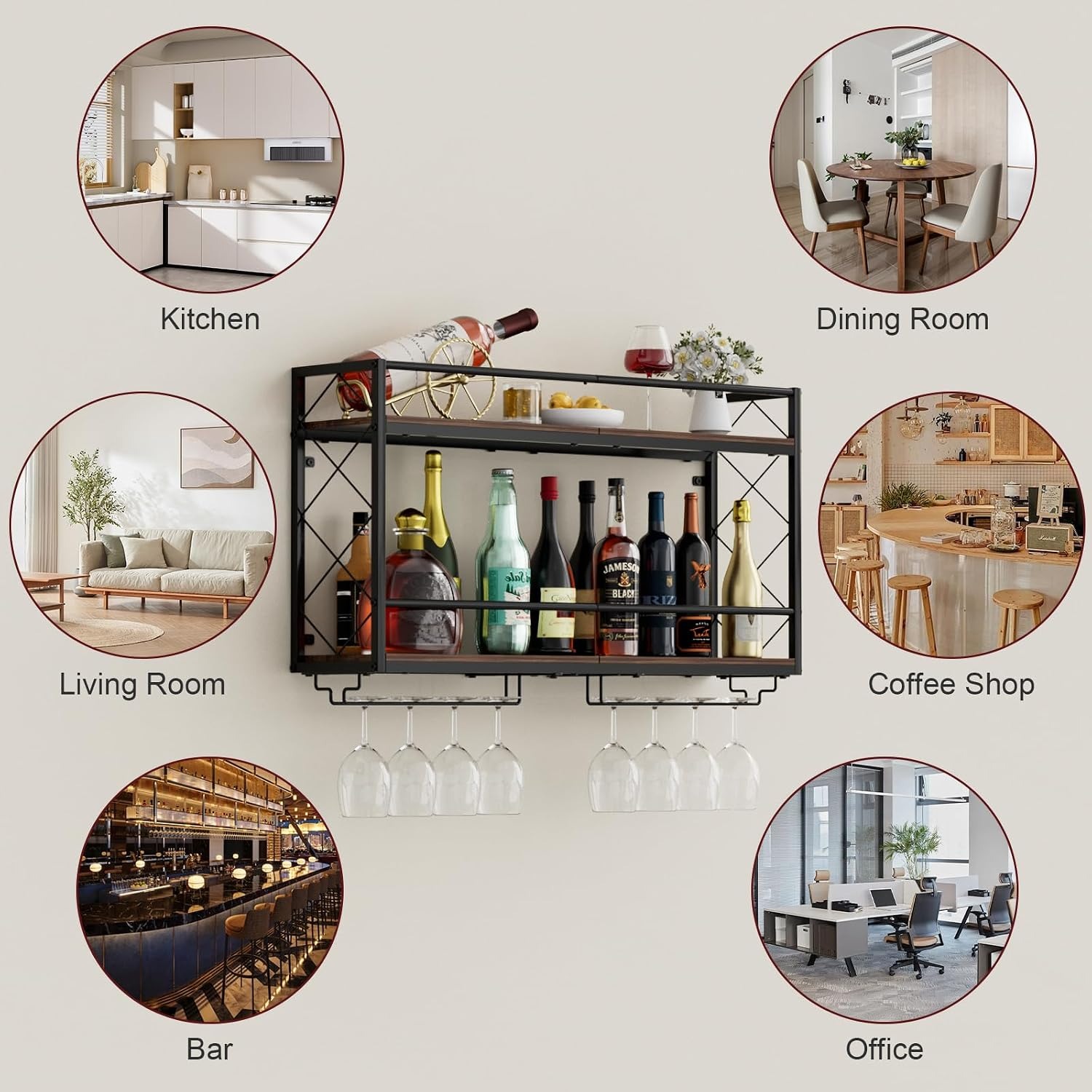
Apartment dwellers get the most out of a hanging wine rack. When floor area is the thing you do not have, vertical storage is the only sensible answer. The same logic applies to small terraces, narrow kitchens and share houses where cupboard space is contested.
It also suits people who entertain. Having bottles and glasses together in one spot turns pouring a drink into a two-second job instead of a cupboard hunt. Guests can serve themselves without opening every door in your kitchen.
Then there is the display side. If you collect wine, or if someone keeps giving you nice bottles you are saving for an occasion, a wine bottle display rack gives those bottles somewhere to be seen. Labels face out. You remember what you have. It is a far better outcome than a box in the laundry.
Cafes, small bars, restaurants and offices use racks like this behind counters and along feature walls. The vintage finish reads as warm rather than industrial, which fits most hospitality fit-outs without clashing.
Choosing the right spot
Start with a tape measure. The rack is 80.5 cm wide, so find a clear run of wall that gives you that plus a little breathing room either side. Check what is above and below. If it is going over a bench, you need enough clearance to lift a bottle out without catching the splashback or a range hood.
Height is the next call. Set the glass rails where you can reach a glass comfortably without stretching, usually around eye level for an adult. If small children are in the house, go higher so bottles and glassware are out of reach. Hold the rack against the wall first, pencil a few marks, and step back to look before you drill anything.
Think about what is around it. Keep the rack away from ovens, dishwashers, heaters and windows that get strong afternoon sun. Heat and light are hard on wine. A steady, cool, shaded wall is kinder to your bottles than a sunny one, even if the sunny one looks better in photos.
Fixings and installation
The box includes assembly instructions and tools. Building the rack itself is the easy part. Mounting it correctly is where the care goes.
The empty rack is 4.54 kg. Load it with 12 bottles and a set of glasses and you are carrying a good deal more than that on the wall. Your fixings need to be rated well above the loaded weight, not the empty weight. That is the single most common mistake people make with any wall mounted wine rack.
On plasterboard, aim for the studs if you can. If the stud spacing does not line up, use heavy-duty hollow wall anchors designed for real loads, not the small plastic plugs that come with picture hooks. On brick or concrete, use masonry plugs and a hammer drill, and you will have a rock-solid result. On tile, drill slowly with a tile bit and start with a small pilot hole to avoid cracking.
Get the rack level before the final tighten. A spirit level or a phone app is enough. A rack that sits half a degree off will nag at you every time you walk past, and it is far easier to fix now than after the holes are drilled.
Living with it
Loading is straightforward. Bottles go in label-up so you can read them. Put the ones you plan to drink soon at the easy-reach end, and the ones you are saving further along. Glasses slide into the rails stem-first, and a gentle push is all it takes.
Cleaning is light work. Wipe the wood shelves with a dry or barely damp cloth, then dry them straight away, because moisture is what damages engineered wood over time. The metal rails take a soft cloth and a mild household cleaner. Skip steel wool and scouring powder, which will mark the painted finish.
Every few months, give the fixings a check. A quarter turn on a screw that has worked loose takes seconds and prevents the kind of problem nobody wants on a wall full of glass. While you are there, run a cloth over the bowls of any glasses that have been hanging a while.
If you outgrow 12 bottles, the simplest move is a second unit beside the first. Two racks along one wall give you 24 bottles and turn the whole thing into a feature. Line the shelf heights up carefully and leave a consistent gap so the pair reads as one piece.
The short version
This is a 12 bottle wall mounted wine rack with a stemware rack built in, made from metal and engineered wood, finished in brown with vintage styling. It measures 80.5 cm wide, 49 cm deep and 20 cm high, weighs 4.54 kg empty, and requires assembly with instructions and tools supplied.
It earns its place by using wall space you were not using, clearing your bench, and keeping bottles and glasses together where you can see them. Measure your wall, choose fixings rated for the loaded weight rather than the empty weight, mount it away from heat and direct sun, and it will look after your wine and your glassware for a long time.