

The complete guide
Choosing a Countertop Wine Rack That Actually Fits Your Kitchen
The problem with loose bottles
Wine has a habit of ending up in the worst places. The bottom of a cupboard, behind the baking tins. Standing in a line at the back of the bench where one careless elbow sends them clinking. Lying flat in a drawer, rolling every time you open it.
None of this is a disaster, but it adds friction. You cannot see what you own, so you buy another bottle of the same thing. You cannot read labels without picking each one up. And bottles stored standing in a warm cupboard with a cork in them slowly dry out at the seal.
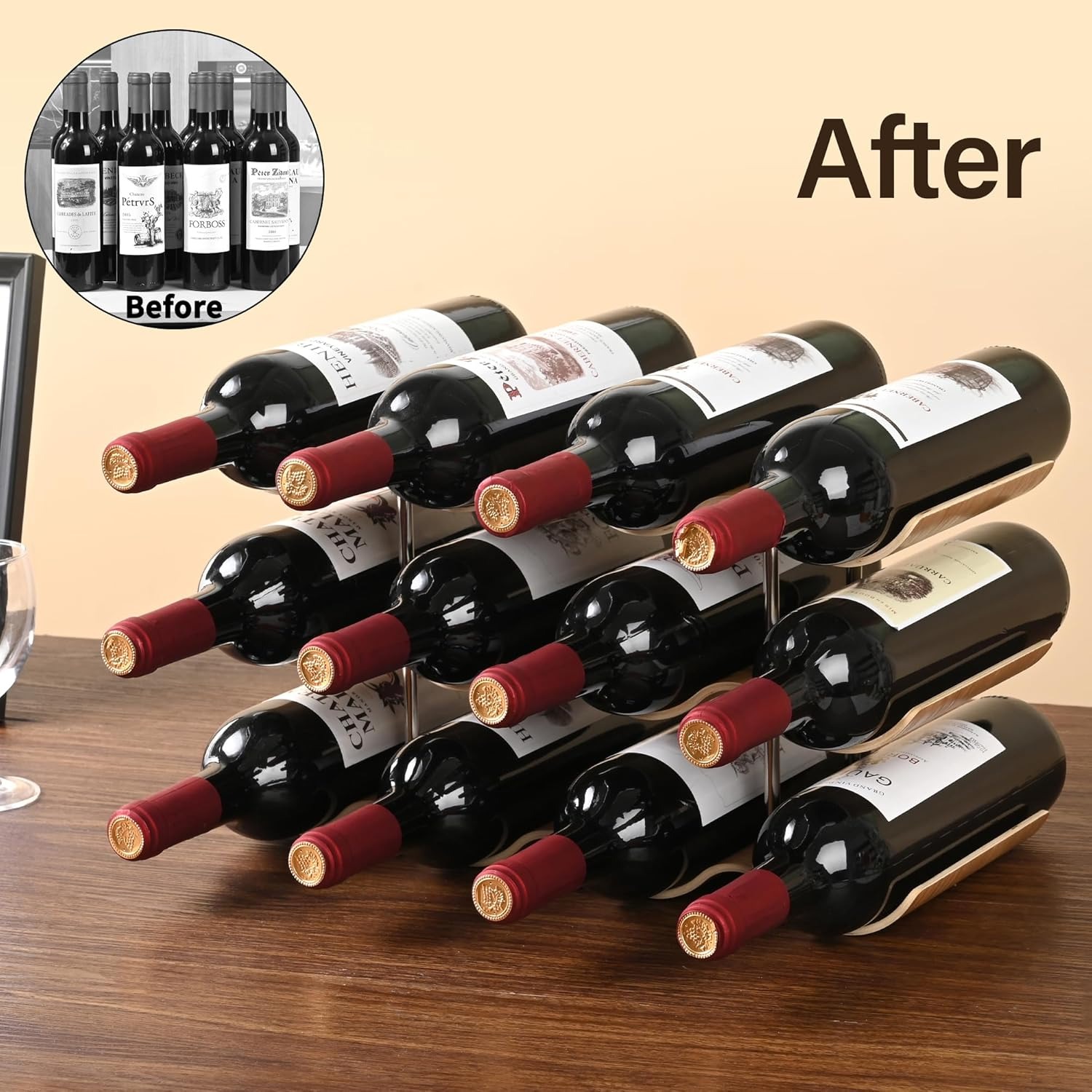
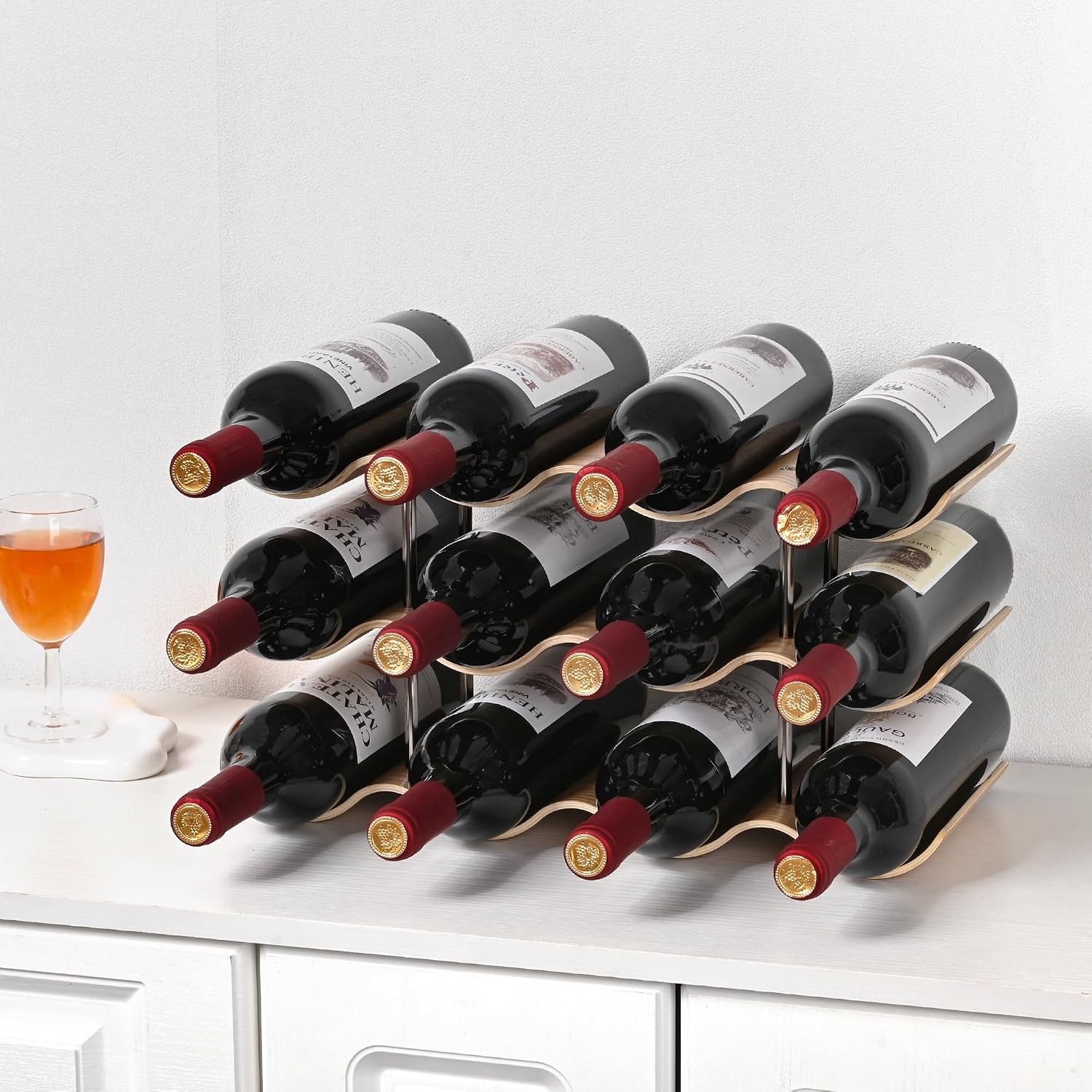
A countertop wine rack solves a small, specific problem. It gives twelve bottles a fixed address, in a place you walk past every day, at a size that does not demand new furniture.
How a wavy wooden rack works
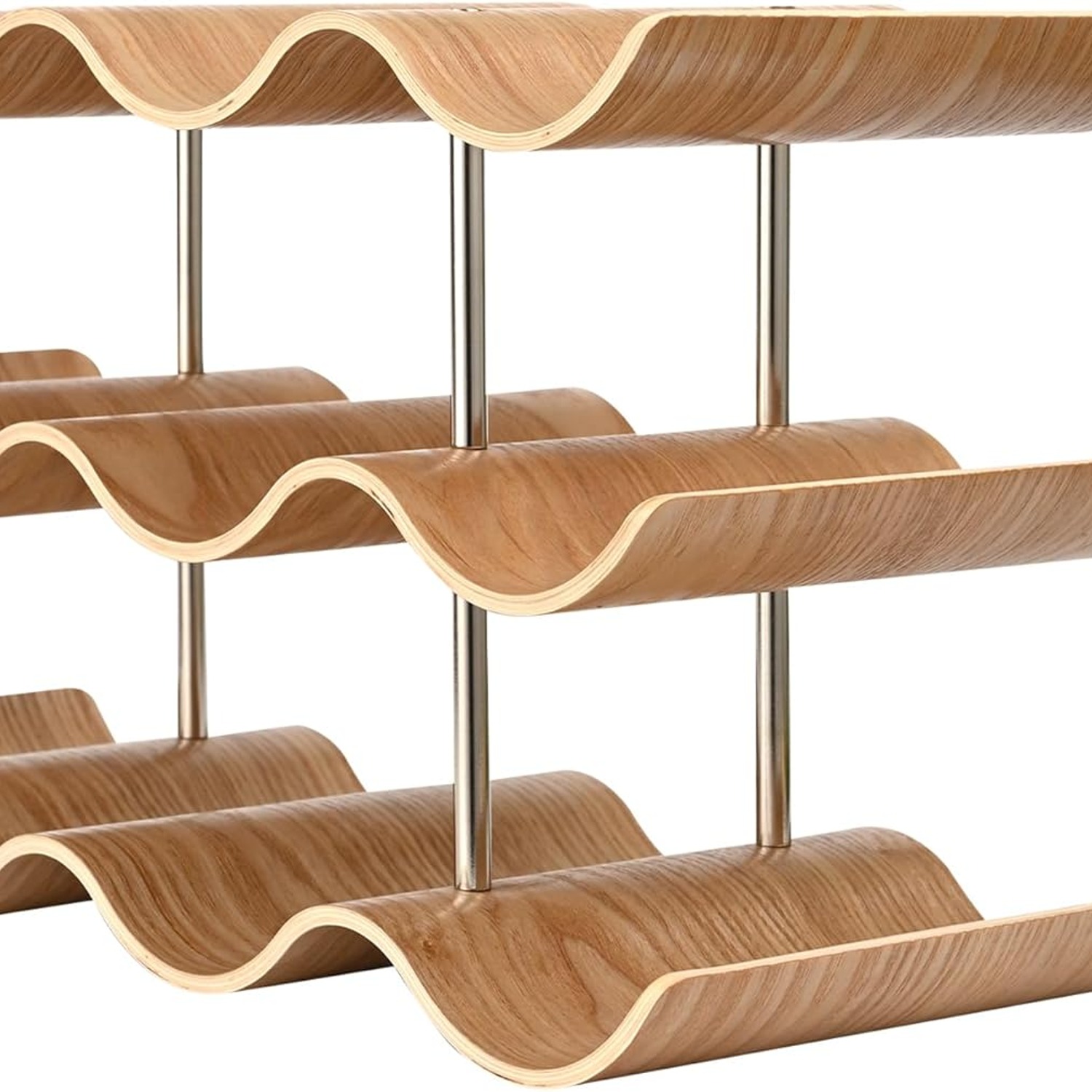
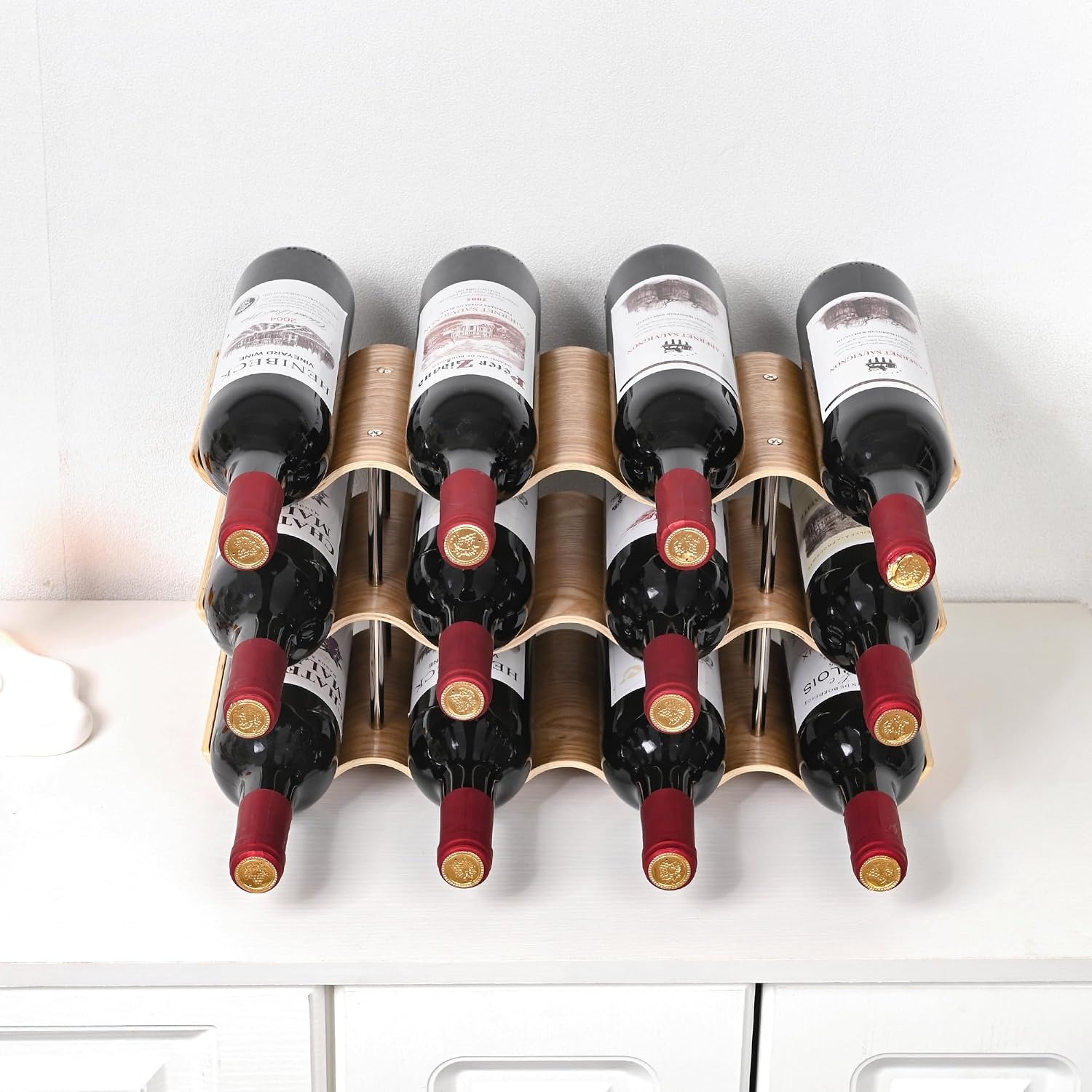
The design here is simple enough that it almost explains itself. Three timber boards are pressed into a gentle wave. Where the wave dips, a bottle sits. The curve of the wood matches the curve of the glass, so the bottle settles into the trough and stays there. There is no clip, no bracket and nothing to adjust.
The three boards are held apart by eight metal nut struts. Those struts do two jobs. They set the gap between tiers so bottles have clearance, and they keep the whole frame square once the screws are tight. Without them the boards would just be three loose planks.
Capacity splits across the tiers. The lower two tiers carry eight slots sized for standard bottles. The top tier has four wider slots designed for oversized bottles, which is where a champagne bottle or a fatter Burgundy shape belongs. Keeping the heaviest bottles low is good practice with any freestanding rack, so load the bottom first and work up.
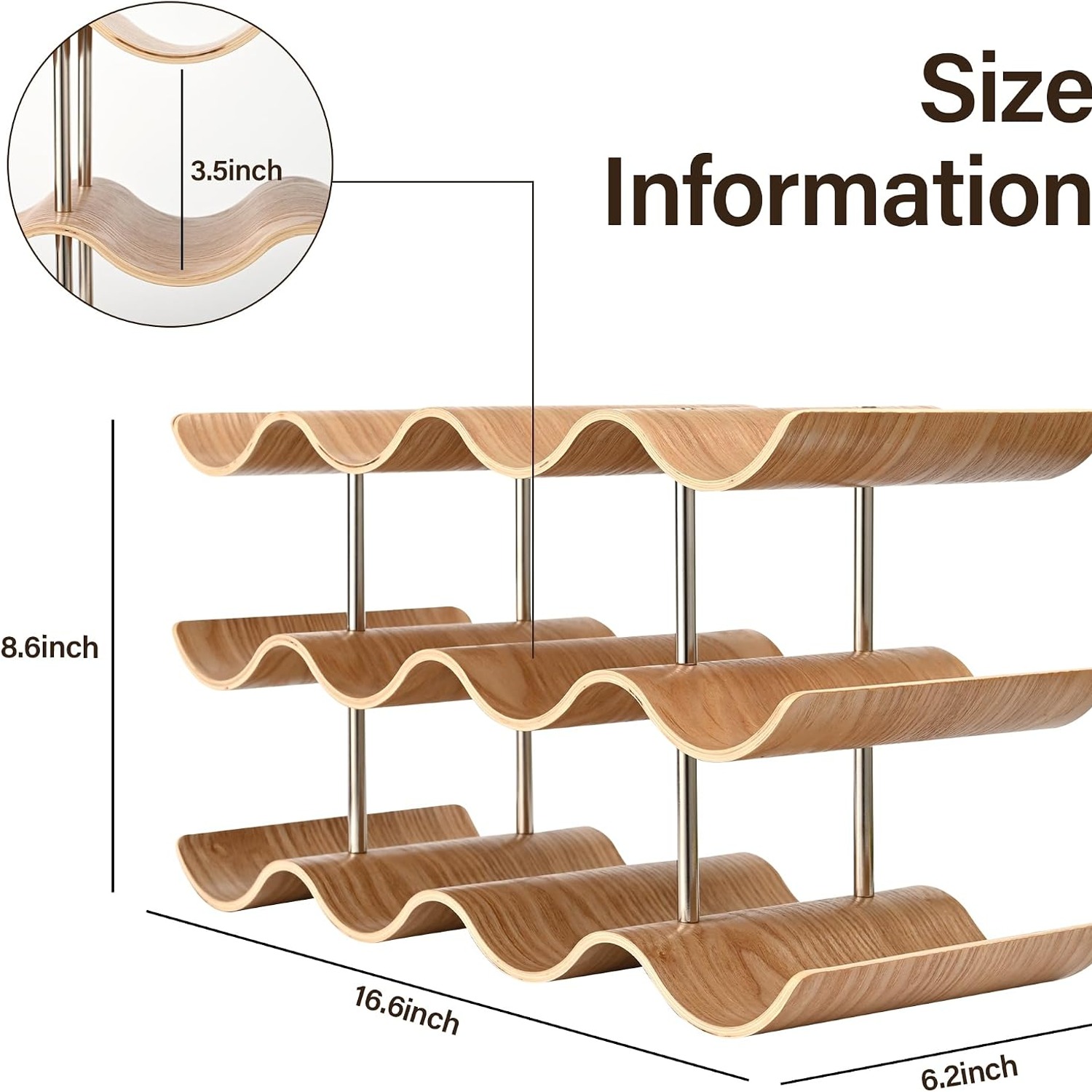
Overall the rack is 42.2cm wide, 15.7cm deep and 21.8cm high. Empty it weighs a kilogram. Those are easy numbers to picture. It is roughly the footprint of a bread board on its side and shorter than most kettles.
Who it suits
This style of rack earns its keep in a few specific situations.
Small kitchens and apartments are the obvious one. If your pantry is one cupboard and your bench is a metre of clear space, a floor-standing wine cabinet is out of the question. A tabletop wine rack that holds a dozen bottles in less than half a metre of width is about the right trade.
Renters do well with it too. Nothing screws to the wall and nothing is permanent. You unscrew eight screws, flat pack the boards and the whole thing travels in a box.
It also works for people who drink through their wine steadily rather than cellaring it. Twelve bottles is a working stock, not an archive. If you are laying bottles down for a decade you want a cool, dark, stable space, and a kitchen bench is none of those things. If you are keeping the next month of drinking in one place, this is exactly the right tool.
Finally, it is a reliable present. A wooden wine rack is one of the few gifts for wine drinkers that does not duplicate something they already own. Most people have a decent corkscrew and a couple of aerators. Far fewer have somewhere sensible to put the bottles.
How to choose the right rack
A few things are worth checking before you buy any countertop rack.
Measure the space first, including the height. Width is the number everyone checks, but height catches people out. If the rack is going under an overhead cupboard or on a pantry shelf, you need at least 21.8cm of clearance plus a bit of room to lift bottles in and out at an angle.
Think about bottle shapes, not just bottle counts. A rack rated for twelve bottles assumes twelve standard bottles. If half your collection is sparkling, you will fill the four oversized slots quickly and find standard slots are tight for the rest. Check the split between standard and wide slots against what you actually buy.
Look at how the bottles are held. Flat shelves let bottles roll. Wire cradles can press into labels. Shaped timber troughs sit somewhere in the middle, holding the bottle without a hard contact point. For a rack that lives in the open, the shaped-trough approach tends to look tidier because the bottles all line up at the same angle.
Consider the surface it sits on. Stone and laminate benches are fine. On a polished timber sideboard, put a felt pad or a runner underneath, because any rack loaded with glass will mark a soft surface over time if it gets nudged around.
Check what assembly involves. This one uses three boards, eight struts, eight screws and a written instruction sheet. You supply the Phillips screwdriver. That is about as simple as flat pack gets, but it is still worth knowing before the box arrives on a Friday night.
Getting the most out of it
Once it is standing, a couple of habits make a real difference.
Put the bottles you plan to drink soonest at the front of the top tier, where they are easiest to grab. Keep the back of the lower tiers for anything you are saving. It sounds fussy, but it stops you reaching past the good bottle every night and eventually drinking it by accident.
Face the labels out. Horizontal storage is only half the benefit. Being able to read what you have from across the kitchen is the other half, and it is the reason a rack beats a cupboard.
Keep it away from the oven, the dishwasher vent and a sunny window. Heat and light are harder on wine than almost anything else. A bench rack is never going to be a cellar, but moving it a metre away from the heat source genuinely helps.
Finally, check the screws every few months. Any assembled timber and metal structure settles a little in the first weeks of use. A quarter turn on each screw keeps the frame tight and stops the tiers developing a wobble.
Care and longevity
Care is straightforward. Wipe the boards with a dry cloth, or a barely damp one if something sticky has dripped. Do not soak the timber, and skip solvent cleaners and scouring pads, both of which will dull the polished surface.
If a bottle drips, deal with it quickly. Wine and oil sitting on wood overnight is what leaves a ring. A quick wipe and a dry cloth and you will never see it again.
The metal struts need nothing beyond an occasional tighten. If you move house, take the rack apart rather than carrying it loaded or assembled, and keep the small hardware bag with the boards.
The short version
This is a 12 bottle wine rack that does one job well. Three wavy timber tiers, eight standard slots and four wider ones, 42.2cm of bench width, a kilogram empty and a few minutes of assembly with a Phillips screwdriver.
It will not replace a cellar and it is not meant to. What it does is take a dozen bottles out of the cupboard, put them where you can see them, and stop them rolling around. For most kitchens, that is the problem worth solving.