

The complete guide
How To Choose A Countertop Wine Rack That Actually Fits Your Kitchen
The problem with loose bottles
Wine has a way of spreading out. One bottle lands on the bench after a shop. Two more go in the back of the pantry, where they roll every time you pull out the pasta. A gift bottle sits by the kettle for a month because nobody has a better spot for it. Before long you have bottles in four places and no idea what you actually own.
That is the small, everyday problem a countertop rack solves. It gives every bottle one address. You can see the labels, you can grab the one you want, and the bench stops looking cluttered.
A wooden wine rack 8 bottle setup is the sweet spot for most homes. Eight is roughly a case minus a few, which is about what a normal household has on hand at any one time. It is enough to cover a week of dinners and a couple of guests, without turning your kitchen into a bottle shop.
How a three-tier rack works
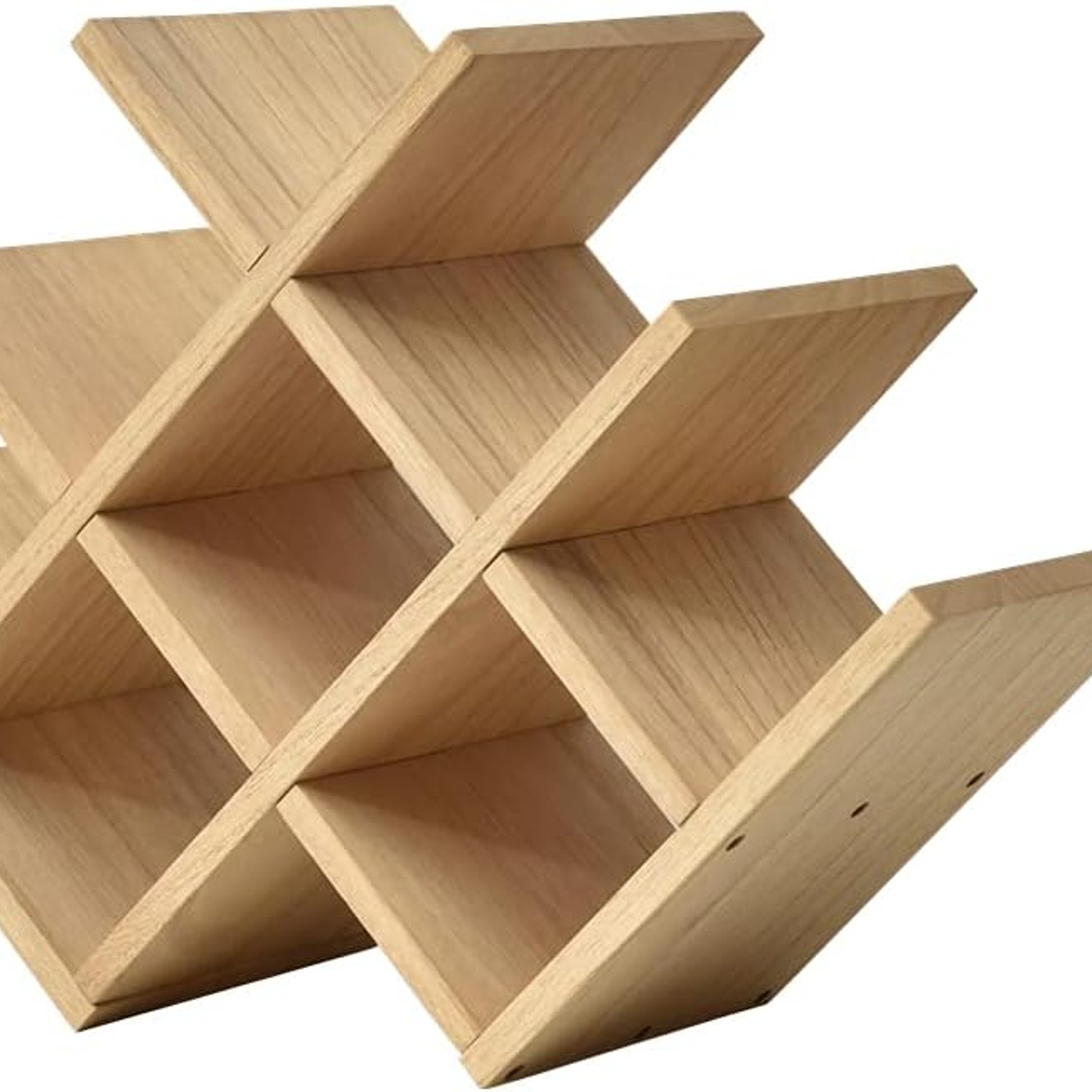
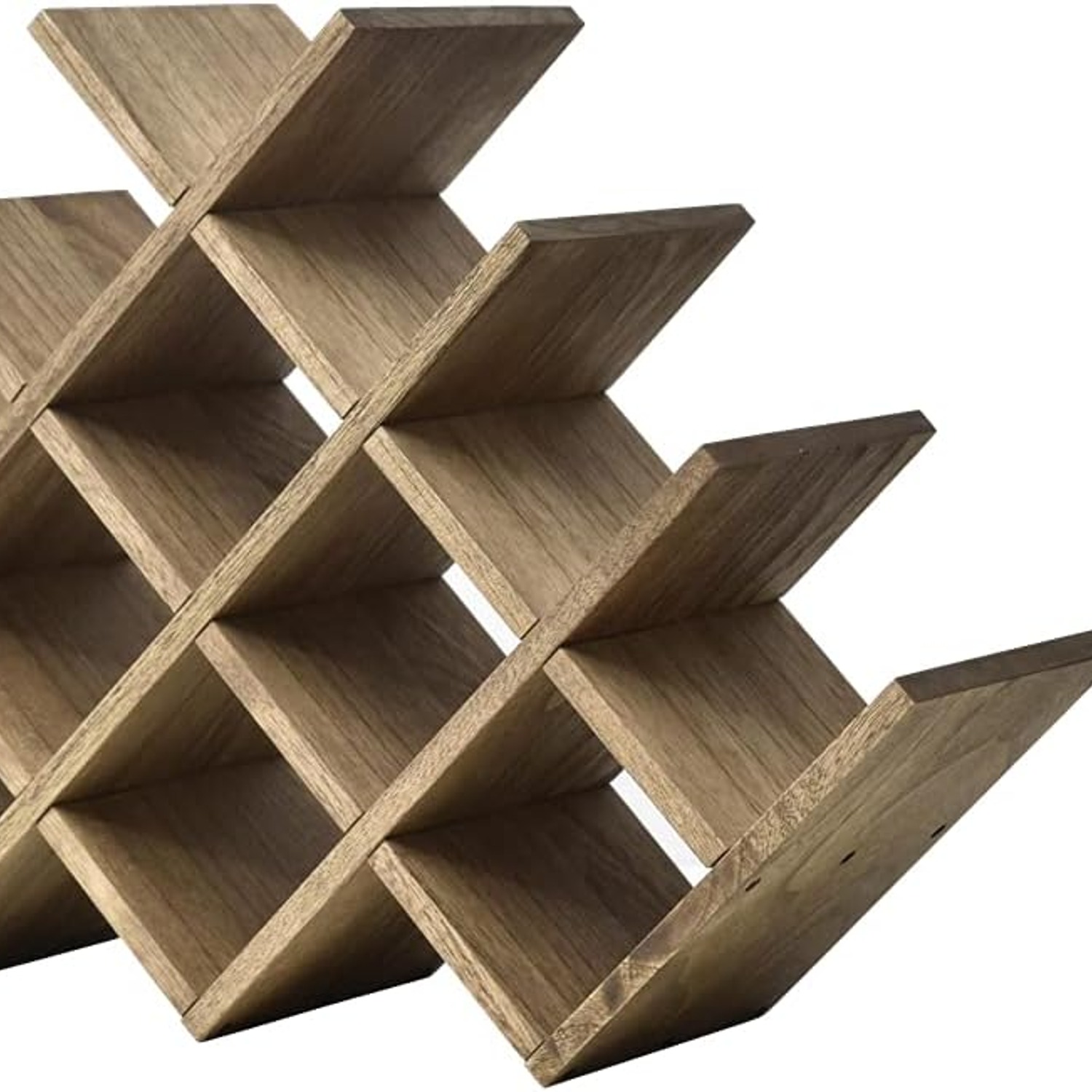
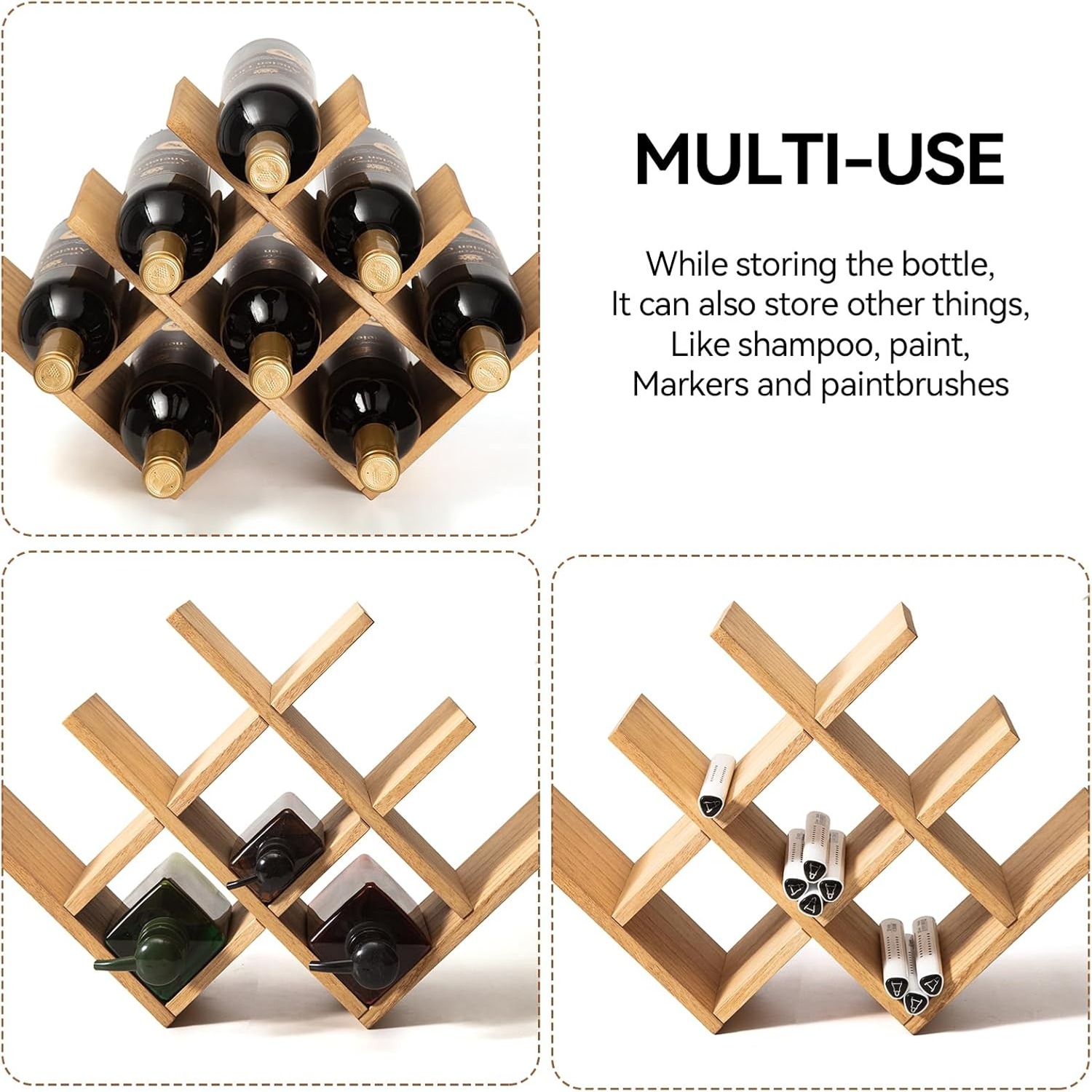
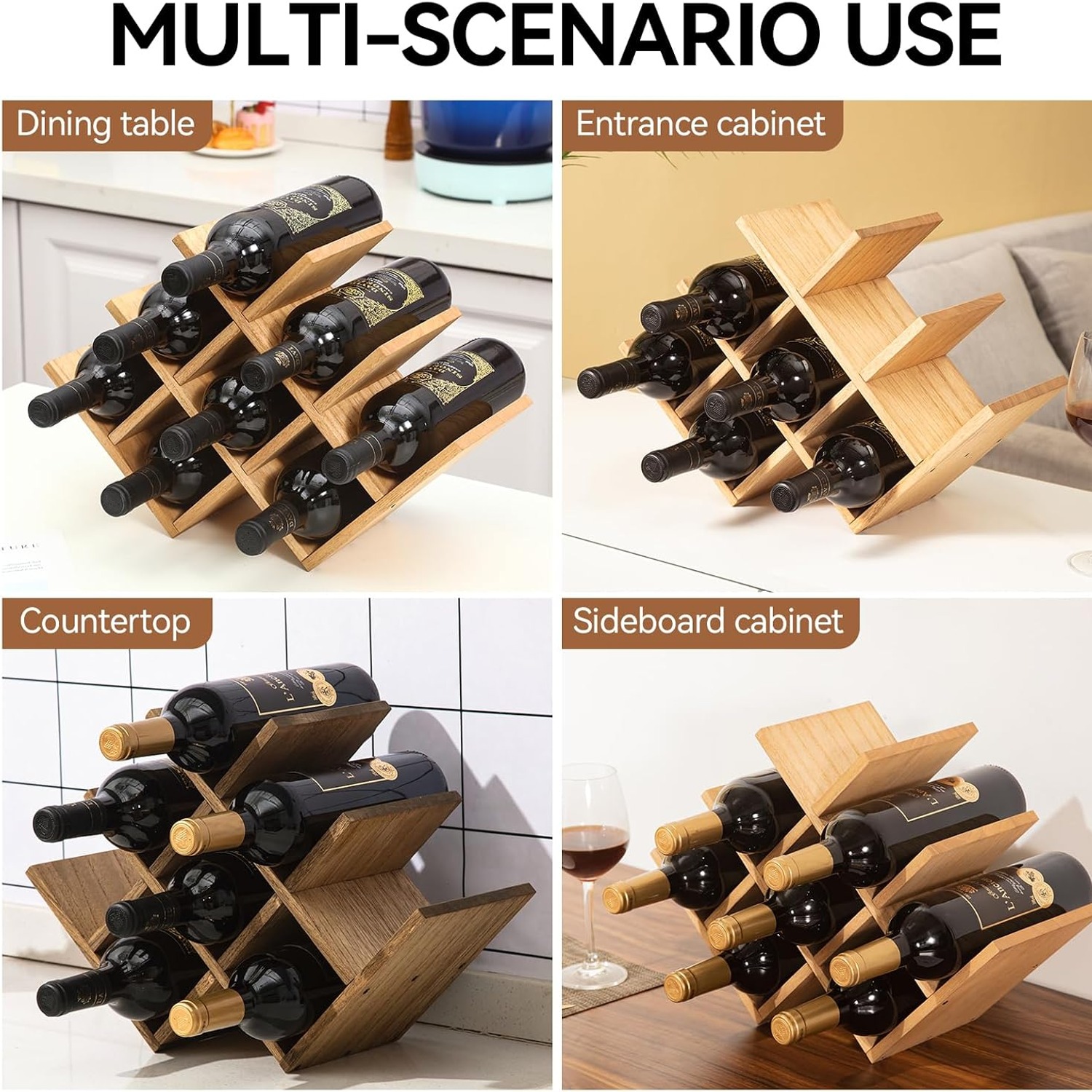
This design is simple on purpose. Three horizontal shelves of timber lattice, with openings sized for a standard bottle. You slide each bottle in neck first so it rests on its side. The weight is carried by the frame, not by one bottle leaning on another.
Lying flat matters more than people expect. With a cork closure, the wine stays in contact with the cork, which keeps the cork from drying out and shrinking. A dry cork lets air in, and air is what turns a good bottle into vinegar. Even for screw caps, horizontal storage is the most compact way to use a shallow shelf.
The other benefit is visibility. Stand bottles upright and you see eight identical foils. Lay them flat and you see eight labels. When you are deciding what to open, that difference is what makes a wine bottle holder genuinely useful rather than just decorative.
This rack measures 42.5 cm wide, 15 cm deep and 28.3 cm high, and weighs 0.74 kg empty. The imperial listing gives it as 16.73 x 5.91 x 11.14 inches. Each inner lattice opening is listed at about 3.5 x 3.5 inches, which is the number to check against your own bottles.
Who it suits
If you drink wine casually and want it organised, this is your rack. It is for the person who buys a few bottles at a time, keeps them for weeks rather than decades, and wants them within reach of the glasses.
It also suits renters and small-space living. There is nothing to drill, nothing to mount, no commitment to a wall. You put it down, you load it, you are done. If you move house, it comes with you in a box.
Timber racks are a good fit for kitchens that already have warm materials in them: oak floors, pine shelving, a wooden chopping board on the bench. The natural wood stain finish sits alongside those without competing. In a very cool, all-white or all-steel kitchen, a wooden rack is still a nice contrast, just a more noticeable one.
Who it does not suit: serious collectors. If you are ageing bottles for years, you need a cellar or a temperature-controlled cabinet, not a bench. And if your collection runs to twenty or thirty bottles, one eight-bottle rack will frustrate you. Buy two, or look at floor-standing storage instead.
Working out where it goes
Measure first. This is the step most people skip and then regret.
For a bench, check the depth of your counter and how far your upper cabinets overhang. A 15 cm deep rack leaves plenty of prep space on a standard 60 cm bench. The 28.3 cm height clears most splashbacks and sits comfortably under standard wall units.
For a cabinet or pantry shelf, measure the internal height between shelves, not the outside of the unit. You need a little more than 28.3 cm so you can lift bottles in and out without scraping. Also check the shelf depth, since a rack that overhangs the front edge is an accident waiting to happen.
For a bar cart, think about balance. Carts are narrow and they roll. Put the rack centred or toward the back, load the lowest tier first, and do not fill a cart's top shelf with eight full bottles if the cart is light.
Avoid three places in particular. Direct sunlight through a window, which heats and light-strikes the wine. Next to an oven or dishwasher, where repeated heat cycles are hard on both wine and timber. And anywhere that stays damp, since moisture is the enemy of a stained wood finish.
Checking your bottles actually fit
The lattice openings are listed at roughly 3.5 x 3.5 inches. Standard Bordeaux and Burgundy bottles, which cover the vast majority of what sits on a shop shelf, slide in without drama.
Where you want to be careful is with the wide ones. Champagne and sparkling bottles are heavier and broader through the body. Magnums are a different league entirely. Some dessert wines and a few show-off Italian reds also come in oversized glass. Take a tape measure to the widest part of your bottle and compare it to the opening before you order.
If you own one or two wide bottles and six standard ones, you can often sit the wide ones in the outer positions where there is a touch more clearance, or just store them separately. It is not a reason to skip a rack, it is a reason to know what goes where.
Putting it together
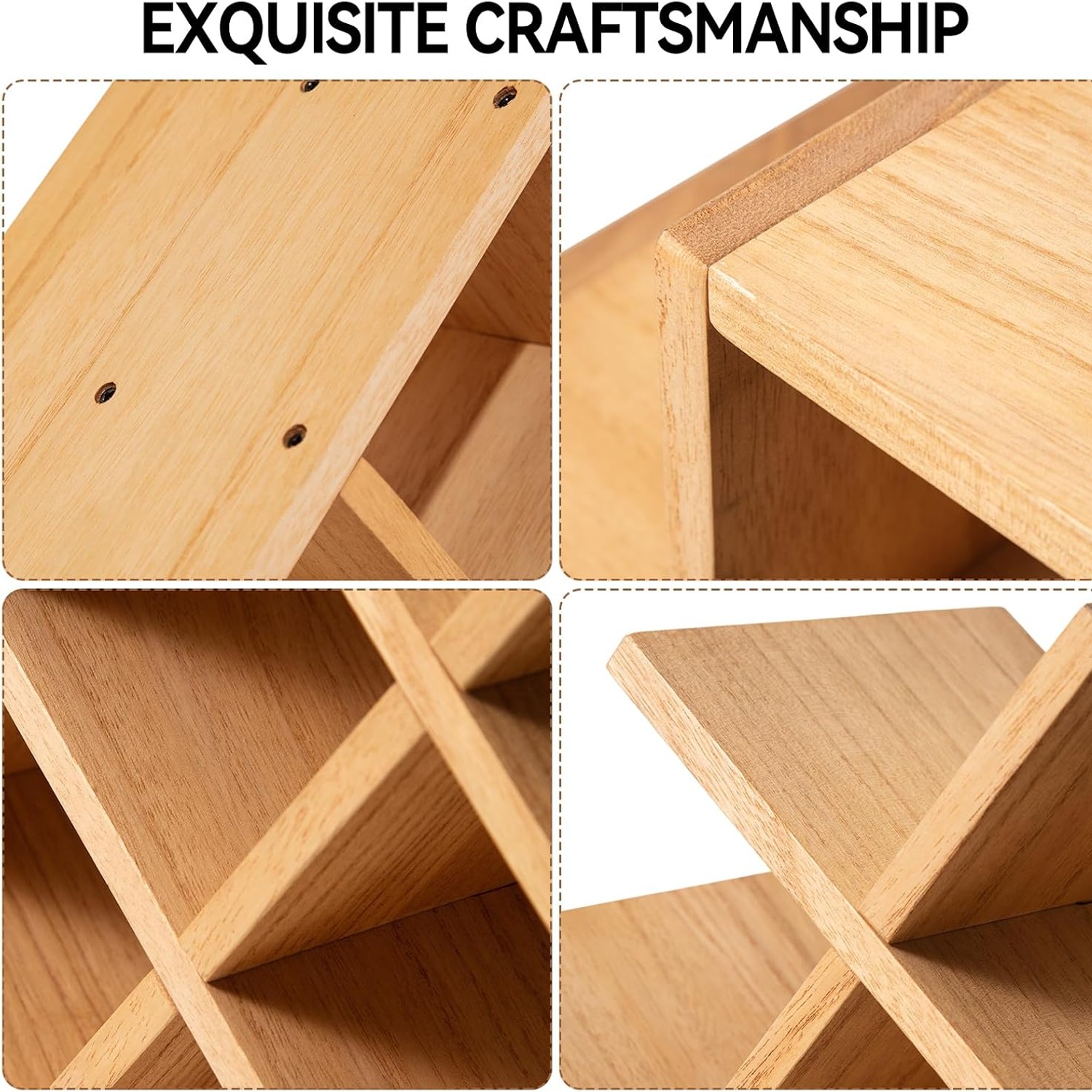
The box holds six wood boards, twelve screws with two spares, and an instruction manual. You need a screwdriver and a clear patch of table.
Lay the boards out and match them to the diagram before you start driving screws. Start each screw by hand so you do not cross-thread it, then tighten properly. Timber racks go wobbly when one or two screws are left half-in, and a wobble under eight bottles is not something you want to discover later.
Once it is built, set it on the surface you have chosen and press down on each corner. If it rocks, the surface is uneven rather than the rack. Shift it or shim the spot. Then load the bottom tier first and work up, which keeps the weight low while you are filling it.
Keeping it looking good
Care is genuinely easy. Wipe it with a dry cloth when dust builds up, which for most kitchens is every week or two.
If something sticky gets on it, a slightly damp cloth will lift it. Dry the timber straight afterwards. Do not soak the wood, do not leave it wet, and keep strong cleaning solvents away from the stained finish. Those are the only real rules.
Every few months, give the screws a quick check, especially if you have moved the rack or if it lives somewhere that gets bumped. Twenty seconds with a screwdriver keeps the frame tight for years.
One habit worth building: rotate your stock. Push older bottles to the front tier and put new buys at the back. It stops a bottle getting forgotten behind the others for two years.
Beyond wine
The open compartments do not know what you put in them. Taper candles store neatly on their sides. So do slim bottles of olive oil, vinegar, cordial or hot sauce. Rolled tea towels fit. Craft markers and brushes fit.
Two cautions. Check the size of whatever you are storing against the lattice opening, and do not load the tiers with anything unusually heavy. This is a light timber frame built to carry bottles, not tinned goods or tools.
The short version
An eight-bottle, three-tier timber rack is the practical answer to bottles scattered around the kitchen. It measures 42.5 x 15 x 28.3 cm, holds eight standard bottles flat so you can read every label, and sits on a bench, shelf or cabinet without any mounting.
Measure your space and your widest bottles first. Assemble it properly, tighten the screws, keep it out of heat and sun, and wipe it with a dry cloth now and then. Do that and you have a small piece of furniture that quietly does its job every day.